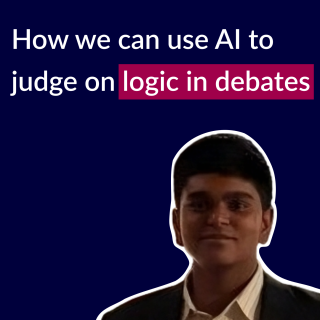
Welcome on another episode of Democracy Innovator Podcast and our guest of today is Vir Sangavi.
Download transcript (.srt)
0:00
0:06
0:09
0:10
0:11
0:11
0:15
0:18
0:27
0:29
0:30
0:43
0:46
0:55
0:59
1:02
1:06
1:08
1:13
1:21
1:25
1:30
1:32
1:40
1:41
1:43
1:57
2:05
2:08
2:15
2:26
2:33
2:39
2:49
2:53
2:55
2:57
3:07
3:14
3:19
3:29
3:31
3:32
3:37
3:41
3:43
3:47
3:52
4:03
4:15
4:20
4:26
4:31
4:43
4:51
4:54
4:58
5:02
5:07
5:10
5:20
5:22
5:23
5:28
5:35
5:48
5:50
6:00
6:08
6:14
6:15
6:20
6:32
6:33
6:37
6:43
6:48
6:53
7:00
7:10
7:22
7:22
7:24
7:28
7:29
7:30
7:35
7:45
7:52
7:57
8:04
8:16
8:20
8:23
8:25
8:27
8:31
8:42
8:55
8:59
9:06
9:11
9:19
9:27
9:28
9:31
9:44
9:50
9:58
10:02
10:07
10:10
10:23
10:24
10:26
10:27
10:32
10:36
10:45
10:51
10:56
11:01
11:08
11:19
11:20
11:24
11:31
11:43
11:47
11:53
11:58
12:04
12:11
12:14
12:20
12:22
12:23
12:25
12:30
12:39
12:47
12:48
12:54
13:01
13:05
13:10
13:15
13:19
13:29
13:38
13:43
13:49
13:51
13:57
14:01
14:17
14:20
14:28
14:31
14:44
14:49
14:54
14:58
15:08
15:10
15:18
15:21
15:25
15:36
15:43
15:50
16:02
16:02
16:15
16:21
16:28
16:31
16:31
16:34
16:39
16:41
16:42
16:44
16:45
16:46
16:48
16:50
16:58
17:06
17:13
17:19
17:34
17:40
17:43
17:48
17:50
17:55
17:58
18:03
18:20
18:32
18:47
18:56
19:00
19:02
19:11
19:15
19:21
19:33
19:40
19:41
19:48
19:57
20:04
20:06
20:10
20:13
20:16
20:21
20:37
20:48
20:52
21:04
21:07
21:12
21:26
21:36
21:41
21:42
21:51
22:02
22:07
22:16
22:27
22:31
22:35
22:38
22:42
22:50
22:59
23:09
23:14
23:29
23:34
23:36
23:38
23:42
23:46
23:55
24:03
24:06
24:09
24:15
24:18
24:36
24:38
24:39
24:40
24:52
24:52
25:04
25:08
25:15
25:25
25:33
25:37
25:47
25:51
26:06
26:08
26:23
26:25
26:29
26:35
26:41
26:47
26:50
26:59
27:08
27:14
27:20
27:25
27:37
27:40
27:43
27:45
27:46
27:51
27:59
28:09
28:11
28:24
28:30
28:34
28:36
28:40
28:42
28:49
28:55
28:58
29:01
29:07
29:10
29:11
29:14
29:16
29:18
29:22
29:27
29:28
29:30
29:34
29:48
29:54
29:58
30:10
30:11
30:23
30:24
30:33
30:34
30:48
30:59
31:01
31:23
31:33
31:37
31:45
31:49
31:51
31:54
31:59
32:08
32:14
32:18
32:22
32:38
32:40
32:44
32:48
32:56
33:03
33:19
33:25
33:27
33:33
33:35
33:46
33:53
33:56
33:57
34:02
34:04
34:11
34:18
34:30
34:34
34:45
34:53
34:58
35:00
35:04
35:08
35:27
35:29
35:32
35:44
35:50
35:52
36:00
36:01
36:03
36:07
36:08
36:12
36:18
36:24
36:33
36:36
36:43
36:47
36:54
37:05
37:13
37:14
37:15
37:22
37:25
37:32
37:41
37:43
38:01
38:04
38:06
38:09
38:11
38:16
38:17
38:18
38:19
38:21
38:32
38:33
38:39
38:41
38:43
38:44
38:51
38:55
39:11
39:13
39:19
39:21
39:33
39:37
39:38
39:45
39:52
40:05
40:16
40:23
40:34
40:46
40:47
40:48
40:49
41:04
41:05
41:10
41:14
41:17
41:18
41:23
41:35
41:39
42:00
42:05
42:06
42:08
42:19
42:32
42:36
42:43
42:52
42:59
43:05
43:15
43:20
43:23
43:27
43:29
43:35
43:45
43:51
43:55
44:01
44:06
44:20
44:24
44:36
44:50
44:51
44:55
45:06
45:09
45:15
45:19
45:29
45:32
45:39
45:43
45:50
45:54
45:58
46:03
46:08
46:11
46:17
46:23
46:27
46:33
46:37
46:51
46:53
46:57
47:02
47:06
47:08
47:16
47:19
47:22
47:28
47:35
47:45
47:48
48:06
48:15
48:22
48:33
48:43
48:46
48:51
49:01
49:09
49:13
49:18
49:24
49:27
49:30
49:36
49:39
49:41
49:43
49:51
49:55
49:56
50:05
50:08
50:16
50:21
50:24
50:28
50:34
50:34
50:37
50:48
50:52
51:03
51:06
51:08
51:19
51:28
51:35
51:42
51:51
51:56
52:02
52:11
52:12
52:18
52:28
52:34
52:37
52:38
52:43
52:53
52:57
53:00
53:01
53:05
53:07
Is it right the pronunciation?
Yes it is.
Thank you so much.
me on.
very excited to be here.
Thank you and welcome and thank you for your time.
um I discovered you, I mean that you're building this platform that is called tilt.vote.
Would you like to tell us something more?
Yeah, sure.
So tilt.vote is a primarily social platform where users can post debates, uh reply to debates, post takes, and really just have a place to voice their arguments and what they
believe in a structured, meaningful way.
Right now, social media is kind of an echo chamber where everyone yells out into the void, but the best ideas get buried beneath comment sections.
There's no method for people with the
opinions that they want to express to rise to the top.
And it's really just based around a culture of virality and rage bait.
Tilt is intended to fix that.
And it's necessary because everyone has an idea, but not everyone has a place to express it.
And that's where I think it's so important in today's democracy, because at the core of a democracy is everyone gets a voice.
And I think Tilt is the platform to surface that.
And when you had the idea...
about this platform.
Yeah, I had this idea a few months back and um I've been very grateful and blessed to have this idea.
just been building ever since.
And no, but how did it happen?
Like, do you remember if there was like a moment you thought, okay, I have to make this platform or like, because you told me you also have experience with debating, right?
Yeah, so from sixth grade through now, 10th grade, I've been participating in competitive debate.
I've won some pretty crazy titles in middle school.
I won this state championships for Texas and I finaled nationals in the US twice.
Obviously it was middle school nationals, but it gave me enough exposure to the debate world to understand that real life was not as the
civil, structured, uh as easy to explain your opinions in as debate.
Because the way debate works is people with the best ideas and the best presentation will generally win.
And that was a void I saw in real life because as I told you before, whenever I wanted to express my ideas, the best way to do it was social media.
And social media was just me yelling to the wall.
And that was
very meaningless.
So after a few weeks of just being frustrated because I wanted to say things, I wanted to have what I said have impact, I just didn't know where I wanted to go.
I didn't know what to do, where to put my opinions and that inspired me to build Tilt.
And also we have to say you are quite young, right?
And because maybe someone listening to the conversation doesn't know, but how old are you at the moment?
I'm 15 years old.
Okay, 15.
And so you already had some experience debating.
how does it work like a debate?
Because you...
You said that representation...
yeah, yeah, so debate is based on different uh events.
There's Congress, PF, LD, and there's a bunch of inter and like presentation based events where it's not actually debate, it's more presentation.
um But with regards to debate, I participate in congressional debate and the job of a congressional debater is to go into a room full of anywhere from 12 to
25 people and represent your constituents.
You have different bills or resolutions that you want to either pass or fail.
You give speeches telling the chamber whether to vote to pass or fail.
uh You get questioned, you argue with other people in your speech, you reference their speech and say what was like inconsistent with it or why you support what they said.
It's done in a timely manner where you have to present in front of the room and speak to everyone at once.
And that's where presentation matters as well.
Other forms of debate include like PF public forum and Lincoln Douglas.
PF is a two on two format of debate.
There's again resolutions and you have to either go in the AFRIN-NED.
Lincoln Douglas is one of you one.
And um I haven't done LOD, but what I've heard is it's more based on ethics, values, and impacts.
So there's a lot of different forms.
Yeah.
No, actually I didn't know about all those forms.
so like Tiltbot in some way tries to represent this kind of debating.
it adopts a specific form of the one that you described or it was a way for you to, I don't know, invent a platform that could...
Yeah, sure.
So tilt.vote is not meant to embody any form of because uh debate has a very hard entry point for any beginner.
It's kind of you have to learn the procedures, the rules, the like expectations in any debate round.
And for most people who don't have experience in debate and still have ideas they want to get out.
um
having those rules and restrictions of any specific debate event would be very limiting.
So Tilt is designed in the most uh user-friendly way that it could have been, which is users post a debate, users argue, and AI will automatically push the best arguments to the
top.
And now there are some users, right, in the platform.
Yeah, we're currently sitting at over 4,000 users and are growing every single day.
I'm very excited that people are also coming back.
We recently hit day 7 11 % user retention.
And that means that people are recognizing Tilt as a place to express their ideas, which I'm very grateful for.
And have you discovered anything like during the, because you know, sometimes you can have an idea, then you actually, I mean, you realize the idea.
So you have a sort of product and then you see that maybe, I don't know, users are using the platform in a different way from when you first had the idea, maybe, I don't know,
like.
uh
Have you had any surprise like a...
Yeah, for sure.
I think that's...
For me, was that the original AI integration part of Tilt was supposed to be summarization.
oh You see these long threads of comments and arguments under any news article, for example.
And you see that people have to scroll down and read through all of them to really understand what's happening.
And I thought that summarization, an AI summary at the top would be what's most popular.
But looking at em AI request logs, it's that people are barely using the AI summarization feature.
em What's more shocking to me is that logic scoring that's done through tilts AI is way more popular, way more requested from any IP address.
And I think there's a few reasons for it, right?
there's people want to see how they're arguing.
People want to see how others are arguing.
People want
consistent fair judge and I think that outweighs any summary.
um It was really a shock to me at first that because I thought that the summary would be something that everyone wanted to see after seeing the like length of these debates.
And while it is true that for longer debates, the summaries are more called upon, um it backwood me that people wanted um to see the AI logic scores more than AI summaries.
And how does it work the logic score?
Yeah, so the logic scoring system for tilts AI is built on very transparent criteria.
There's four parts of any logic scored under any given debate.
All of these parts are quantifiable to some degree, and I'll go into them one by one.
There's a fact check, which great and all of these four criteria grade your take on a scale of zero to 100.
100 being
the most desirable and zero being the worst possible.
um So there's a fact check which looks to real sources, real, um like does a web search to see if what you're saying is logical.
Then there's um a fallacy or no fallacy check which looks to common logical fallacies.
um Some of these include like ad hominem, straw man, false dilemma, appeal to authority and
All of these different logical fallacies can undermine the strength of your argument.
And that's why we check for uh logical fallacies going from a scale of zero to 100.
um Then there's relevancy within the debate.
Because if I can, if I post the best argument, one without fallacies for a debate about Israel versus Palestine, where the actual debate is about pineapple on pizza, then um it
shouldn't be scored highly.
And that's where relevancy comes in.
uh
looking at the context of the rest of the debate and rating your take from zero to 100.
um Lastly, there's logos versus pathos, logic versus emotion.
How much of what you're saying is based on um a consistent chain of reasoning and chain of thought as opposed to just yelling.
And um all four of these scores are averaged out to produce a logic score.
um It's all visible under any debate at tilt.vote.
And then the AI also gives a brief rationale for its logic score.
For example, um in a debate about Israel, or the debate said Israel will win the war against Palestine.
um What happened is the top, the user with the best pick said, it's not a matter of winning or losing, it's a prolonged conflict that cannot be resolved through military
victory alone.
He went along with it for a little while and then he said, however, Israel could win
could take control of Gaza if they wanted to because of their military superiority and alliance with the United States.
The AI's rationale for giving a 92 out of 100 was overall because the argument is well grounded in verifiable facts, directly addresses the debate and shows no clear fallacies.
Its reasoning is evidence led and the presentation is well structured.
So for each take it's uh graded and then uh given a rationale for its grade.
Recently, I was also able to put logic scoring on replies.
So whenever I reply to an argument, that will get logic scored as well.
So by default, sorry, the arguments with the highest logic score will always get pushed to the top of the debate.
um Say there's 50 comments under a debate.
So the way the debate page is structured is there's the title, then there's vote bars.
Do I agree with the debate topic?
Do I disagree or do I?
Am I neutral?
Then there's a place for you to post here take and then there's a whole chain of arguments underneath.
um So because of this AI scoring system and one more factor that I want to talk about next, the best arguments get pushed to the top.
So the next uh part of the like argument scoring and ranking factor is a rank score.
A rank score is.
compiled from the logic score, which is an average of the four criteria put from zero to 100.
And the rank score is the logic score times the amount of net upvotes or downvotes.
So one thing about tilt is that it's also user driven.
Each argument can get upvoted by users or downvoted.
So an argument has a logic score of 92 and three upvotes.
then the rank score would be 92 times three.
The reason that I did this was because AI says an argument is the best, 100 out of 100, but every user hates it.
Then it doesn't deserve to be at the top because it doesn't match with what really does make sense in a user's eyes.
And seeing how tilt is supposed to surface the strongest and
uh most logical arguments, I think user intervention is an important part of it.
And that's what compiling the rank score came from.
And how is working at the moment in your opinion like this?
um I mean having...
because it's interesting the fact that usually if we think about, I don't know, Reddit, can, how do you say, like a post and that post goes up in the feed.
But here there is the logic, I mean...
the four scores plus the like or dislike and how is it working um
Yeah, so what I've heard from users is they're loving it.
Like everyone that has spoken to me about it tells me that a common flaw with Reddit is the noisiest arguments will always rise to the top because people who like the loud
minority will post the craziest arguments and just upvote each other's arguments.
The quiet majority will just post something but won't be there to like
scream into the other side's face by liking their side's comments.
And that's where Tilt's logic score comes in, because even if I have an opinion that the rest of the world disagrees with, I still have a chance for it to be seen and for it to
surface just because of the logic score.
So it does a great job of bringing value and uh attention to every argument.
And that's what I think is so powerful about it.
I just had an idea.
What if like, let's say you also use some Reddit conversation to test it.
So like to analyze the comment and let's say at the moment there is a certain...
So there is one comment that has received more upvotes and so it is at the top at the moment on Reddit.
like maybe using your algorithm, then that comment would not be at top anymore because maybe, and also could start maybe some conversation.
For sure.
um So I've actually recently built a REST API for Tilt to be embedded in any website with just one to four lines of code, depending on the structure you're using.
And what that allows you to do is literally bring Tilt's entire consensus engine over to your website.
And for you to be able to post arguments, um create debates, and really just run them on your website.
If I can share my screen, I can show you what it
looks like.
Is that all right?
Yes, but consider that a lot of people will just listen to the conversation.
um
sounds good.
I'll talk in a way that allows everyone to understand.
And actually...
Okay, yeah, you can share.
Okay, perfect.
So here is the API reference.
You can see that this kind of consensus engine will always, with just a few lines of code, be integrated at the top.
um You can see that you can agree, vote neutral, go disagree, post takes, replies, and even generate a summary.
And it's really so powerful because any debate can now
or any website will now be able to boost their user engagement and fairness of take sharing.
um This REST API allows not only for Tilt to make money long-term through contracts, for a small blog or as you say Reddit um to embed it into any one of their subreddits or threads
and uh automatically surface the best arguments.
I believe that
It can be integrated into Reddit, Discord, Slack, WhatsApp, iMessage everywhere.
And it's going to happen very soon.
I'm working very hard to create those contracts and talk to those potential clients.
Okay and how...
let's say that tomorrow everyone will start...
I mean if not using that app but like debating in a certain way so actually using Logix in a certain way so how do you think that the work could...
could be like, do you think that at the moment you said about the noise that there is um on traditional social networks?
Like, I don't know, as an example, you were debating, so I suppose that maybe you have friends that also like to debate and is it easier for you to...
I don't know, maybe it's a hard question, in comparison maybe to other people, could be other young people that are not used to debate.
Do you think that this logic and this clarity helps you to...
Yes, I get what you're asking.
I know where this question is headed and I'm very excited to answer this because this is one that I've spent a lot of time thinking about and working to answer as properly as
possible, just in the way I've built the site.
Let me tell you this, everyone has opinions and everyone wants to see it rise.
So during the last 2024 presidential election between Trump and Kamala Harris, there were so many people who wanted to advocate for a certain side with their friends.
They would say, Oh, tell your parents to vote this guy because vote this person because blah, blah, blah.
And then
The other side would say, well, that doesn't make sense because yada, yada, yada.
so many people who wanted to argue during that time with their friends in a civil way have came to me and said, look, I love what you're building.
I love the AI summary because if I had this during the election, then my friends and I could have really seen who was winning and who was right.
And uh
the way that they would have been able to see it is logic scores.
And that's why I think it makes sense for everyone.
Have you had...
Was it maybe last interview that I've done?
I mean, we were talking about how it could be that people use the same word, but they think about a different concept.
So it was with Richard Bartlett and he uh co-founded Lumio some time ago.
It was 2008, I think.
And basically we were saying that if we say, I don't know, uh capitalism, I mean something, you mean something else.
And otherwise, maybe...
we think about a concept, we have a concept, but then we express it in a different way.
So let's say, I don't know, for me, uh to have freedom, stability, peace and so on, the perfect candidate is, I don't know, that person.
And for you, and you also want peace and stability, freedom, but for you is someone else, or maybe you want to do it in another way.
How does it work, this with debating?
I don't know.
Yeah, so one part of tilt is that arguments that are very short or very weak don't get logic scored.
If I just go into a debate and say like five words, em capitalism is a good thing, then obviously I can manually call for a logic score.
I can say I want it to be scored, but it won't get scored highly.
One way that Tilt is working to reduce people saying something and meaning something else is through our AI rewrite feature.
So if you're writing an argument and you've surpassed like 100 characters, you can call the AI rewrite feature, which will restructure and rewrite your argument in the way that
will allow the world to best understand what you want to say.
em The reason we kept it at 100 character minimum
is so you can't just use AI to draft an argument.
You actually have to say what you want and then have AI clean up the noise.
um That AI rewrite feature is also embedded into debate creation and replies.
And that's why I think that occurrences of people saying one thing but meaning something else are happening less and less.
Okay, so you think that em because AI can help the person to express in a better way what he or she means, then this doesn't happen.
em I'm actually curious to see.
em Because also this is something like em I don't know in the US, but many times I mean, I mean, when I was younger.
It happens to me, I don't know, like to talk with my mother and to say, but this is not logic.
It's not logical what you're saying.
And so we were arguing.
And they thought, okay, what I'm saying, it is logical.
And uh so, I mean, she's wrong.
Then I discovered like uh that there are several kinds of logics.
So what I say can be logical from my point of view with the logics that I'm using.
So I'm not very, I'm not an expert of this field.
uh
but then also another person can be right using another logical system.
And this makes everything more complex.
and what it is, because then saying, as an example, that what I say is logical, uh it's also a way to uh legitimize what I'm saying and also to say that basically you're wrong.
uh
So I don't know if you have any thoughts.
Of course, yeah.
So first of all, if you had tilt back then, I would have loved to see you arguing with your mom on tilt, but um it would have been a hassle to get any mom on tilt just to argue
with you.
um But in terms of logic and saying that one side is logical in one way and another side is logical in another way, I think that's true, but to a certain degree, because logic has
a very strict definition to it, which is,
that if your reasoning for your claim makes sense, if it's grounded in reason, then what you're saying is logical.
So if I'm arguing something and I have a reason for it that's logical in my eyes, but maybe not in yours, and you're saying something that is logical in your eyes, but not in
mine, then as long as it has verifiable um rationale to it, that's what makes it logical.
And that's what tilts AI is meant to embody because
If I say an opinion, again, that the rest of the world doesn't have, as long as I can provide proper reasoning for it, it's considered logical.
Yeah, I'm thinking that also...
I really think that AI can help from this point of view because it also can help us to discover what are the differences in the meaning that we give to words or concepts.
uh
I mean, to be honest, I think that the next generation of civic tech is all going to be AI driven because AI allows human voices to be represented and scored in a way that is not
capable for humans to do at scale.
um Going into this.
Going into the rest of the 21st century, mean, I'm sure life five years from now will be very different from what life is today.
AI is going to automate, revolutionize every minute of our lives.
We're going to be looking at something uh that has AI in it, interacting with some type of artificial intelligence.
We might've even reached AGI.
So for any platform to have weight in the coming century and to out-compete its AI using competitors,
you have to integrate AI because that's what allows users to enjoy and interact with your platform in a meaningful way at scale.
Yeah, I'm also thinking that in the future we will see a lot of AI.
I mean, also in the latest year we had a lot of AI, but it was not visible.
It was behind such a network, basically.
And probably it was the one that was creating the noise that there is now on such a network.
And then I was curious, you build a platform all by yourself?
I don't know, you have, you are more than one person.
No, how does it work?
And...
Yeah, so there's no way I was building this platform without the help of AI.
I'm sure AI has uh built around half of this platform, if not a little bit less.
And really, I work on a tech stack of Visual Studio Code and GitHub Copilot, which is then deployed to Vercell via GitHub.
uh
I've also wired a live super base backend that constantly fetches and constantly fetches and puts all the data that um is needed on a page to that page.
So it's also built on next.js with react and.
Like obviously this is a full stack development setup.
It's very complicated for anyone to know.
And just as I was saying before that like, AI is going to revolutionize this.
AI is going to revolutionize that.
It's really um been instrumental to my ability to build, in my ability to build this kind of platform.
I'm sure I could have built something similar, just not as capable without the help of artificial intelligence.
um But.
Yeah, aside from that, it's just me building.
um I've had a few friends try to get involved, but none have stuck around.
You were debating about how to make the platform.
That's why.
Okay.
So different ideas or not.
um Yeah.
So that, by the way, it's, it's hard to do something with other people.
It's harder sometimes than, yeah.
And using.
please.
sorry, I think it comes from a motivation point of view.
If I'm going to school from 8.30 to 4.00 and then coming back and working on this from 4.30 to 5.00 AM and then sleeping from 5 to 7, there's going to be very few people that
are willing to put in the time and effort that I'm going to make something like this happen and succeed at scale.
um
If I want to get anyone involved, if someone wants to be a co-founder with me and comes with this level of hard work and motivation to make something like this happen, I want to
work with them.
But if someone just wants to work with me for like a resume boost or uh that kind of thing, then it's like, sure, you can, if you help out, you can take the credit for it.
I don't want...
you as uh I don't want to rely on you to build any part of the platform and that's why I think up to date it's been just me.
It's interesting.
And yeah, as I was saying, yes, sometimes it is harder with other people because you have um to agree about everything.
I mean, if you are like uh if you have a co-founder, um well, of course, if he's like an employee, you can like tell him what to do.
But that is a second step.
And also I really think that with AI and other technologies, maybe we could, I don't know, in the future, we will be able maybe to coordinate um without having a boss, let's say.
Maybe having a leader, because a leader in some way could be like the one that is, oh, I have this idea, I have this vision in my mind, I want to, I know how to do it and please
help me in doing that.
But maybe without like having a boss that tell you, you have to do this and you just have to obey.
And also like, yeah, please, please.
it won't necessarily be only not having the boss.
It'll be not having employees.
um In the future, only the most skilled workers will stay around.
And my estimate is by 2035, um 90 % of employees in a corporate workspace will be gone and replaced by AI agents.
um Even recently, I don't know if you've heard of it, but a company in China tested
an AI CEO instead of their real CEO.
And um they got delivered significantly better results.
uh So there's a benefit to having AI agents that I don't think humans will be able to out-compete in the next few years unless, and big unless, they're more skilled with AI
than just AI by itself.
um If they can deliver more results while working with AI,
than AI can by itself, it's imperative that they stick around.
And that's why you're saying, oh, it won't necessarily be a boss, it'll just be a leader or a visionary in the future.
I think it won't be employees that follow that leader or visionary, it'll be a team of AI agents that do it.
Yeah, thinking like, then what remain to humans is, I'm thinking maybe the production of data, but then, uh so if I use the platform in some way, I contribute with my, it could be
Tilt or another platform, I express my ideas and thoughts.
um
Yeah and then I don't know like AI is evolving very fast and...
actually don't know where it could lead.
There are people that say that it will lead to the uh best possible world and other people that say that maybe this will lead to the destruction of the world.
And then there are other problems like uh climate change and wars.
We have AI, but still we are having wars.
uh
So it will be nice to fix that small problem like that are called words.
No, it's a big problem.
And just because you brought this up, I want to kind of go back to talking about a certain part of Tilt, which is its AI.
um You're saying that every time you interact with the platform, the AI gets trained even farther.
And I think that's what in the next few months, few years, few weeks, whatever it is, is going to make Tilt more valuable because every time someone interacts with Tilt, our AI is
actually given more data to train on.
Over time, it will really help um make the biggest change in democracy by allowing the most logical voices to rise over the loudest.
um AI being trained on this new data is very imperative to the success of any major social platform.
And um I'm doing the work it takes.
I'm trying to do the work it takes to get there.
Yeah, having the...
This is a nice idea.
several, I think, civic tech software are trying to do this, or at least aim to do this, to have all these flow of conversations and so on that is, I don't know, aimed to fix a
problem or like...
um
And then using that data to train an AI so that the AI can fix problems um instead of us, like without us basically.
uh Yeah, that is also another interesting thing.
em
having AI that could help us in, um let's say, fixing problems.
Mm-hmm.
But then it's also very political in some way.
um But maybe we are like...
um
It's too complex maybe, also for us.
Yeah, I mean, eventually what I want to see Tilt.ai do is uh suggest solutions to problems.
uh After it's trained on enough data, I want for Tilt.ai to be able to say like,
this could be a potential solution to this conflict or to prevent global warming in this field, in this region.
Here's the actionable changes that can be made.
And um not only for Tilt, I want to see other platforms doing that too, because AI is capable of it.
And it's just not being used in the most productive way possible yet.
Yeah, unfortunately also other technologies are not used in the best way possible.
uh Like if you think also internet, that is like the basic layer that allows us to communicate and so on.
Often it is used for the noise and also to polarize.
Because sometimes like...
um
Let's say you are a person that have power and you want to have...
uh and there are other people.
If you want to keep that power it's better if the other people fight with each other.
Because if everyone is, you know, like uh friendly to everyone then they could say, but maybe we don't need a boss or like...
uh
And so there are some structural changes that should be done, maybe, um to use technology in the best possible way, because at that time, otherwise, what happened is that
technology...
Anyway, like...
You know, like it's...
How do you say like, I know in Italian,
Yeah, like to keep power is better if people are not united together.
If they fight.
Yeah, exactly.
Exactly.
Thank you.
And over time, think that with any platform that is meant to surface the is meant to push democracy forward by allowing people to see where they stand together, there will be state
level challenges.
People in power won't want to see it succeed because as you say, it can undermine their power.
I don't know where it will be.
could be in the US.
could be Italy.
Someone at a certain point is not going to be happy with um pushing the loudest or
bringing people together because it can undermine their power.
um I don't know if you know about it, but that's what the British did to conquer India in a uh few hundred years back, where they divided it up and conquered it, just and then
exploited the entire country.
And if you're stopping leaders from dividing and conquering people to stay in power,
then there will be challenges.
And I think AI is the perfect tool to address those challenges because at the heart of it, it's not someone making the summary or it's not a person grading the logic, it's AI.
And when AI is doing it, it's very hard to pinpoint blame on someone.
Yeah, absolutely.
I share it, as I said, the long term hope.
I also share it like I hope that in the future we will able to do this.
At the moment, what we have seen is that sometimes AI still reason as humans because they were trained on human data.
There was this example, don't know, probably they fixed it, I don't know, but there was this paper and they were saying that if you say to the AI, if you give me a precise
answer, I give you like $1,000, the AI was replying in a better way.
Or like uh sometimes there are like differences compared to how women and men are treated.
by the AI because there are some prejudice um that are embedded in the AI system.
Mm-hmm.
But yeah, I really hope that it...
No, no, sorry, go ahead.
No, no, I was just saying that, I really hope that in the future we will be able to fix ah those kind of problems ah and have an AI that is really neutral.
Yeah, yeah, for sure.
That's what Tilt is working towards.
That's what many other companies are working towards and it's gonna happen soon.
So I'm very excited for what the future holds.
Yeah, I'm also very excited.
I mean, you told me something about the future, how you imagine it.
um And also, like, if you like to say something about democracy and how you imagine the possible world.
you'll grow up like in...
I mean now I'm 33 so like a little bit more than the double of your age so like in 15-20 years as we said yeah probably we'll have incredible AI models or maybe the world will see
I don't know the third world war I hope not
Yeah, if you...
oh
in the future democracy is going to be um like democracy 10 years from now is not going to be the same democracy it is today.
um Just like the industrial revolution like completely transformed every aspect of society from when it happened to after it was done.
I think the AI revolution is going to be just as, if not more significant.
um I think that voting will be done with some sort of AI embedded into it.
think that candidates will speak to the best they possibly can using an AI teleprompter instead of a physical teleprompter.
I think that every form of like,
potential debate or civic disagreement will be moderated and controlled by AI.
uh I know that right now already candidates are using AI to kind of map out their speeches, uh direct policy decisions.
OpenAI gave the US government access to chat GPT for $1.
So, and Quad did the same as well.
And I think that as these companies continue to
build even more powerful models.
As you say, in 50 years, we might have World War III, or we might have the best utopia we could have imagined.
um Every little, even the smallest aspects of our society are going to be transformed.
In day-to-day life, this might look like um a humanoid serving you coffee at 8 a.m.
in the morning, or um maybe, let me think.
Maybe like Ubers with human drivers are going to be obsolete.
like Robo taxis are going to be the only way we get around just because there's so much safer and cheaper.
There's so many, every aspect of society that I look at has potential to be transformed by AI manufacturing, civic tech, um transportation, whatever it is.
And with regards to what the future holds in my eyes.
I think it's one that is going to be increasingly shaped by civic tech platforms because they're what is going to guide the world's policy decisions.
And if they can be done in an ethical and uh fair way that really gives everyone a voice, then we're looking at a better world 50 years from now than without these civic tech
platforms.
Yeah, I think in that...
Yeah, I really hope that we will be able to use technology in the best possible way, because all the other times that we invented amazing technologies, then we use them to
kill each other, unfortunately.
So, yeah, I really hope that we will be able to do it.
And also, like, I haven't asked you anything about...
yourself like where do you live or like if you want to share something I don't know if you have brothers sisters hobbies
I live in Houston, Texas.
I have two younger brothers that are, I forget they're growing so fast.
They're 11 and 12 years old.
They're going to turn 13 and 14 and it's like, they're a big part of my life.
They kind of helped validate tilt at the very start.
Like they tried to find flaws in the idea.
even my parents, like, they're there to support me, to help me.
And, like, I'm very grateful for that.
Thank you.
do you have any other questions or things you would like to add to this conversation?
Yeah, I'm curious because this whole call I've been saying like what AI looks like in my eyes.
Where do you see AI transforming the world 25, 50 years from now?
I don't know, that's why I ask to the other people.
No, I mean, yeah, I some ideas.
Then I think it's very hard to have our ideas and then because in some way we are influenced also by the world.
Sometimes also in a way...
that is not very easy to recognize.
Now I'm not...
I remember I've read about how...
I don't remember which movie it was if...
There were some movies about Mars and exploration, about...
Maybe it was Interstellar, maybe it was another one.
And...
I remember that sometimes, you know, there is a movie about space.
um But maybe there are reasons why there is a movie about space.
it is because maybe uh they want to move more money uh related to space research.
So people...
dream about space colonization and so on and so they are they also accept that a lot of money are dedicated to to that field so sometimes we are not uh it's hard to think with
just with our mind you know there is like a famous series like how it's called about the future um
I think it's on Netflix, it's very, very famous.
I don't remember now the title and they know that it's all about AI, about the future and how it will look like.
And a lot of friends, I know that they watch it and they told me like, hey Ale, you should really watch it.
It talks uh about what you're saying about...
uh But I don't want to watch it because I don't want to be influenced.
uh Because it is true that I do think that in five years we will have probably an AI that can...
Like everyone can create like an application uh just saying, hey, Alexa, hey, please make this up for me.
And the AI will do it.
And yeah, we will have probably these kind of things, but it's not...
I think we should never think that it will happen because we are like...
uh We can change it.
ah Always.
Then I hope that it will be very interesting to have an AI very, very smart.
We also know that AI in some ways is very, very stupid.
uh
Yes.
So I actually don't know how the future will look like, but I think that sometimes we should have an idea and then destroy that idea.
And just.
um
I'm like, I can't reiterate this enough, but I can't wait to see what the world looks like in five to 10 years.
The world before COVID was so much different.
And then when I found out about chat GPT in 2022, it was like a gold mine in school, chat GPTing essays and everything.
It was middle school, but it's.
radically transformed every aspect of my life.
Whenever I have something that I'm not sure what to do, chatgpt.com.
like, um I'm just very excited.
Yeah.
Yeah, I'm also very uh curious to know how...
m But I cannot really experience it because when I was 15 there was no ChudGPT.
so, I mean, I was very nerdy, so I was...
um Maybe using tools and exploring computer science more than other friends, but...
there wasn't.
I completely get it.
um Before AI came along, older than me at 1820 was talking about crypto and blockchain, and those words sound like alien to me.
Though um I get what it's like um being there before you're able to experience everything.
But luckily, we're at a point where if we adopt and start
working with AI super well now will be able to reap its benefits oh dozens of years into the future.
I think you should put a lot of effort to do it, ah to do something good.
Yeah, because as I said before, it's up to us, like we can change...
ah So probably there will be a third World War, but we can change it.
We can actually decide that we don't want a war and we can create tools that maybe could avoid to have new wars.
Exactly.
em I think AI for bargaining would be great.
Just President Singh with they're able to give up AI bargaining with AI on the other side and coming to some sort of decision could be a reality just a few years from now.
Yeah, from a technical point of view, think there are a lot of things that can be possible uh from a...
but then there are other...
I would say political problems.
are a lot of other problems.
But hopefully we will be able to solve them using some civic tech tools, some AI that is trained to do that.
Trained by us and tools developed by us.
So thank you a lot, Viro.
Yeah, thank you.
It was great to have this conversation with you.
Same for me, thank you again.
Thank you.