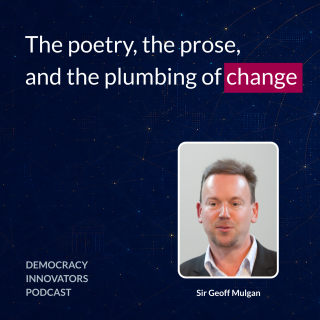
Alessandro Oppo: Welcome to another episode of the Democracy Innovator podcast, and our guest of today is sir Jeff... Jov Volkan.
Download transcript (.srt)
0:00
0:07
0:10
0:15
0:24
0:28
0:35
0:36
0:42
0:44
0:47
0:50
0:52
0:53
0:58
1:02
1:03
1:04
1:08
1:10
1:12
1:16
1:23
1:24
1:26
1:28
1:30
1:33
1:35
1:36
1:39
1:42
1:44
1:47
1:49
1:50
1:52
1:54
1:59
2:05
2:07
2:10
2:15
2:17
2:19
2:27
2:28
2:33
2:34
2:36
2:39
2:40
2:42
2:43
2:47
2:49
2:52
2:53
2:55
3:00
3:05
3:07
3:09
3:11
3:12
3:14
3:16
3:19
3:20
3:22
3:29
3:32
3:35
3:37
3:38
3:40
3:43
3:45
3:46
3:50
3:55
3:57
3:58
4:01
4:03
4:06
4:07
4:10
4:13
4:15
4:17
4:20
4:22
4:25
4:31
4:34
4:35
4:38
4:43
4:47
4:49
4:57
5:02
5:04
5:07
5:12
5:14
5:16
5:17
5:19
5:23
5:24
5:28
5:30
5:31
5:39
5:41
5:44
5:45
5:47
5:49
5:55
5:58
5:59
6:02
6:06
6:08
6:15
6:17
6:19
6:21
6:24
6:33
6:35
6:38
6:45
6:50
6:51
6:55
6:56
6:57
7:00
7:03
7:06
7:07
7:10
7:11
7:12
7:21
7:24
7:28
7:31
7:34
7:37
7:38
7:42
7:44
7:49
7:51
7:52
7:54
7:56
7:58
8:00
8:01
8:03
8:04
8:06
8:11
8:14
8:16
8:18
8:20
8:23
8:24
8:27
8:34
8:44
8:48
8:50
8:56
8:57
9:00
9:05
9:08
9:14
9:17
9:20
9:24
9:26
9:34
9:34
9:37
9:39
9:40
9:43
9:45
9:52
9:53
9:55
9:58
9:59
10:03
10:08
10:11
10:12
10:14
10:16
10:18
10:19
10:20
10:23
10:25
10:31
10:34
10:35
10:37
10:41
10:44
10:45
10:48
10:49
10:52
10:53
10:56
11:00
11:06
11:08
11:11
11:14
11:18
11:20
11:25
11:29
11:30
11:35
11:44
11:48
11:50
11:52
11:56
12:01
12:05
12:10
12:12
12:16
12:17
12:20
12:26
12:27
12:29
12:31
12:33
12:34
12:40
12:41
12:45
12:47
12:49
12:56
13:00
13:04
13:08
13:10
13:15
13:18
13:21
13:23
13:30
13:31
13:36
13:39
13:40
13:42
13:45
13:53
13:56
14:00
14:02
14:08
14:13
14:15
14:16
14:19
14:22
14:23
14:27
14:27
14:28
14:30
14:32
14:33
14:39
14:41
14:43
14:49
14:51
14:57
14:59
15:01
15:05
15:08
15:11
15:15
15:17
15:20
15:25
15:27
15:28
15:30
15:32
15:39
15:44
15:46
15:48
15:49
15:53
15:56
15:57
16:00
16:04
16:07
16:11
16:14
16:16
16:18
16:20
16:24
16:26
16:27
16:30
16:35
16:37
16:39
16:47
16:51
16:53
16:58
16:59
17:03
17:08
17:09
17:12
17:14
17:16
17:21
17:22
17:25
17:32
17:33
17:37
17:38
17:39
17:41
17:43
17:45
17:47
17:51
17:53
17:55
17:56
17:58
18:00
18:02
18:04
18:07
18:10
18:13
18:18
18:22
18:24
18:26
18:29
18:32
18:35
18:43
18:44
18:47
18:54
19:01
19:05
19:07
19:09
19:10
19:11
19:13
19:16
19:19
19:20
19:24
19:27
19:30
19:34
19:37
19:42
19:44
19:47
19:51
19:54
19:55
19:57
19:59
20:02
20:06
20:09
20:10
20:13
20:14
20:17
20:25
20:27
20:28
20:30
20:34
20:37
20:41
20:43
20:44
20:46
20:48
20:49
20:52
20:55
21:00
21:02
21:07
21:12
21:14
21:16
21:21
21:28
21:30
21:31
21:33
21:34
21:39
21:41
21:46
21:47
21:48
21:49
21:55
21:58
22:02
22:03
22:04
22:07
22:12
22:16
22:18
22:19
22:20
22:22
22:24
22:34
22:36
22:41
22:45
22:50
22:53
22:55
22:57
23:02
23:06
23:11
23:13
23:15
23:18
23:21
23:25
23:30
23:33
23:36
23:38
23:43
23:45
23:50
23:52
23:54
23:59
24:02
24:05
24:09
24:10
24:11
24:14
24:15
24:17
24:19
24:21
24:24
24:27
24:28
24:29
24:31
24:32
24:35
24:37
24:38
24:38
24:39
24:41
24:45
24:48
24:49
24:53
24:54
25:02
25:05
25:08
25:12
25:14
25:17
25:21
25:22
25:24
25:26
25:29
25:30
25:31
25:33
25:36
25:41
25:43
25:46
25:47
25:49
25:53
25:55
25:57
25:58
26:04
26:07
26:11
26:14
26:15
26:20
26:23
26:25
26:26
26:28
26:29
26:35
26:38
26:39
26:42
26:47
26:50
26:56
26:57
26:59
27:01
27:03
27:04
27:05
27:10
27:11
27:13
27:15
27:17
27:20
27:21
27:23
27:26
27:28
27:30
27:35
27:38
27:43
27:44
27:46
27:48
27:49
27:51
27:53
27:57
27:58
28:04
28:06
28:08
28:11
28:14
28:21
28:23
28:24
28:28
28:29
28:30
28:32
28:34
28:36
28:40
28:43
28:47
28:52
28:55
28:59
29:02
29:04
29:07
29:11
29:12
29:15
29:21
29:23
29:26
29:29
29:34
29:39
29:41
29:43
29:44
29:45
29:47
29:48
29:52
29:53
29:57
30:05
30:06
30:08
30:11
30:12
30:14
30:18
30:20
30:24
30:27
30:31
30:33
30:37
30:39
30:45
30:46
30:48
30:51
30:54
30:56
30:59
31:07
31:12
31:14
31:15
31:20
31:28
31:35
31:38
31:45
31:46
31:50
31:52
31:55
32:00
32:02
32:03
32:05
32:09
32:12
32:15
32:17
32:20
32:22
32:25
32:26
32:27
32:29
32:32
32:33
32:36
32:42
32:50
32:55
33:02
33:04
33:11
33:13
33:16
33:17
33:21
33:23
33:25
33:26
33:30
33:32
33:39
33:41
33:43
33:46
33:50
33:55
34:02
34:04
34:06
34:07
34:14
34:21
34:24
34:27
34:33
34:34
34:39
34:41
34:46
34:53
34:56
35:00
35:03
35:07
35:09
35:11
35:14
35:15
35:18
35:20
35:23
35:26
35:27
35:30
35:31
35:37
35:39
35:45
35:46
35:50
35:54
35:57
36:00
36:05
36:10
36:14
36:16
36:17
36:21
36:25
36:29
36:33
36:35
36:38
36:40
36:45
36:48
36:49
36:51
36:53
36:54
36:56
36:59
37:02
37:05
37:11
37:16
37:20
37:23
37:24
37:25
37:26
37:29
37:31
37:35
37:39
37:44
37:46
37:50
37:53
37:54
37:55
37:56
38:00
38:02
38:03
38:05
38:11
38:13
38:16
38:17
38:22
38:23
38:27
38:29
38:31
38:34
38:39
38:40
38:42
38:48
38:51
38:54
38:59
39:01
39:05
39:07
39:08
39:11
39:14
39:18
39:23
39:27
39:31
39:34
39:38
39:44
39:46
39:49
39:53
39:57
40:01
40:06
40:10
40:17
40:22
40:26
40:32
40:37
40:40
40:43
40:46
40:49
40:50
40:54
40:57
41:00
41:02
41:03
41:05
41:07
41:09
41:11
41:13
41:16
41:18
41:19
41:21
41:25
41:28
41:31
41:34
41:39
41:42
41:43
41:46
41:53
41:55
41:58
42:01
42:02
42:04
42:09
42:11
42:14
42:17
42:18
42:22
42:24
42:25
42:27
42:29
42:32
42:36
42:39
42:41
42:43
42:44
42:46
42:49
42:51
42:52
42:53
42:54
42:56
42:58
43:00
43:04
43:06
43:08
43:10
43:12
43:13
43:17
43:19
43:23
43:26
43:31
43:32
43:33
43:35
43:40
43:41
43:44
43:45
43:47
43:49
43:51
43:56
44:01
44:06
44:08
44:10
44:14
44:18
44:20
44:23
44:24
44:27
44:28
44:31
44:38
44:42
44:46
44:50
44:53
45:00
45:02
45:03
45:04
45:05
45:07
45:09
45:10
45:15
45:18
45:23
45:30
45:31
45:34
45:39
45:42
45:46
45:48
45:53
45:56
45:59
46:03
46:06
46:09
46:15
46:16
46:22
46:24
46:28
46:29
46:31
46:36
46:38
46:42
46:45
46:47
46:51
46:53
46:58
47:03
47:07
47:09
47:12
47:14
47:19
47:21
47:23
47:24
47:26
47:30
47:33
47:34
47:35
47:38
47:40
47:46
47:51
47:53
47:59
48:05
48:07
48:13
48:15
48:22
48:26
48:28
48:30
48:31
48:33
48:36
48:37
48:40
48:42
48:48
48:50
48:52
48:54
48:57
49:04
49:11
Alessandro Oppo: And thank you for your time and for being here.
Sir Geoff Mulgan: Thank you, Alessandro, for having me. And
Alessandro Oppo: the first question is if you can maybe say something about you. I know that you have worked on many things and...
Alessandro Oppo: But, yeah, if you can give
Alessandro Oppo: an overview of what you worked on and maybe what are you working on, and maybe your personal background also could be
interesting.
Sir Geoff Mulgan: Yeah. And first of all, we should say we are having this conversation on quite a good day for democracy.
Sir Geoff Mulgan: Brazil
Sir Geoff Mulgan: went a different way from many expected.
Sir Geoff Mulgan: The students in Serbia overthrew a
Sir Geoff Mulgan: strong man.
Sir Geoff Mulgan: And
Sir Geoff Mulgan: so this is a time... Sometimes it looks like democracy is in a very bad way,
Sir Geoff Mulgan: but this is one of the so far one of the better weeks.
Sir Geoff Mulgan: So my background,
Sir Geoff Mulgan: I
Sir Geoff Mulgan: was very much a political activist as a teenager.
Sir Geoff Mulgan: I then became involved
Sir Geoff Mulgan: in technology at MIT.
Sir Geoff Mulgan: I did a PhD on networks and so on.
Sir Geoff Mulgan: And I guess that's what first got me interested in what we're gonna be talking about. I was running a think tank
in the nineties called Demos
Sir Geoff Mulgan: in London,
Sir Geoff Mulgan: and I published a survey
Sir Geoff Mulgan: on how democracy
Sir Geoff Mulgan: could use technologies to transform itself,
Sir Geoff Mulgan: to get back to sortition,
Sir Geoff Mulgan: the models of
Sir Geoff Mulgan: Athens, new ways of mobilizing
Sir Geoff Mulgan: the collective intelligence of society. It seemed obvious
Sir Geoff Mulgan: then thirty years ago
Sir Geoff Mulgan: that our democracy had really frozen
Sir Geoff Mulgan: in nineteenth century forms,
Sir Geoff Mulgan: the parliament,
Sir Geoff Mulgan: periodic elections,
Sir Geoff Mulgan: parties with lists.
Sir Geoff Mulgan: There's nothing wrong with that, but that's not the only way you can organize democracy.
Sir Geoff Mulgan: And in some ways, it's a bit amazing to me thirty years later, we're still having some very similar
Sir Geoff Mulgan: conversations.
Sir Geoff Mulgan: In the interim, I've worked in many governments.
Sir Geoff Mulgan: In the UK government, I ran the strategy function. I was head of policy
Sir Geoff Mulgan: in the prime minister's office.
Sir Geoff Mulgan: I've run foundations
Sir Geoff Mulgan: and in at least one of them, Nesta, we we oversaw quite a big program across Europe of democratic innovations,
Sir Geoff Mulgan: working with
Sir Geoff Mulgan: Barcelona and Amsterdam and others, and also with the political parties
Sir Geoff Mulgan: experimenting
Sir Geoff Mulgan: with liquid democracy.
Sir Geoff Mulgan: And I guess I've had some involvement in
Sir Geoff Mulgan: citizens'
Sir Geoff Mulgan: juries, citizens' assemblies,
Sir Geoff Mulgan: the various
Sir Geoff Mulgan: devices of of democracy for several decades.
Sir Geoff Mulgan: And,
Sir Geoff Mulgan: which I hope leaves me both an enthusiast
Sir Geoff Mulgan: for innovation,
Sir Geoff Mulgan: but also sometimes skeptical
Sir Geoff Mulgan: of anyone who believes that a single new idea is the answer to everything.
Sir Geoff Mulgan: And I've more and more become convinced democracy is quite a a complex ecosystem
Sir Geoff Mulgan: of many elements,
Sir Geoff Mulgan: all of which need
Sir Geoff Mulgan: innovation and reform.
Sir Geoff Mulgan: But
Sir Geoff Mulgan: none of us should overestimate
Sir Geoff Mulgan: how much any single
Sir Geoff Mulgan: change, whether it's to voting systems
Sir Geoff Mulgan: or citizens' assemblies
Sir Geoff Mulgan: or participatory budgeting,
Sir Geoff Mulgan: none of these on its own is gonna be the answer to everything.
Alessandro Oppo: Sure. And and also I see a
Alessandro Oppo: sort of tension between,
Alessandro Oppo: let's say, experimenting
Alessandro Oppo: in the
Alessandro Oppo: democratic field
Alessandro Oppo: and also having some stability in the sociopolitical
Alessandro Oppo: system
Alessandro Oppo: and how
Alessandro Oppo: to, let's say, have experiment,
Alessandro Oppo: but still that kind of stability so that we do not pass, let's say, from day to night
Alessandro Oppo: to another
Alessandro Oppo: system.
Sir Geoff Mulgan: Yeah. No. I think it's very important that
Sir Geoff Mulgan: constitutions
Sir Geoff Mulgan: and governance systems should be legible to people.
Sir Geoff Mulgan: They should understand
Sir Geoff Mulgan: how is power used,
Sir Geoff Mulgan: and that requires a degree of stability.
Sir Geoff Mulgan: And a whole set of institutions
Sir Geoff Mulgan: and social norms and habits
Sir Geoff Mulgan: grow up around
Sir Geoff Mulgan: a democratic system,
Sir Geoff Mulgan: and it's very dangerous to change everything overnight
Sir Geoff Mulgan: to, you know, to get... If if we got rid of all parties and elections and parliaments tomorrow,
Sir Geoff Mulgan: that would be a complete disaster.
Sir Geoff Mulgan: And I think some,
Sir Geoff Mulgan: you know, reformers in the past
Sir Geoff Mulgan: seem to be recommending that in the sixties. It was push button democracy.
Sir Geoff Mulgan: Permanent referendum was thought to be a good idea.
Sir Geoff Mulgan: It always never is a good idea.
Sir Geoff Mulgan: More recently, some have thought that, you know, AI enabled or digitally enabled democracy can simply get rid of everything else.
Sir Geoff Mulgan: I I have a much more evolutionary view of how change should happen,
Sir Geoff Mulgan: that we need to build up
Sir Geoff Mulgan: new types of democracy like
Sir Geoff Mulgan: participatory budgeting at a local level or like the use of citizens assemblies
Sir Geoff Mulgan: for big moral questions
Sir Geoff Mulgan: or new ways of enhancing
Sir Geoff Mulgan: parliaments
Sir Geoff Mulgan: with citizen input.
Sir Geoff Mulgan: And let's grow these over time so they become more normal
Sir Geoff Mulgan: and more understood
Sir Geoff Mulgan: and more legible to the public rather than
Sir Geoff Mulgan: sudden revolutionary
Sir Geoff Mulgan: breaks,
Sir Geoff Mulgan: which have never worked well in the last two hundred years and probably won't in the next two hundred either.
Alessandro Oppo: And you
Alessandro Oppo: have written recently a paper that...
Alessandro Oppo: In the name as also
Alessandro Oppo: work in progress.
Sir Geoff Mulgan: Mhmm.
Alessandro Oppo: And if you like to tell us something, because it's also very related to
Alessandro Oppo: what we we are talking about.
Alessandro Oppo: So
Sir Geoff Mulgan: Yeah. So in in the paper, we start off
Sir Geoff Mulgan: by looking at all the many ways democracy is under attack
Sir Geoff Mulgan: and in crisis.
Sir Geoff Mulgan: I'm afraid there are many, many signs of that. It's not just the rise of autocrats all over the world from
Sir Geoff Mulgan: Russia to
Sir Geoff Mulgan: to Iran to,
Sir Geoff Mulgan: South America.
Sir Geoff Mulgan: The Bolsonaro luckily left.
Sir Geoff Mulgan: But also there's a declining confidence in democracy with each generation. If you survey people in Europe and North America,
Sir Geoff Mulgan: each new generation
Sir Geoff Mulgan: has less confidence in democracy as a system,
Sir Geoff Mulgan: which is why there's large groups who quite like the idea of an autocratic leader who will cut through,
Sir Geoff Mulgan: the problems and the constraints and just fix stuff.
Sir Geoff Mulgan: And then
Sir Geoff Mulgan: in some countries, there's been a weakening of some of the
Sir Geoff Mulgan: underlying substrates
Sir Geoff Mulgan: of democracy,
Sir Geoff Mulgan: the habits of decision making, the habits
Sir Geoff Mulgan: of mutual trust. And we talk
Sir Geoff Mulgan: quite a lot in the paper about this relational,
Sir Geoff Mulgan: foundation
Sir Geoff Mulgan: of democracy, which is sometimes ignored,
Sir Geoff Mulgan: but is
Sir Geoff Mulgan: really, really important
Sir Geoff Mulgan: that you actually have the ability to cooperate with your fellow citizens. And The US is an extreme example at the moment
where now about half of all Americans
Sir Geoff Mulgan: think their fellow Americans are bad, are morally evil.
Sir Geoff Mulgan: And if you have that kind of distrust,
Sir Geoff Mulgan: it's very hard to have democracy functioning.
Sir Geoff Mulgan: We then look at the extraordinary
Sir Geoff Mulgan: proliferation
Sir Geoff Mulgan: of innovation around the world. There are various,
Sir Geoff Mulgan: repositories or
Sir Geoff Mulgan: maps of these innovations showing thousands and thousands of experiments
Sir Geoff Mulgan: get with budgeting
Sir Geoff Mulgan: or assemblies
Sir Geoff Mulgan: or digital,
Sir Geoff Mulgan: which are increasingly being
Sir Geoff Mulgan: being surveyed
Sir Geoff Mulgan: and analyzed,
Sir Geoff Mulgan: citizen juries,
Sir Geoff Mulgan: deliberative polls.
Sir Geoff Mulgan: There's many,
Sir Geoff Mulgan: many using AI
Sir Geoff Mulgan: like police to try and help group think and deliberate.
Sir Geoff Mulgan: And what we've tried then to do in the paper
Sir Geoff Mulgan: is in some ways a very simple idea,
Sir Geoff Mulgan: going back to your previous
Sir Geoff Mulgan: question,
Sir Geoff Mulgan: is let's not aim for a single big bang
Sir Geoff Mulgan: constitutional
Sir Geoff Mulgan: rupture where we change everything overnight.
Sir Geoff Mulgan: But let's use the analogy of what the world has done on climate change and net zero,
Sir Geoff Mulgan: where many, many countries, many cities, and many businesses around the world have developed ten, twenty, thirty year road maps
Sir Geoff Mulgan: to how they move from an entirely carbon based economy
Sir Geoff Mulgan: to a post carbon economy.
Sir Geoff Mulgan: And it involves lots of different things. You have to change your buildings, your transport,
Sir Geoff Mulgan: your energy.
Sir Geoff Mulgan: You can't do that overnight. It takes time.
Sir Geoff Mulgan: But if you have a ten, twenty, thirty year road map, you can transform
Sir Geoff Mulgan: your system very profoundly,
Sir Geoff Mulgan: and so long as everyone is bought into it. And I think we need something very similar for democracy.
Sir Geoff Mulgan: I haven't seen that done anywhere in the world,
Sir Geoff Mulgan: an equivalent to the net zero roadmap,
Sir Geoff Mulgan: which shows how to evolve these new tools,
Sir Geoff Mulgan: over time.
Sir Geoff Mulgan: And in a way, the single most important idea there is what we put in the title. We call this work in
progress.
Sir Geoff Mulgan: And this simple idea is that democracy
Sir Geoff Mulgan: is never finished.
Sir Geoff Mulgan: It's always
Sir Geoff Mulgan: something living, something which has to,
Sir Geoff Mulgan: to evolve.
Sir Geoff Mulgan: And the opposite idea, which is quite common in America amongst some constitutional
Sir Geoff Mulgan: scholars,
Sir Geoff Mulgan: believe the constitution
Sir Geoff Mulgan: was defined in the seventeen seventies and eighties
Sir Geoff Mulgan: and
Sir Geoff Mulgan: should be seen as fixed in stone like a sacred book,
Sir Geoff Mulgan: which you have to try and work out what did they intend in 1776,
Sir Geoff Mulgan: and that should then guide decisions
Sir Geoff Mulgan: in 2026.
Sir Geoff Mulgan: To me, this is insane.
Sir Geoff Mulgan: This is an extreme,
Sir Geoff Mulgan: sort of misunderstanding
Sir Geoff Mulgan: of how democracy
Sir Geoff Mulgan: should work,
Sir Geoff Mulgan: which is much more as a a valued possession,
Sir Geoff Mulgan: something we care about,
Sir Geoff Mulgan: but we are guard... And we are guardians of, something which is always a work in progress
Sir Geoff Mulgan: needing to be adapted to new technologies,
Sir Geoff Mulgan: new tools,
Sir Geoff Mulgan: but also new tasks
Sir Geoff Mulgan: like like climate change or governance of AI,
Sir Geoff Mulgan: which was not in the mind of
Sir Geoff Mulgan: democratic
Sir Geoff Mulgan: designers in 1890
Sir Geoff Mulgan: or 1780.
Sir Geoff Mulgan: And so, obviously, the answers will be different
Sir Geoff Mulgan: now.
Sir Geoff Mulgan: So I hope in this paper,
Sir Geoff Mulgan: which is quite long and has a lot of references,
Sir Geoff Mulgan: its aim is really just to give a framework for thinking of democracy as an assembly of multiple elements,
Sir Geoff Mulgan: as a work in progress,
Sir Geoff Mulgan: and as a learning system,
Sir Geoff Mulgan: as an alternative both to the extreme conservatism,
Sir Geoff Mulgan: which says nothing can be improved, nothing can be changed,
Sir Geoff Mulgan: but also the opposite view,
Sir Geoff Mulgan: which says that if only we replaced everything perhaps with sortition,
Sir Geoff Mulgan: you know, then democracy would would be perfect.
Sir Geoff Mulgan: And I'm skeptical
Sir Geoff Mulgan: of both extremes.
Alessandro Oppo: And the road map is very interesting because it is true that a of a lot of time I see that
Alessandro Oppo: a lot of different possibilities using tools, using sortation,
Alessandro Oppo: using other different
Alessandro Oppo: ways in relation,
Alessandro Oppo: not just representative democracy,
Alessandro Oppo: But then it's very hard to give a sort of timeline, a sort of roadmap.
Alessandro Oppo: And I was thinking that in the past we had some interesting experiment
Alessandro Oppo: also in relation to political parties, the Five Star Movement, Podemos.
Alessandro Oppo: And
Alessandro Oppo: yeah. I wonder what could be a sort of roadmap
Alessandro Oppo: that
Alessandro Oppo: is very hard to say, like in ten years we will have this,
Alessandro Oppo: I don't know, political system or the other one.
Alessandro Oppo: But maybe
Alessandro Oppo: it could be also
Alessandro Oppo: that sort of
Alessandro Oppo: collective intelligence
Alessandro Oppo: process.
Alessandro Oppo: So when there may be something that works in The UK, could work also in Italy.
Alessandro Oppo: Yeah.
Alessandro Oppo: What are your thoughts about
Sir Geoff Mulgan: these? So in paper,
Sir Geoff Mulgan: we say that we need roadmaps.
Sir Geoff Mulgan: We don't describe a particular roadmap for a particular place. We don't say in five years' time in Milan, this is what
you should be doing. But this is the parallel with net zero.
Sir Geoff Mulgan: Each nation, each city has to design its own road map,
Sir Geoff Mulgan: but often using some common elements and some
Sir Geoff Mulgan: common ideas.
Sir Geoff Mulgan: As you say, there are lots of different ways you can organize political parties.
Sir Geoff Mulgan: Cinque Estella in Italy
Sir Geoff Mulgan: experimented with various things. Podemos did
Sir Geoff Mulgan: the pirate party.
Sir Geoff Mulgan: And in the paper, we look at team Mirai in Japan this year, which has done interesting things using
Sir Geoff Mulgan: AI.
Sir Geoff Mulgan: Now none of these are perfect because there will always be a tension between
Sir Geoff Mulgan: the members of the party, the most enthusiastic
Sir Geoff Mulgan: people,
Sir Geoff Mulgan: and maybe the wider public
Sir Geoff Mulgan: who may have different interests and views.
Sir Geoff Mulgan: So on its own, transforming the parties is not is one part of a road map, but not everything.
Sir Geoff Mulgan: Similarly, I think there are many ways parliaments
Sir Geoff Mulgan: could be doing much more to use citizen collective intelligence
Sir Geoff Mulgan: than they do now
Sir Geoff Mulgan: as a matter of course. And I think that could be quite easy for any parliamentary committee
Sir Geoff Mulgan: to open up to tens of thousands or hundreds of thousands of people
Sir Geoff Mulgan: to offer commentary,
Sir Geoff Mulgan: ideas,
Sir Geoff Mulgan: and so on, and then use AI
Sir Geoff Mulgan: to analyze those, to group them.
Sir Geoff Mulgan: This this
Sir Geoff Mulgan: should be part of the working process of any
Sir Geoff Mulgan: elected
Sir Geoff Mulgan: parliament,
Sir Geoff Mulgan: city assembly,
Sir Geoff Mulgan: regional government
Sir Geoff Mulgan: right now.
Sir Geoff Mulgan: And then I think the road map probably will need some use of, say, things like
Sir Geoff Mulgan: citizens assemblies
Sir Geoff Mulgan: for big strategic questions,
Sir Geoff Mulgan: for big moral questions like assisted dying, which was the assembly in
Sir Geoff Mulgan: in France last year.
Sir Geoff Mulgan: There are probably better ways of coming to good decisions than just traditional
Sir Geoff Mulgan: party politics.
Sir Geoff Mulgan: And then PB, participatory budgeting,
Sir Geoff Mulgan: we now have hundreds of examples around the world.
Sir Geoff Mulgan: It works pretty well at a local level
Sir Geoff Mulgan: for decisions on public spaces.
Sir Geoff Mulgan: Paris has had a pretty good ten years using it for,
Sir Geoff Mulgan: about a €100,000,000
Sir Geoff Mulgan: a year and also letting school kids
Sir Geoff Mulgan: have a bit of that money to to to learn the habits of democracy.
Sir Geoff Mulgan: So these are all different
Sir Geoff Mulgan: blocks. It's like a mosaic
Sir Geoff Mulgan: or an assembly.
Sir Geoff Mulgan: But you can imagine
Sir Geoff Mulgan: Italy or Milan or Naples having some kind of roadmap to say, let's try this one out in 2027,
Sir Geoff Mulgan: and maybe let's prepare the way for some other ones in 2030.
Sir Geoff Mulgan: But always with the goal
Sir Geoff Mulgan: that together,
Sir Geoff Mulgan: these make citizens
Sir Geoff Mulgan: feel they have more control, more say
Sir Geoff Mulgan: over the decisions made in
Sir Geoff Mulgan: their name,
Sir Geoff Mulgan: but also that the governing system
Sir Geoff Mulgan: is better able to make use of collective intelligence.
Sir Geoff Mulgan: And one of the the data points,
Sir Geoff Mulgan: which I've just been looking at this this week actually,
Sir Geoff Mulgan: is nearly half of people across Europe
Sir Geoff Mulgan: don't think they are represented
Sir Geoff Mulgan: by their representatives.
Sir Geoff Mulgan: So representative democracy
Sir Geoff Mulgan: depends on the idea that you feel represented
Sir Geoff Mulgan: by a political party.
Sir Geoff Mulgan: And at the moment,
Sir Geoff Mulgan: right across the Western world,
Sir Geoff Mulgan: a large minority and sometimes even a majority no longer feel
Sir Geoff Mulgan: adequately represented
Sir Geoff Mulgan: by the existing political parties.
Sir Geoff Mulgan: So we have to reform democracy in a way which gives people a feeling of agency, a feeling of control
Sir Geoff Mulgan: and power. And that is, as I the moment missing.
Sir Geoff Mulgan: And the danger is when that's missing,
Sir Geoff Mulgan: people are probably more likely either to switch off entirely
Sir Geoff Mulgan: or
Sir Geoff Mulgan: to lurch to the opposite extreme and look to an autocratic leader
Sir Geoff Mulgan: to fix everything for them.
Alessandro Oppo: Yeah.
Alessandro Oppo: Make me think about
Alessandro Oppo: the Genetic State Initiative,
Alessandro Oppo: where they say basically
Alessandro Oppo: the state is quite slow compared
Alessandro Oppo: to companies.
Alessandro Oppo: And so people also...
Alessandro Oppo: Basically, if the state will not become fast as, let's say private companies,
Alessandro Oppo: the state,
Alessandro Oppo: I mean, citizen will trust more companies than the state.
Alessandro Oppo: I
Alessandro Oppo: I
Alessandro Oppo: didn't
Alessandro Oppo: explain it in the best way,
Alessandro Oppo: but I think this was interesting
Alessandro Oppo: as a concept.
Alessandro Oppo: And then I wanted to ask you if you think that
Alessandro Oppo: something
Alessandro Oppo: like
Alessandro Oppo: Tim Mirai
Alessandro Oppo: could happen in
Alessandro Oppo: Europe?
Alessandro Oppo: Because I see,
Alessandro Oppo: as an example, the
Alessandro Oppo: five star movement
Alessandro Oppo: and Podemos, they,
Alessandro Oppo: I mean, they didn't change the institution.
Alessandro Oppo: They did a sort of, let's say, private experiment
Alessandro Oppo: inside the party. And so I was wondering between these,
Alessandro Oppo: let's say,
Alessandro Oppo: experiment and innovation
Alessandro Oppo: inside political parties or inside the institutions
Alessandro Oppo: that is
Alessandro Oppo: maybe it's a different kind of approach.
Sir Geoff Mulgan: It is. And Team Mirai, one of the things they did this year in some ways is quite simple, using AI
Sir Geoff Mulgan: chatbots
Sir Geoff Mulgan: to talk to people, then to gather ideas,
Sir Geoff Mulgan: and then to synthesize them. I think I could easily imagine many political parties doing a version of that.
Sir Geoff Mulgan: They'd be very unwise if they turn that directly into their platform or their manifesto.
Sir Geoff Mulgan: I think you still need humans to make use their judgment to decide
Sir Geoff Mulgan: how to synthesize
Sir Geoff Mulgan: ideas into a coherent
Sir Geoff Mulgan: form.
Sir Geoff Mulgan: Pure liquid democracy,
Sir Geoff Mulgan: I'm quite skeptical of.
Sir Geoff Mulgan: I never thought that was very smart,
Sir Geoff Mulgan: but it... But in combination
Sir Geoff Mulgan: with,
Sir Geoff Mulgan: yeah, a party leadership who are elected,
Sir Geoff Mulgan: it can work well in opening
Sir Geoff Mulgan: things up. And as you say, that's outside the formal system,
Sir Geoff Mulgan: and that's different from how decisions are then made within
Sir Geoff Mulgan: the state or within parliaments.
Sir Geoff Mulgan: And here the agentic move, which you mentioned, is very, obviously, very interesting.
Sir Geoff Mulgan: So we have enormous
Sir Geoff Mulgan: investment in agents in in business,
Sir Geoff Mulgan: a trillion dollars probably this year at least being invested.
Sir Geoff Mulgan: Governments have been very slow to develop
Sir Geoff Mulgan: agentic
Sir Geoff Mulgan: state ideas,
Sir Geoff Mulgan: though there are many examples
Sir Geoff Mulgan: of how you can use agents to
Sir Geoff Mulgan: handle problem solving or to deal with
Sir Geoff Mulgan: requests and so on.
Sir Geoff Mulgan: I've long been
Sir Geoff Mulgan: arg... I've argued for
Sir Geoff Mulgan: governments providing
Sir Geoff Mulgan: citizens with helpful agents
Sir Geoff Mulgan: to guide difficult decisions on issues like health or pensions or work. I still think this is what the public services
Sir Geoff Mulgan: of the future
Sir Geoff Mulgan: should look more
Sir Geoff Mulgan: agentic.
Sir Geoff Mulgan: But many of the advocates of the agentic state didn't quite notice,
Sir Geoff Mulgan: and maybe it's very obvious now,
Sir Geoff Mulgan: that agents in the hands of citizens and businesses
Sir Geoff Mulgan: will overwhelm governments
Sir Geoff Mulgan: as they
Sir Geoff Mulgan: make claims for payments,
Sir Geoff Mulgan: as they challenge
Sir Geoff Mulgan: decisions.
Sir Geoff Mulgan: It's called this agentic flooding is a very live
Sir Geoff Mulgan: problem in many countries.
Sir Geoff Mulgan: And then states try to develop their own agents to counter the agentic flooding
Sir Geoff Mulgan: or to triage
Sir Geoff Mulgan: and so on. And it's fascinating. Even two years ago, the advocates of the agentic state
Sir Geoff Mulgan: almost completely missed what was in fact the biggest,
Sir Geoff Mulgan: you know, change of ubiquitous
Sir Geoff Mulgan: agents.
Sir Geoff Mulgan: And in a way, that's just a reminder we are in a period of such rapid technological change
Sir Geoff Mulgan: that I can't predict where we will be in even one or two years time. And that's why we need our systems
to have extraordinary agility
Sir Geoff Mulgan: to respond
Sir Geoff Mulgan: to unforeseen
Sir Geoff Mulgan: problems
Sir Geoff Mulgan: as well as to have a degree of stability at their core,
Sir Geoff Mulgan: as you said earlier.
Sir Geoff Mulgan: And that's why every state needs a very strong AI,
Sir Geoff Mulgan: competent
Sir Geoff Mulgan: capability
Sir Geoff Mulgan: right at its heart
Sir Geoff Mulgan: to make sense of things like the arms race of agentic citizens of the agentic state,
Sir Geoff Mulgan: all the problems of safety,
Sir Geoff Mulgan: which are now obviously so visible with OpenAI
Sir Geoff Mulgan: and
Sir Geoff Mulgan: and others,
Sir Geoff Mulgan: all the problems of vulnerability.
Sir Geoff Mulgan: So in The UK last week, you know, many of our utilities and banks
Sir Geoff Mulgan: stopped functioning because of a cyber problem in a single
Sir Geoff Mulgan: data center.
Sir Geoff Mulgan: So we have new
Sir Geoff Mulgan: vulnerabilities
Sir Geoff Mulgan: in our systems,
Sir Geoff Mulgan: which, again,
Sir Geoff Mulgan: were probably not so visible to the more optimistic views of an agentic state two or three years ago.
Alessandro Oppo: Yeah. I was thinking about...
Alessandro Oppo: It's very true that everything is is evolving so fast that,
Alessandro Oppo: I mean, nowadays, it's possible to do what it would with AI,
Alessandro Oppo: what it was possible to do maybe one year ago in one week,
Alessandro Oppo: and maybe one year before in one month.
Alessandro Oppo: And
Alessandro Oppo: so I also have some
Alessandro Oppo: difficulty in imaging the future
Alessandro Oppo: because there could be an AI that is so smart,
Alessandro Oppo: also you will know Harari, the Israeli historian,
Alessandro Oppo: was talking about
Alessandro Oppo: AI in the future will be so smart,
Alessandro Oppo: and because we are simple humans,
Alessandro Oppo: we will not understand
Alessandro Oppo: maybe some choices that AI could suggest.
Alessandro Oppo: And so another things that I think it's very important is to,
Alessandro Oppo: let's say, to avoid the black box black box
Alessandro Oppo: concept so that everything is
Alessandro Oppo: explainable.
Alessandro Oppo: And
Alessandro Oppo: and... Yeah. Because
Alessandro Oppo: you said it is very hard to to give a sort of
Alessandro Oppo: roadmap or
Alessandro Oppo: timeline because we
Alessandro Oppo: don't know what it will happen in a couple of years.
Alessandro Oppo: But I wonder
Alessandro Oppo: if you have, let's say,
Alessandro Oppo: a sort of desire of how it could go
Alessandro Oppo: maybe.
Alessandro Oppo: Or
Sir Geoff Mulgan: I think with any road map,
Sir Geoff Mulgan: it needs...
Sir Geoff Mulgan: You set out your direction
Sir Geoff Mulgan: and your targets and your milestones,
Sir Geoff Mulgan: but you know you'll have to change it.
Sir Geoff Mulgan: Nothing is ever perfectly predictable.
Sir Geoff Mulgan: So I think it's feasible to have a road map
Sir Geoff Mulgan: and to recognize
Sir Geoff Mulgan: technology
Sir Geoff Mulgan: will change, geopolitics
Sir Geoff Mulgan: will change,
Sir Geoff Mulgan: and you'll have to adapt it. They are not alternatives.
Sir Geoff Mulgan: You can have both
Sir Geoff Mulgan: direction,
Sir Geoff Mulgan: strategy,
Sir Geoff Mulgan: and
Sir Geoff Mulgan: agility.
Sir Geoff Mulgan: And let me give you just two or three examples. So you mentioned
Sir Geoff Mulgan: the black box issue with AI.
Sir Geoff Mulgan: I'm...
Sir Geoff Mulgan: The EU has tried to legislate for explainability
Sir Geoff Mulgan: of algorithmic
Sir Geoff Mulgan: decisions, and, clearly, that's a good thing that if you're... A decision is being made about your finance or your job or
your health, that you can understand it.
Sir Geoff Mulgan: But the truth is that so many people
Sir Geoff Mulgan: in the midst of the the frontier labs, they don't really understand
Sir Geoff Mulgan: their own technologies.
Sir Geoff Mulgan: So my my guess is that will become ever more difficult
Sir Geoff Mulgan: to achieve genuine explainability.
Sir Geoff Mulgan: It's desirable,
Sir Geoff Mulgan: but but difficult.
Sir Geoff Mulgan: But what we can do
Sir Geoff Mulgan: maybe more easily is protect ourselves
Sir Geoff Mulgan: from deliberate
Sir Geoff Mulgan: manipulation
Sir Geoff Mulgan: by AI,
Sir Geoff Mulgan: which is trained on all of human psychology.
Sir Geoff Mulgan: So the Brazilian election has been a very interesting case study.
Sir Geoff Mulgan: During the election, an extraordinary
Sir Geoff Mulgan: array of AI generated
Sir Geoff Mulgan: fakes
Sir Geoff Mulgan: spread on Brazilian media.
Sir Geoff Mulgan: Some showed, you know, lula
Sir Geoff Mulgan: hand in hand with various,
Sir Geoff Mulgan: criminal gangs.
Sir Geoff Mulgan: One had a fake
Sir Geoff Mulgan: CNN journalist interviewing Lula where he said he would annul the election if he lost.
Sir Geoff Mulgan: And these were then spread on all the networks,
Sir Geoff Mulgan: And it's quite clear, I think, that Meta
Sir Geoff Mulgan: used its power to favor Bolsonaro
Sir Geoff Mulgan: against Lula,
Sir Geoff Mulgan: perhaps under instruction from the American government. We we don't know.
Sir Geoff Mulgan: So I think we have a very urgent need
Sir Geoff Mulgan: to better protect democracy
Sir Geoff Mulgan: from subversion
Sir Geoff Mulgan: by deepfakes.
Sir Geoff Mulgan: I've
Sir Geoff Mulgan: published quite a detailed design for what we called electoral integrity institutions,
Sir Geoff Mulgan: which could use collective intelligence
Sir Geoff Mulgan: and AI
Sir Geoff Mulgan: to protect elections during
Sir Geoff Mulgan: these periods when a deepfake can circulate very rapidly
Sir Geoff Mulgan: and with huge impact on an election.
Sir Geoff Mulgan: And it worries me that no country yet has an institution with that power
Sir Geoff Mulgan: or that capability.
Sir Geoff Mulgan: So we're very vulnerable
Sir Geoff Mulgan: to AI,
Sir Geoff Mulgan: which is smart about humans
Sir Geoff Mulgan: and can manipulate
Sir Geoff Mulgan: us
Sir Geoff Mulgan: in very dangerous ways. So that's point one. We need our
Sir Geoff Mulgan: democratic
Sir Geoff Mulgan: roadmap has to include
Sir Geoff Mulgan: defenses
Sir Geoff Mulgan: against deliberate subversion,
Sir Geoff Mulgan: some of it from Russia, some from China,
Sir Geoff Mulgan: some from Elon Musk,
Sir Geoff Mulgan: some from Meta,
Sir Geoff Mulgan: you know, for many, many, many people want to use AI
Sir Geoff Mulgan: to distort,
Sir Geoff Mulgan: democracy.
Sir Geoff Mulgan: But then we also need to cultivate the positive side of AI,
Sir Geoff Mulgan: which, again, we set out in this paper
Sir Geoff Mulgan: and show how almost any group from a local community meeting
Sir Geoff Mulgan: to a parliament
Sir Geoff Mulgan: to a national conversation
Sir Geoff Mulgan: can use AI
Sir Geoff Mulgan: to help,
Sir Geoff Mulgan: show relevant knowledge,
Sir Geoff Mulgan: relevant evidence,
Sir Geoff Mulgan: where there may be trade offs between different goals,
Sir Geoff Mulgan: to help translate
Sir Geoff Mulgan: between different groups who may use different terms for the same thing, and to help towards synthesis
Sir Geoff Mulgan: and consensus
Sir Geoff Mulgan: rather than towards polarization.
Sir Geoff Mulgan: So again, this this requires
Sir Geoff Mulgan: action. It requires a road map
Sir Geoff Mulgan: even though the detailed tools may look very different in three years' time or five years' time from,
Sir Geoff Mulgan: in the present.
Sir Geoff Mulgan: Our problem
Sir Geoff Mulgan: is that the trillion or so being invested in AI
Sir Geoff Mulgan: this year
Sir Geoff Mulgan: is being invested
Sir Geoff Mulgan: primarily
Sir Geoff Mulgan: for, obviously, commercial purposes
Sir Geoff Mulgan: or to help advertising.
Sir Geoff Mulgan: Almost none of it is being invested to improve democracy.
Sir Geoff Mulgan: And that's why we risk
Sir Geoff Mulgan: AI advancing much faster as a threat to democracy
Sir Geoff Mulgan: than as an aid to support democracy.
Sir Geoff Mulgan: And
Alessandro Oppo: and what is democracy for you?
Sir Geoff Mulgan: Democracy at its heart is very simple.
Sir Geoff Mulgan: It's ruled by the people.
Sir Geoff Mulgan: And I I think this is part of
Sir Geoff Mulgan: every human community throughout history and prehistory.
Sir Geoff Mulgan: People
Sir Geoff Mulgan: have wanted to have some degree of freedom,
Sir Geoff Mulgan: and there's always been resistance to a single person, usually a man being the chief
Sir Geoff Mulgan: or the king or the emperor.
Sir Geoff Mulgan: And that's why you find versions of democracy
Sir Geoff Mulgan: in every part of the world,
Sir Geoff Mulgan: from Aboriginal Australia we write about to the Amazon,
Sir Geoff Mulgan: to the Buddhist republics of Northern India two thousand years ago, or Persia,
Sir Geoff Mulgan: as well as Greece
Sir Geoff Mulgan: and, the more familiar
Sir Geoff Mulgan: Athenian
Sir Geoff Mulgan: variants.
Sir Geoff Mulgan: So that's the underlying
Sir Geoff Mulgan: desire,
Sir Geoff Mulgan: rule by the people. It's what the word democracy means.
Sir Geoff Mulgan: Its expression
Sir Geoff Mulgan: can take lots of different forms. It can be a
Sir Geoff Mulgan: a council. It could be like in ancient Athens, the, you know, decision by lot. It can be elected parliaments. It can
be,
Sir Geoff Mulgan: you know, municipalities.
Sir Geoff Mulgan: And in the future, it may be everything
Sir Geoff Mulgan: from
Sir Geoff Mulgan: digital parliaments to
Sir Geoff Mulgan: one of the projects I'm involved in now, is the Global
Sir Geoff Mulgan: Citizens Assembly,
Sir Geoff Mulgan: which is a representative sample of the entire world population
Sir Geoff Mulgan: being brought together to deliberate
Sir Geoff Mulgan: on questions like food security,
Sir Geoff Mulgan: climate change, and now AI.
Sir Geoff Mulgan: Now that would never have been in the mind of someone in Athens
Sir Geoff Mulgan: or Northern India,
Sir Geoff Mulgan: but that's what... That is an expression of the idea of democracy,
Sir Geoff Mulgan: but made real
Sir Geoff Mulgan: in the late twenty twenties
Sir Geoff Mulgan: for a very interconnected planet
Sir Geoff Mulgan: where we need new ways as humanity
Sir Geoff Mulgan: to talk with each other,
Sir Geoff Mulgan: to to spot threats, to make decisions,
Sir Geoff Mulgan: and hopefully to solve some of the big challenges like climate instability.
Alessandro Oppo: And I really like the concept of citizen assembly.
Alessandro Oppo: And I was thinking that,
Alessandro Oppo: I mean,
Alessandro Oppo: citizen assembly could happen like in, let's say, the normal way
Alessandro Oppo: or like with some devices that maybe record, transcribe, and help finding maybe some common ground.
Alessandro Oppo: And I was thinking like in the second case, so if we use technology to support the process,
Alessandro Oppo: and then before we say that
Alessandro Oppo: there are a lot of new AI agents because citizens maybe use, I don't know, LGBT,
Alessandro Oppo: Claude, whatever,
Alessandro Oppo: instead of going on the website of an institution.
Alessandro Oppo: And
Alessandro Oppo: soon, but already now there are,
Alessandro Oppo: let's say AI agents from institutions.
Alessandro Oppo: So I wonder,
Alessandro Oppo: because
Alessandro Oppo: citizen assembly
Alessandro Oppo: right now, most of the times are, let's say, organized by
Alessandro Oppo: an association, an institution.
Alessandro Oppo: Usually, are not spontaneous
Alessandro Oppo: or self organized,
Alessandro Oppo: but they see that the technology now
Alessandro Oppo: could allow people,
Alessandro Oppo: let's say, I don't know, I'm part of the young vegetarians
Alessandro Oppo: or young
Alessandro Oppo: Christian.
Alessandro Oppo: I could organize,
Alessandro Oppo: let's say, sitting as an assembly inside my
Alessandro Oppo: community
Alessandro Oppo: or political group.
Alessandro Oppo: And so I wonder like,
Alessandro Oppo: I mean, and this is in way going back to the roadmap that we don't know, we cannot know.
Alessandro Oppo: But do you see the future...
Alessandro Oppo: I don't know. Because it could be like a sort of direct democracy in some way, representative democracy.
Alessandro Oppo: Like, there
Alessandro Oppo: could be agents that take decision for us based on the knowledge that they have
Alessandro Oppo: about us.
Alessandro Oppo: So there are really a lot of new things.
Alessandro Oppo: And
Alessandro Oppo: I also tried myself, like recently with...
Alessandro Oppo: I tried to give
Alessandro Oppo: like a lot of,
Alessandro Oppo: let's say,
Alessandro Oppo: polarizing questions
Alessandro Oppo: the AI that I use usually,
Alessandro Oppo: and they say, okay, reply to those questions as if it was me. Like, say, if I agree, disagree.
Alessandro Oppo: And in some cases,
Alessandro Oppo: I will say that
Alessandro Oppo: the AI had enough information
Alessandro Oppo: to, let's say, vote instead of me regarding
Alessandro Oppo: a specific statement.
Alessandro Oppo: Yeah. So I wonder, like, if you think that...
Alessandro Oppo: Yeah. How
Alessandro Oppo: How it will evolve?
Alessandro Oppo: Let's say,
Alessandro Oppo: do you think that in twenty years we will all vote from home, let's say, in a sort of direct democracy?
Alessandro Oppo: We will have our personal agents that...
Sir Geoff Mulgan: Oh, you're you're you're covering a lot of different things there.
Sir Geoff Mulgan: I mean, first of all, on citizens' assemblies,
Sir Geoff Mulgan: I think there's a big difference between a citizens' assembly, which is self organized
Sir Geoff Mulgan: within a social movement.
Sir Geoff Mulgan: So let's say the vegans of Milan have a citizen's assembly. That's that's fine.
Sir Geoff Mulgan: But that's different from,
Sir Geoff Mulgan: it being part of state power, legitimate formal power,
Sir Geoff Mulgan: like the citizen's assemblies created in in Ireland or by the city of Brussels and so on.
Sir Geoff Mulgan: There's... Have some similar methods,
Sir Geoff Mulgan: but one is in a sense an expression of the polis,
Sir Geoff Mulgan: in the traditional sense, and therefore legitimate
Sir Geoff Mulgan: power, which may be power to pass a law,
Sir Geoff Mulgan: a power to take money from you for taxation,
Sir Geoff Mulgan: that's very different from
Sir Geoff Mulgan: a bottom up social movement
Sir Geoff Mulgan: expression.
Sir Geoff Mulgan: But they may intersect,
Sir Geoff Mulgan: at some points.
Sir Geoff Mulgan: And you can imagine the same in a workplace.
Sir Geoff Mulgan: You know, a a worker assembly in a big company
Sir Geoff Mulgan: is,
Sir Geoff Mulgan: you know, a new way of organizing,
Sir Geoff Mulgan: workers,
Sir Geoff Mulgan: which was not there twenty, thirty, forty years ago and may... Makes it much easier for everyone
Sir Geoff Mulgan: to take part.
Sir Geoff Mulgan: I think we will experiment with Bound To with agents.
Sir Geoff Mulgan: Agents
Sir Geoff Mulgan: sometimes given authority to act on our behalf.
Sir Geoff Mulgan: I've also tried to experiment with the idea that each of us might want multiple
Sir Geoff Mulgan: different agents to guide our decisions
Sir Geoff Mulgan: because we are not singular things
Sir Geoff Mulgan: as human beings. So my simple idea was maybe in the future,
Sir Geoff Mulgan: you'll have one agent which will say how might you
Sir Geoff Mulgan: vote or express your views depending on your immediate
Sir Geoff Mulgan: material self interest.
Sir Geoff Mulgan: Another might say,
Sir Geoff Mulgan: you know, what would you do based on your values?
Sir Geoff Mulgan: A third might say, what would you do if you really wanted to use your vote
Sir Geoff Mulgan: for the interests of your children and your grandchildren?
Sir Geoff Mulgan: Or perhaps another might say, what if you wanted to represent
Sir Geoff Mulgan: the interests of the planet?
Sir Geoff Mulgan: We are... We contain multitudes,
Sir Geoff Mulgan: all of us, as individuals.
Sir Geoff Mulgan: And I think what would be really interesting is an agentic process
Sir Geoff Mulgan: which flushes out that complexity,
Sir Geoff Mulgan: not a single agent
Sir Geoff Mulgan: which just represents
Sir Geoff Mulgan: you as if you, Alessandro,
Sir Geoff Mulgan: are singular,
Sir Geoff Mulgan: but can actually
Sir Geoff Mulgan: make visible to us our own complexity,
Sir Geoff Mulgan: own richness.
Sir Geoff Mulgan: You may then still, you know,
Sir Geoff Mulgan: give instructions to an agent to speak on your behalf or vote on your behalf.
Sir Geoff Mulgan: Though, of course, we'll have to be very, very
Sir Geoff Mulgan: safe. We'll have to be very, very
Sir Geoff Mulgan: confident that the systems cannot be hacked,
Sir Geoff Mulgan: cannot be
Sir Geoff Mulgan: manipulated
Sir Geoff Mulgan: by
Sir Geoff Mulgan: the many powers who will definitely want to manipulate
Sir Geoff Mulgan: any agentic process.
Sir Geoff Mulgan: So part of me thinks that probably democracy,
Sir Geoff Mulgan: a little bit like what's happening in universities right now,
Sir Geoff Mulgan: will both lean into AI and use it for all that it can.
Sir Geoff Mulgan: But paradoxically,
Sir Geoff Mulgan: the more we have AI widely used, the more we will return
Sir Geoff Mulgan: to very, very face to face
Sir Geoff Mulgan: discussion,
Sir Geoff Mulgan: deliberation,
Sir Geoff Mulgan: and decision.
Sir Geoff Mulgan: So like in MIT is a good example as a university,
Sir Geoff Mulgan: perhaps the most... One of the most advanced
Sir Geoff Mulgan: technological
Sir Geoff Mulgan: universities.
Sir Geoff Mulgan: They have announced in the last few months that they will go much more back to oral examination,
Sir Geoff Mulgan: oral group work of students,
Sir Geoff Mulgan: because everything else can be manipulated
Sir Geoff Mulgan: or hacked.
Sir Geoff Mulgan: So if I had to guess in twenty years' time, some of our democracy
Sir Geoff Mulgan: will look almost identical
Sir Geoff Mulgan: perhaps to ancient Greece, the nineteenth century,
Sir Geoff Mulgan: alongside some which is very
Sir Geoff Mulgan: tech enabled.
Sir Geoff Mulgan: And that a purely tech enabled democracy
Sir Geoff Mulgan: simply won't be resilient and robust enough. It will be too easy
Sir Geoff Mulgan: to manipulate
Sir Geoff Mulgan: and therefore not trustworthy
Sir Geoff Mulgan: at all. That is my guess. I don't know.
Alessandro Oppo: Yeah. A lot of open questions,
Alessandro Oppo: but I also like the idea of being
Alessandro Oppo: of discussing in person with other people and have technology that support
Alessandro Oppo: instead of having us
Alessandro Oppo: to always deal with technology with a chatbot or
Alessandro Oppo: something else.
Alessandro Oppo: And
Alessandro Oppo: and before, you you were mentioning, like, the...
Alessandro Oppo: Let's say, the the the student movement
Alessandro Oppo: that...
Alessandro Oppo: Like, right now in the... In these days, there are a lot of protests.
Alessandro Oppo: And I wonder like,
Alessandro Oppo: I mean, of course, students are, let's say young people, and in
Alessandro Oppo: some years they will be like
Alessandro Oppo: adults and they will
Alessandro Oppo: be part of society as they are now, but like more in a more like, I don't know, maybe they will have
a role institution in a job.
Alessandro Oppo: Maybe they can...
Alessandro Oppo: Yeah. I wonder like
Alessandro Oppo: what could be
Alessandro Oppo: the role of who is protesting now also in relation to
Alessandro Oppo: the changes that we discussed?
Alessandro Oppo: Because I see young people, so people that are used to use technology,
Alessandro Oppo: sometimes they also use technology, but I don't know, maybe a Facebook group or Telegram group or WhatsApp group. So not really
specific for civic tech, political tech.
Alessandro Oppo: But I can imagine that in the future, maybe this will happen
Alessandro Oppo: because also nowadays it's very easy to build new tools.
Alessandro Oppo: And so maybe we can see new kind of organization
Alessandro Oppo: that could emerge from those groups.
Sir Geoff Mulgan: So I think there's a very,
Sir Geoff Mulgan: very important set of lessons from history
Sir Geoff Mulgan: for anyone involved in student protests
Sir Geoff Mulgan: right now.
Sir Geoff Mulgan: So student protests can be very powerful
Sir Geoff Mulgan: in mobilizing people onto the streets,
Sir Geoff Mulgan: getting rid of a bad government like in
Sir Geoff Mulgan: in Serbia, in Belgrade,
Sir Geoff Mulgan: this
Sir Geoff Mulgan: this week,
Sir Geoff Mulgan: and sometimes in
Sir Geoff Mulgan: initiating change.
Sir Geoff Mulgan: But what often they're very bad at
Sir Geoff Mulgan: is the organization
Sir Geoff Mulgan: needed to then take over state power
Sir Geoff Mulgan: and actually embed
Sir Geoff Mulgan: change.
Sir Geoff Mulgan: So one of the negative
Sir Geoff Mulgan: patterns of the last twenty years is when a
Sir Geoff Mulgan: grassroots social movement
Sir Geoff Mulgan: gets rid of a bad regime
Sir Geoff Mulgan: but then completely fails the next stage.
Sir Geoff Mulgan: So that happened in much of The Middle East after the, the Arab Spring,
Sir Geoff Mulgan: using all these social media tools
Sir Geoff Mulgan: for the mobilization,
Sir Geoff Mulgan: but no plans for after.
Sir Geoff Mulgan: It happened to a degree in Chile where a student leader became president and tried to bring in a new constitution,
Sir Geoff Mulgan: and it then completely fell apart.
Sir Geoff Mulgan: It happened in Madagascar last year
Sir Geoff Mulgan: where, again, they were very good at
Sir Geoff Mulgan: mobilizing
Sir Geoff Mulgan: to overthrow the old
Sir Geoff Mulgan: but didn't have the means to put in place its replacement.
Sir Geoff Mulgan: So one of my
Sir Geoff Mulgan: obsessions in a way has been how do we do better
Sir Geoff Mulgan: at social imagination,
Sir Geoff Mulgan: both
Sir Geoff Mulgan: the creative work on a zero carbon economy,
Sir Geoff Mulgan: radically reformed democracy,
Sir Geoff Mulgan: equality,
Sir Geoff Mulgan: but turning that into
Sir Geoff Mulgan: policies and programs
Sir Geoff Mulgan: and agendas for change.
Sir Geoff Mulgan: I think we still lack that in much of our political system.
Sir Geoff Mulgan: We either have very, say, oppositional
Sir Geoff Mulgan: movements
Sir Geoff Mulgan: or we have very incremental
Sir Geoff Mulgan: conservative
Sir Geoff Mulgan: incumbents.
Sir Geoff Mulgan: And what we need is something which is neither of those,
Sir Geoff Mulgan: but which is creative,
Sir Geoff Mulgan: imaginative,
Sir Geoff Mulgan: but also practical
Sir Geoff Mulgan: about
Sir Geoff Mulgan: what I call the poetry,
Sir Geoff Mulgan: the prose, and the plumbing
Sir Geoff Mulgan: of change,
Sir Geoff Mulgan: where it's great to have the poetry of the big speech in the city square,
Sir Geoff Mulgan: but the prose is the policies,
Sir Geoff Mulgan: what you actually do with
Sir Geoff Mulgan: industry or taxation
Sir Geoff Mulgan: or health.
Sir Geoff Mulgan: And then the plumbing
Sir Geoff Mulgan: is the machinery of the state which will deliver that.
Sir Geoff Mulgan: And my fear,
Sir Geoff Mulgan: I think in Belgrade, they sound like they're pretty smart, the student leaders.
Sir Geoff Mulgan: And in some countries like in Nepal,
Sir Geoff Mulgan: where what was a student movement is now in power and appears to be very
Sir Geoff Mulgan: canny,
Sir Geoff Mulgan: very, very,
Sir Geoff Mulgan: very wise,
Sir Geoff Mulgan: they're the good models, but there be... There are more examples where that youth
Sir Geoff Mulgan: dynamism
Sir Geoff Mulgan: does not translate into lasting
Sir Geoff Mulgan: change.
Sir Geoff Mulgan: And in a way,
Sir Geoff Mulgan: there are many examples like in 1968,
Sir Geoff Mulgan: which was probably
Sir Geoff Mulgan: the biggest example in recent history of where all over the world
Sir Geoff Mulgan: there was a huge youth movement in France and in Paris, even also a revolution,
Sir Geoff Mulgan: the same in The US with the anti Vietnam war movements.
Sir Geoff Mulgan: It's worth remembering 1968
Sir Geoff Mulgan: was the year when the goal,
Sir Geoff Mulgan: the conservative president, got his biggest ever landslide
Sir Geoff Mulgan: and when Richard Nixon got his big landslide in The US.
Sir Geoff Mulgan: And, again, it's because
Sir Geoff Mulgan: the the radicals did not have an adequate
Sir Geoff Mulgan: plan
Sir Geoff Mulgan: for how to turn the energy of opposition
Sir Geoff Mulgan: into
Sir Geoff Mulgan: energy for lasting change.
Sir Geoff Mulgan: And so that would be my my encouragement to anyone involved in a grassroots bottom up movement.
Sir Geoff Mulgan: Learn the lessons of all of those examples and don't repeat
Sir Geoff Mulgan: their mistakes.
Alessandro Oppo: Yeah. This is very true what to say. That is...
Alessandro Oppo: You also need, like,
Alessandro Oppo: a... That is still the the governance issue. Like, what what do you do after? Because then... Or you replicate
Alessandro Oppo: the system that you
Alessandro Oppo: overthrown
Alessandro Oppo: basically,
Alessandro Oppo: or you
Alessandro Oppo: have to create a new system,
Alessandro Oppo: and this is very
Alessandro Oppo: difficult.
Sir Geoff Mulgan: In a way, it goes back to what you said before. If you try and make everything new,
Sir Geoff Mulgan: most of it won't work.
Sir Geoff Mulgan: That's what Lenin did. That's what Pol Pot did in Cambodia.
Sir Geoff Mulgan: And weirdly, it's what the Americans did when they overthrew Saddam Hussein. They got rid of all the government, all the police,
all the army.
Sir Geoff Mulgan: And then what you get then is usually chaos.
Sir Geoff Mulgan: So the smart revolutionary leaders keep some bits of the old system.
Sir Geoff Mulgan: They don't try and change everything overnight.
Sir Geoff Mulgan: But they have a direction of travel so they can steadily grow
Sir Geoff Mulgan: the new alternatives
Sir Geoff Mulgan: alongside the old. But if you have a sort of a year zero
Sir Geoff Mulgan: idea that everything will be transformed,
Sir Geoff Mulgan: as I say, we have many, many examples where that has been tried,
Sir Geoff Mulgan: and it usually leads to horrible results.
Sir Geoff Mulgan: Millions of people suffering
Sir Geoff Mulgan: either from violence or hunger.
Sir Geoff Mulgan: And this is such a clear lesson of history that even if you are a revolutionary,
Sir Geoff Mulgan: understand
Sir Geoff Mulgan: the pace of change of different parts of the system and don't try to change everything overnight
Sir Geoff Mulgan: because
Sir Geoff Mulgan: that never works.
Alessandro Oppo: Thank you. And
Alessandro Oppo: if you have any
Alessandro Oppo: message, but this also was a very interesting message because
Alessandro Oppo: usually the last question is
Alessandro Oppo: if you have a message for the people that are trying to innovate
Alessandro Oppo: in different ways in regards to democracy,
Alessandro Oppo: governance,
Alessandro Oppo: but I think that what you said could be a very good advice,
Alessandro Oppo: but maybe you have another one.
Sir Geoff Mulgan: Well, maybe one other one, which in a way is the same, and one advantage of
Sir Geoff Mulgan: I've been around a few decades. I've worked in many countries around the world,
Sir Geoff Mulgan: and I always observe that people overestimate
Sir Geoff Mulgan: how much they can change short term.
Sir Geoff Mulgan: They think they can change everything in a year sometimes,
Sir Geoff Mulgan: but they nearly always underestimate
Sir Geoff Mulgan: how much can be changed over ten, twenty, or thirty years.
Sir Geoff Mulgan: And that's why I am a believer in these radical
Sir Geoff Mulgan: roadmaps,
Sir Geoff Mulgan: like for net zero
Sir Geoff Mulgan: and for democracy.
Sir Geoff Mulgan: They don't try and change literally everything overnight,
Sir Geoff Mulgan: but they bring the forces, the focus,
Sir Geoff Mulgan: the energy,
Sir Geoff Mulgan: the imagination
Sir Geoff Mulgan: to transform whole systems
Sir Geoff Mulgan: within the life of generation.
Sir Geoff Mulgan: And that's what I would encourage any innovator to do. Don't lose your energy, your hope, your imagination,
Sir Geoff Mulgan: but realize your work is probably a twenty or thirty year project,
Sir Geoff Mulgan: not a one or two year project.
Sir Geoff Mulgan: And that way, you're much more likely to succeed.
Alessandro Oppo: Another very quick question. Like, when you started... Because you you said that you had this long career.
Alessandro Oppo: So you had
Alessandro Oppo: in mind a sort of possible...
Alessandro Oppo: How did you call it? A road map,
Alessandro Oppo: and then you changed it. How did it happen like that you got interested in this
Sir Geoff Mulgan: I didn't I didn't have a road map for myself at all. It was pure chance
Sir Geoff Mulgan: where
Sir Geoff Mulgan: I ended up in
Sir Geoff Mulgan: activism,
Sir Geoff Mulgan: civil society,
Sir Geoff Mulgan: the British government, the Australian government, Europe,
Sir Geoff Mulgan: Africa.
Sir Geoff Mulgan: So, yeah, I I
Sir Geoff Mulgan: believe a little bit in serendipity.
Sir Geoff Mulgan: You go where you find the energy and just try to be useful. That's always what I say to people. Try to
be useful.
Alessandro Oppo: Thank you a lot, really.
Sir Geoff Mulgan: Thank you, Alessandro,
Sir Geoff Mulgan: and good luck to everyone
Sir Geoff Mulgan: in trying to reform, reimagine, innovate the democracy, which is one of the most valuable things we have that we have inherited
from the past, and we need to hand it on in a better state to the future.
Alessandro Oppo: Thank you again.