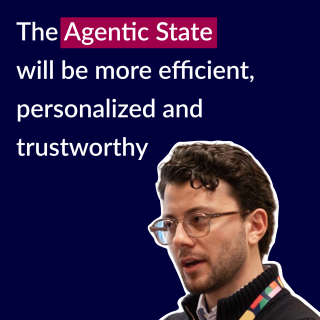
Welcome on another episode of Democracy Innovator podcast and our guest of today is Simone Maria Parazzi.
Download transcript (.srt)
0:00
0:07
0:29
0:34
0:42
0:48
0:50
0:54
1:04
1:05
1:10
1:14
1:20
1:25
1:37
1:41
1:48
1:58
2:11
2:25
2:33
2:37
2:40
2:53
2:59
3:14
3:21
3:28
3:40
3:48
3:55
4:06
4:18
4:24
4:36
4:47
4:59
5:07
5:10
5:13
5:17
5:28
5:42
5:45
5:56
6:06
6:15
6:17
6:20
6:26
6:35
6:41
6:49
7:03
7:10
7:26
7:29
7:37
7:54
7:56
8:06
8:07
8:12
8:23
8:35
8:42
8:52
8:57
9:05
9:23
9:29
9:34
9:49
9:59
10:04
10:19
10:21
10:30
10:32
10:41
10:55
11:02
11:11
11:25
11:32
11:34
11:40
11:47
11:57
12:06
12:16
12:18
12:24
12:35
12:45
12:58
13:02
13:05
13:19
13:26
13:35
13:43
13:59
14:02
14:04
14:10
14:20
14:32
14:38
14:47
14:57
15:06
15:08
15:14
15:17
15:25
15:31
15:49
15:57
16:06
16:14
16:15
16:18
16:24
16:28
16:46
16:57
17:00
17:23
17:26
17:40
17:52
18:05
18:14
18:37
18:38
18:44
18:49
19:01
19:02
19:11
19:13
19:17
19:17
19:21
19:32
19:40
19:53
19:58
20:00
20:06
20:23
20:35
20:40
20:56
21:06
21:13
21:16
21:19
21:26
21:38
21:44
21:46
21:57
22:07
22:30
22:38
22:56
22:58
23:01
23:06
23:23
23:25
23:40
23:48
23:52
24:00
24:13
24:15
24:22
24:31
24:36
24:48
24:52
25:05
25:17
25:23
25:35
25:48
25:51
25:52
26:04
26:13
26:15
26:24
26:30
26:47
26:56
27:10
27:20
27:22
27:37
27:42
27:57
28:06
28:17
28:21
28:33
28:40
28:41
28:45
28:55
29:13
29:22
29:30
29:44
29:49
29:57
30:14
30:20
30:24
30:34
30:47
30:53
31:03
31:10
31:18
31:23
31:40
31:47
31:53
31:58
32:14
32:23
32:35
32:40
32:51
33:03
33:09
33:24
33:32
33:34
33:36
33:45
34:02
34:03
34:08
34:11
34:24
34:27
34:33
34:49
34:52
34:56
34:59
35:06
35:19
35:30
35:32
35:51
35:52
35:59
36:03
36:16
36:18
36:26
36:33
36:45
36:48
37:08
37:09
37:17
37:21
37:32
37:42
37:52
38:03
38:13
38:14
38:28
38:30
38:35
38:42
38:43
38:56
39:01
39:13
39:15
39:26
39:32
39:41
39:53
40:07
40:21
40:26
40:29
40:43
40:49
40:56
41:07
41:14
41:16
41:23
41:27
41:33
41:43
41:58
42:02
42:09
42:14
42:19
42:22
42:29
42:38
42:40
42:52
42:53
43:00
43:09
43:12
43:19
43:26
43:29
43:31
43:40
43:45
43:54
44:10
44:23
44:47
44:49
44:53
45:02
45:12
45:22
45:24
45:34
45:48
45:53
46:06
46:15
46:24
46:28
46:30
46:34
46:43
46:52
46:54
46:58
47:19
47:21
47:28
47:48
47:55
47:58
48:01
48:05
48:08
48:24
48:32
48:40
48:46
48:50
48:58
49:02
49:04
49:11
49:12
49:15
49:18
49:30
49:44
49:52
50:00
50:14
50:20
50:25
50:39
50:40
50:43
50:53
50:56
51:01
51:05
51:14
51:23
51:34
51:51
51:52
51:56
51:59
52:01
52:10
52:21
52:24
52:31
52:43
52:59
53:03
53:10
53:23
53:39
53:42
53:51
53:59
54:03
54:10
54:19
54:21
54:25
54:36
54:49
54:53
55:00
55:12
55:16
55:27
55:29
55:30
55:34
55:42
55:47
55:54
56:11
56:28
56:32
56:42
56:47
56:48
57:01
57:12
57:16
57:27
57:40
57:48
57:54
57:59
58:08
58:10
58:21
58:27
58:30
58:37
58:41
58:46
58:50
58:57
59:02
59:14
59:37
59:48
1:00:02
1:00:05
1:00:12
1:00:14
1:00:19
1:00:24
1:00:28
1:00:33
1:00:48
1:00:51
1:00:53
1:00:55
1:01:01
1:01:06
1:01:07
1:01:09
1:01:11
1:01:14
1:01:17
1:01:22
1:01:35
1:01:42
1:01:46
1:01:51
1:01:56
1:02:02
1:02:06
1:02:10
1:02:13
1:02:17
1:02:19
1:02:23
1:02:26
1:02:29
1:02:34
1:02:38
1:02:43
1:03:00
1:03:01
1:03:08
1:03:14
1:03:17
1:03:26
1:03:28
1:03:34
1:03:35
1:03:38
1:03:43
1:03:55
Thank you for your time, And yeah, I I know that you have been researching about Civic Tech, GovTech governance solution that use also, I mean governance solution.
related to the digital era we are living in.
And I know that you were researching with the OECD.
And would you like to tell us what you have learned in doing your research?
Yeah, sure.
I mean, a little bit of background about me.
Over the last couple of years, I was indeed at the OECD, where my work was on two fronts.
Actually, three.
The first one was innovation in public services.
uh The second one was about uh
innovative participation and how emerging technologies can improve civic participation.
And the third one was on AI in the public sector.
And after those years at the OECD, uh I'm now part of a new initiative that is in part funded by World Bank that is called the Agentic State.
And the goal of the initiative is to actually uh envision
and then lay the foundations for governments to adopt uh agentic AI solutions.
And yeah, there's a bunch of things that I have learned or that caught my attention and interest over the last years.
But indeed, the big red line across all was always this tension between technology, specifically AI and government, which also
includes the governance aspect of these technologies and these technologies when deployed in these complex systems which are partly social, partly political, partly technical that
are indeed the use cases of technology and they are in particular in government.
And how did you start?
uh I mean, AI now is a thing.
And so I am thinking that a lot of people maybe are thinking about how it can influence the social and political life, but how it was for you.
Like when you had the idea AI is going to change governance.
I mean, everything started in terms of my curiosity for the topic when I was a student at Sciences Po and I was lucky to have as one of my teachers, Swazik Peniko, who is an
independent researcher and journalist working on algorithms in the public sector.
And she ran this little course about algorithms in the public sector.
and how actually deployments could be done in a better way and going through some of the most famous scandals around the adoption of algorithms in the public sector.
And then I ended up falling in love with the topic because it was presenting...
many sets of questions that had no simple answer at all.
And we had some more technical questions to untangle about precisely what does it mean when an algorithm is discriminating.
For instance, the famous compass example of the adoption of algorithms in the judicial system in the US, there was then a ProPublica.
article that was judging, let's say, the adoption of the algorithm as discriminatory.
And then there has been an endless discussion about the technical details of how actually you can measure discrimination and to what extent an algorithm can satisfy different
definitions of fairness, which is in practice ah a very interesting normative question, but at the same time, a very practical and
tangible question because in practice it means that some people then will be put to jail or receive different conditions, different treatments by the judicial sector in that case.
And yeah, fundamentally the thing was in this field, there's a bunch of questions that I have no answer to.
And this is something that I find very interesting.
And then I kept just working on this topic.
So I did my master thesis on
AI in the public sector, trying to understand specifically how algorithmic accountability can be ensured through policy.
And so the idea is that governments have a big palette of options and they can pick different choices, but each policy will have an impact on the social technical system that
is the use case.
really the complex system of technology and institutions and humans acting together to deploy an algorithm in the public sector.
And so among these many possible colors on the palette of policymakers, among these different policies, uh the question is, what should governments do?
And I mean, just like most research, uh I wasn't coming there with an answer, but I was just offering, trying to offer a framework to
to think through this matter.
And then I just stick to the topic.
So I went for a while to do data science research.
And again, was NLP for governments and then OECD and then now World Bank.
But yeah, fundamentally, think what is still
extremely interesting to me is that there's really no answer to most of the things.
And even the most basic ones, even when we start um thinking about the deployment of very simple algorithms in the public sector, we immediately encounter problems related to the
governance, related to the data management and sharing, and obviously,
privacy issues and cultural issues related to, let's say, the tension between deterministic and probabilistic approaches in the public sector, all questions that really
do not have an answer.
And indeed I have a lot of questions that I cannot have an easy answer.
And you mentioned policies and also in the Argentic State paper there was um something about policies, how AI agents can help in maybe drafting policies, in finding how the
policies have to change.
And it's very interesting how they can also maybe change in almost real time based on the data.
Yeah, indeed.
Let's say the agentic state report is a vision paper.
And in this vision paper, it's really a serious science fiction attempt to describe how governments could look like when AI agents are diffused.
m To describe uh somewhat rigorously the science fiction future, we developed this framework that has
12 layers and one of the layers is indeed policy making and rule making.
When it comes to this layer, we claim that agentic policy making and rule making will show four characteristics.
And the first one is dynamic policy simulation.
So in practice, it's AI agents that stress test policies in digital twins of society.
And the idea is that through this simulation, they can actually m explore how different outcomes um can be achieved through different set of laws, so combination of laws.
The second feature of agentic policymaking is machine readable law.
So it's a symbolized having regulation that are not ambiguous text, but
precise and executable code, which will enable the consistent application uh of flow, but also, let's say, the automated compliance against flow.
The third feature of agentic policymaking is adaptive rule refinement, which is precisely what you were referring to saying real time.
So rules, instead of being, let's say, freezed,
in time, they are actually continuously monitored in terms of the impact they have and through evidence-based analysis, they are adjusted to optimize for the outcomes that are
identified by policymakers.
And the fourth point, which is probably what's more interesting for the civic tech community is participatory intelligence.
So the idea that uh
you can actually through the use of agents have more and better quality feedback from citizens, business, and frontline systems.
uh And the data points they continuously provide can actually be used and leveraged to develop uh better policies and better regulations.
And so in real time, you can actually learn from the experience of regulation to improve why
and in the best possible way try to preserve democratic accountability.
These things about testing the policies made me think about how in some way uh this is maybe replicating what big tech companies are doing.
So when there is a change in their software, they don't release the software to everyone, but just a small percentage of people.
They see if the change is actually...
um it doesn't have bugs, these kind of things.
release it and also like the machine readable law, ah it makes me think about code is low.
ah That maybe it's, um yeah, I mean.
No, it's precisely, let's say, on the two points, the first one being simulation size.
process that is not far from, for instance, A B testing that is common practice in private companies.
Indeed, that's true.
And also at the same time, private companies, you see continuous efforts on terms and services, for instance.
So in that case, it's dynamic changes to regulations which have to take place because of
changes in the regulatory context of where a product is deployed, but also due to changes in the product itself.
So with new uh improvements in the offered product, you'd see the necessity of new changes which are in real time brought to life.
And second point on machine readable low.
Yeah, I think...
Here we have the interesting and pretty common idea of rules as code, which is something that will probably take a very different uh look in the future.
mean, rules as code uh is definitely not a new concept.
And it was something that for long time was considered as a means to decrease the
ambiguity of regulation and to make laws immediately operationalizable.
But the truth is that right now we might be able to accept some degree of ambiguity maybe thanks to GenAI solutions in the sense that, Chaggpt for instance, doesn't require you to
write perfectly logical sentences.
And in the ambiguity of
natural language, uh it can actually work well or well enough.
So I think we're going to see also some somehow a new version, a new updated version of rules as code.
And then when it comes to what you are saying, code as law, I think, I mean, here it really depends on what we're thinking about precisely because
ah The easy question would be what code and what law?
Like in practice, in the government experience, when we say code is law, what are we thinking about?
I mean, I was thinking about the fact that the law can be interpreted while code is, let's say, executed.
And so if we have laws that cannot be interpreted but can just be executed, as you say, like removing the ambiguity.
um
But I wonder, mean, this is again a big question mark that is interesting.
ah
to what extent can an agentic solution be
consider deterministic, it really depends on the complexity of the agentic solution.
And in that case, so going to a lowest code, sorry, a code is low kind of approach doesn't really imply the fact that there is no ambiguity at all.
And the code is a hundred percent deterministic.
Which raises the interesting question of to what extent can governments accept non-deterministic solutions?
Which is probably the fundamental one when we talk about AI in public sector.
Good question.
I have to think about it.
Yeah, I mean, it's a big one and we didn't nail it.
So that's
What my mind always goes towards is that obviously there are regulatory mandates to have the administrative practice, for instance, to be explainable and transparent, which means
that in practice as a citizen, you are obviously allowed to understand, you have the right to understand why your case has been treated.
in one or the other way.
But in the practice of public administration, is this what's going on every day in a sense that are human agents actually at zero level of ambiguity and fully deterministic?
Well, that's a cool question to have in mind.
and especially when it comes to testing, when we will have the ability to actually test algorithmic and agentic solutions and have a look at their degree of accuracy and recall,
we will be able to actually assess how they perform against a human benchmark, which is not 100 % accuracy.
I think that we are bringing back very, very old philosophical questions about if humans being are determinists, if we can choose what to do or not.
And oh also, old problems that don't have solutions.
And thinking about the agentic state, em so basically a lot of AI agents, um a lot of data that the AI agents uses, a lot of connection between different entities, and add this
flash.
um Is this the starting of...
I mean, the real starting of the civic tech or is it the end?
Because in some way, like also in the paper, there were some examples about how maybe a citizen can say, I don't remember exactly, maybe, I don't know, I want to open a company,
I want to do something.
And so the AI agents help that person maybe directing him to the right...
uh
entity institution.
And so.
um
Basically, every question from a citizen perspective could be satisfied by the AI agents.
I mean, I think we've got to draw a line between what is GovTech and what is Civic Tech.
GovTech is generally referred to as the application of technology in government to solve mainly, let's say, kind of problems, efficiency kind of problems when it comes to the
internal machinery of government, procurement processes, internal workflows.
um
database management and
Civic tech on the other side has to do with, let's say, the democratic practice of governance and the idea that technology can help have a better dialogue between citizens
as um democratically represented m agents and policymakers, which are
their representatives.
And fundamentally in Civic Tech, we have a look at people not as users of services, eh but as, again, uh
political actors that actually play in the game and in yeah, in the game, in the theater of democracy.
And so probably the agentic state prepper takes more of a GovTech lens.
um
towards the adoption of technology in government.
But there are indeed some ideas here and there about civic tech.
I I worked in civic tech for a while, and especially more than me also, Tiago Pesotto, one of the co-authors, is one of the brightest thinkers on civic tech.
So definitely there are some civic tech thinking underlying the whole vision paper.
um
But I think this distinction is important and probably what could be interesting to discuss, and I'm also very curious to hear your take on this, is to what extent we should
make deliberate efforts to blur the line between Civic Tech and GovTech.
Yeah, often it seems to me that there are quite blurred the distinction between GovTech and CivicTech because I see how maybe everything that is related to states, to the
government can be defined as GovTech and at the same time as, I don't know, software for citizen assemblies can be CivicTech.
At the same time, I wonder if we reach a state that is so well interconnected, uh then can be the outcomes of a citizen assembly also became the input for the, let's say, GovTech
part.
And so where is GovTech and CivicTech?
Then of course, this opens a lot of questions.
Because I also don't, when we talk about this possible future, I don't even know if we are talking about five years, 10 years, 20, if we will ever see it in our life.
um
I mean, this timeline issue is a big question mark for the agentic state as a set of people that are trying to think about this topic.
And we don't really know when the agentic state will actually m be live.
But we don't even know precisely what
to what extent we should expect it to be, let's say, implemented in, I don't know, three years or five years.
There are a few governments which are running fast towards the agentic state, uh Ukraine being the leader and one of the only countries that is starting to say out loud that we
want to build the agentic state.
Ukraine is definitely the most central voice, but also Italy has been
doing the first step towards the agentic state, Singapore as well, Estonia as well.
But the timeline is a big question mark.
in terms of culture of the authors, we are not fully sure that AI 2027 vision will take place.
2027 is very close.
we are not seeing the deployments being precisely adherent to the timeline that was suggested in that vision.
And also I wonder like, so now we have nation-state that are tied, I mean, to a territory.
And so in the future, if probably we will see agentic states.
uh And I wonder like, if everything is very interconnected, also states will become very interconnected.
And so I wonder, you know, when there is the theory about decentralized states, but also we can say that, ah I mean, we are Italians, but at the same time, we use Google in some
way, are...
I don't know how to say.
um So, but if we think about the state as the entity that has the monopoly of violence,
oh And then the state is not so tied to the territory.
Where is the state?
I wonder, we will see a sort of, let's say 100 years, of global state, global agentic state.
um Yeah, I have no clue.
think, I mean, definitely to say that the state that's been at least 30 years with internet that has been trying to understand this problem of the physicality of the
territory of space eh and where the
the territorial aspects of the internet actually m matter when it comes to the monopoly of violence.
What are we imagining for the agentic state is so far we are sticking to national state as they are.
We are not doing big stretches.
We are not imagining uh not at all a global entity that could be a super part of or the dissolution of national state is not something that we are.
imagining and there's no real reason to imagine it as of now.
Yet there are indeed more and more international collaborative efforts and this is happening and the most relevant example that I have in my mind are the collaborations that
governments did for cloud but most of all for digital public infrastructure that is an international movement we could say
um helping different governments actually build solutions through the development of common bricks that can help different governments.
And this is something that we are thinking about for the agentic state.
So the question is, what are the kind of tools and resources that could be developed at an international level?
to actually make it easier for governments at the national level to build their solution.
And it's an open question.
Actually, if you have any suggestion, I'm more than happy to take it.
We have a few ideas, but I'm not sure precisely of what's going to happen and what's needed.
And yeah, was quite interesting, the sort of contradiction because I'm basically quoting government procurement suffer from a fundamental contradiction.
Its intentions are impeccable, ensuring fair competition, preventing corruption, maximizing value for taxpayer.
and so on, yet are channeled into bureaucratic processes that undermine the very values they seek to promote.
And this also makes me think about a conversation with Thiago when he was, as an example, saying that participatory budgeting is very helpful for the political life because
citizens are happier politicians that implement...
that solution also have more chance to be reelected.
At the same time, then we see that, and also a lot of other advantages, but at the same time, we don't see often that methodologies applied because there are other, I don't know,
power dynamics or like...
I mean there's no
specific tech solutions are increasingly diffused, but still very little diffused.
And many times when they are diffused and adopted, they are done in a way that not necessarily empowers people.
An interesting question is whether actually the contributions and the final choices
an assembly should be or not uh mandatory for a municipal council, for instance.
There are good reasons to say yes, there are good reasons also to say no, because they are not elected.
And so we can take their output as uh an informed suggestion.
Again, in general, the low diffusion of civic tech
is fundamentally a political problem and there's no political interest in having it more diffused and indeed there's the need of movements that do deliberate and explicit efforts
to make sure that governments are accountable and that governments are hearing people's voices.
uh Sometimes this effort needs to be, I mean, most of the time.
When these efforts are effective, they are bottom up.
And so I'm thinking about, Taiwan, where relatively quickly, um also, let's say, top heard the voice and accepted to embed these practices into institutional practices.
uh Same thing goes for the SEDEM, for instance, uh where there actually, let's say, support or there has been support.
from the top, but also at the same time strong bottom-up push and efforts to ensure that the solution is there, up and active, and deployed successfully in a multitude of use
cases.
And yeah, I have questions, but I also know that they don't have answers.
I'm thinking about democracy as we know it now and about how it can look in the future.
um
I wonder, because sometimes we call different political systems with the same name, like we can use democracy for the one that we have now, mean representative democracy, ah then
the one in the future could be, I don't know, agentic democracy.
Yeah.
How?
Like you said before, like people voices, how can we make sure that people voices are actually heard?
I mean, because I think that some, I mean, at least I'm thinking that it is quite important that citizen understand that they have a weight also, because sometimes, you
know, the...
At the moment, politics is, I don't know, wrong for Italy.
So for a normal citizen, it's very far away, okay.
They have the mirror in their town, also ah how politics can be more accessible and also how to make sure that people feel like they have some power.
uh
mean
Probably the big underlying question is whether the current representative democracy is working well or not.
Big question mark, very big question mark.
um But how can we do it better?
I think, yeah, I think that technology can help a lot.
um And it means on both the GovTech lens and the Civic Tech lens.
And when it comes to the GovTech lens, means listening more to your users, for instance, making sure that services um perfectly or as much as possible.
address their needs and so really being close to their problems and trying to start from the problem to build effective solutions, to improve solutions and make them evolve with
the evolving needs of users.
uh On the Civic Tech side instead, it means that there's plenty of technologies that can help bring together different voices, the tech
different opinions.
mean, Polys is the easiest example of how you can, let's say, cluster different opinions.
And that's the most, let's say, famous one.
um what we're seeing with more advanced technologies is that we can have more sophisticated solutions to define boundaries and identify groups and also facilitate the
dialogue.
between different sets of participants in that case, uh different set of citizens.
And so I'm quite optimistic on technology as a means to empower people.
Yet both these potential improvements on the GovTech and the Civic Tech side will require buy-in and political support.
um
No way a civic tech solution uh becomes central in the life of a polity eh without political support, which is not something that should be expected to be received by the
king.
It's something that can be also fought for through political movements, political effort.
and representative democracy itself.
But it's, yeah, there needs to be agreement to make sure that the adoption of technology can actually empower people.
There needs to be agreement, there needs to be power behind these technologies.
Related to the adoption of technology, I mean, in the paper there were several paragraphs related to the cost of inaction.
So what if states do not implement a technological solution?
yeah, it seems like they have to because otherwise the cost of inaction is quite high.
We think so.
We think so in a sense that we believe that governments will be better off if they start working on agentic solutions ah relatively soon, because we expect the world to look quite
different in a few months and years.
m And there's a big opportunity for governments.
That is to build better services, be more proactive.
ah
better address people's needs and be even more efficient, more effective, more transparent and regaining some of the trust from people.
So there is a big opportunity ahead for governments.
The cost of inaction is definitely high and it will be higher, more and more high with time passing by.
That's for sure.
The question probably is, how will the cost of inaction be unevenly spread across different countries?
So will it be higher for some people not to adopt um agentic AI?
And I'm thinking about the more advanced countries and middle and low income countries.
how will agentic AI and this vision of the agentic state be an opportunity for them, an opportunity of leapfrogging from them as well.
again in different ways, but we do believe that the cost of inaction is high and that governments should push and try to experiment right now, try to pilot right now and
collaborate to develop the tools and the resources and the frameworks and the standards that are needed to make sure that we have the railways to go towards the Atlantic state.
Yeah, this is about which kind of resources states have.
It's very important.
um And this maybe was in some way related to the question about where is the state because let's say it is the eyes hosted by, let's say, the big techs.
um But the results are about how states should maybe have
use open source models, maybe hosting inside the territory.
And there were also some questions about, I mean, should government provide universal baseline agents to ensure equitable access to agentic services?
uh Or can market-based approaches deliver adequate public benefits?
And this is also a
Yeah, this again is the kind of question that we put out there as an open question because we have no clue.
I mean, we have some ideas obviously, but not...
we are not sure.
Probably the key concept here is we might be seeing new sources of inequality.
If agents are the interface between citizens and governments, different agentic capabilities will determine different possibilities of access to government services and
different possibilities of benefiting from them.
Obviously this is unacceptable and this is something that we should fight against.
The question here is how to avoid it?
Will the government be in the position to let's say provide...
ah
a successful and satisfactory and trustworthy solution for everyone.
And then allow some people to benefit from private solutions.
That's maybe a possibility.
Or maybe we want government to lay the foundations, lay, let's say, the railways for then private sector actors.
to build on.
And so it could be that governments deploys, let's say develops, the digital public infrastructure.
the railways for payments, for identity, for data interoperability and management.
And then we have private actors building on top of them.
And we have economic incentives to make sure that the output of private actors
is actually ensuring equitable access to all public services.
Again, we don't really know.
We are here to explore.
What's sure is that right now there is plenty of private vendors which are reaching out to governments saying, actually, you should do this, you should do that.
And we have a solution for this, we have a solution for that, which is exciting.
But the practicality of government experience today is that they don't know precisely what they need in terms of agentic solutions.
And they don't have the means to understand m precisely how the agentic solution could be deployed in practice, which is why we are seeing our initiative as important because we
are trying to close this gap and make sure that governments are empowered to take bold decisions ah towards the agentic state.
I was curious about the feedbacks that I mean, many, I saw from the names, were many institutions, many uh people that are working on digital innovation inside the States.
yeah, what was the feedback or like...
uh
I mean, the actors, the contributors to the paper are contributing in their personal capacity.
So they are not through their participation, we are not taking an official endorsement from their agencies.
But what's exciting is that these people are the leading thinkers and the leading doers in the field of government technology.
across the globe.
And the simple fact of having them engaged in the process is amazing.
And it's signal that this vision actually has something that is resonating across governments globally.
When it comes to the feedback that we received so far, it's been
exciting, extremely exciting in a sense that most people are shared vision.
We received some good criticism as well, which was good points to take.
But yeah, the big request from governments now is really, how can we do the movement from the vision to the implementation?
So how can we build this vision?
As simple as it is.
And for us, it means what are the
deliverables, the tools, the artifacts that we as the Atlantic State Initiative can produce to help governments move from vision to implementation.
And if you have any question, any idea on this, we are more than happy to take it.
I have thoughts.
I don't know if I can say that I have ideas.
What I'm thinking is that once there are a lot of agents, AI agents that interact with each other, then maybe there could be also some AI agents that tries to...
simplify the system.
So if there is another node, something that goes in one direction, the other one in the other direction can be also low.
That sometimes lows can be uh overlapping or like saying different things like and so in that way, maybe the agents can find the in current things and that
find and simplify.
Simplify the...
Not the problem, I don't know how to...
I'm missing the word at the moment.
And,
Yeah, I'm really curious to see if this could happen because then it could actually lead to a very different social and political system.
Because now they say also that bureaucracy is heavy in some way.
And so if we simplify it and it becomes light,
then everything will change.
And now we have the question about when, the window sometimes.
So if we are talking about five years or 10 years.
But yeah, those are my thoughts.
Yeah, no, it's useful.
It's very useful.
Yeah.
oh
And the...
Yeah, so many questions, so many thoughts, so many ideas, but not really a lot of answers.
And it's quite interesting to think that these things could actually lead to a
to a different society, to a different world.
And so it's extremely important as a topic, ah but there are no answers.
I mean there are no answers but there are some attempts of answers which is what matters the most to drive action forward.
So let's say we have been provocative with our proposal of the agentic state.
Now it seems like the world is just full of question marks.
The exercise that we've got to do in the next months is go one by one to each question mark and trying to have look closely and try to understand how actually we can build this
vision of the agentic state.
ah
We can find balances between different tensions that exist in the government adoption of AI and technology in general.
But that's an exciting attempt, to be honest.
It's very exciting.
it's bunch of questions that don't have an answer.
And our humble effort is to go closer to things and try to
unveil some of the truth that is there and try to surface some.
pieces of answers and hopefully this will be, let's say, useful for governments to move forward.
Yeah, and now maybe I have some ideas about what we were saying about the AAB testing, how maybe policies, if there is a new policy, how it can be implemented maybe on a smaller uh
part of the population.
Maybe this approach can be also used for the agentic states.
um
I mean, definitely.
Indeed, one of the testing is crucial, essential idea of the agentic state.
Taking an iteration kind of approach, a testing kind of approach, an experimental kind of approach, it will be the bread and butter of the agentic state.
And especially from a cultural standpoint, this will be one of the biggest changes.
Because so far, innovation is often...
happening only in a few limited teams in public administration, innovation units, the digital government units are in practice.
The agentic status we are describing and envisioning will require experimentation to happen across whole government activities, which will be a big cultural shift, but it's.
will definitely lead to better results and better outcomes.
mean, when we say better results, in the end, it's literally always improvements for citizens.
It's efficiency gain, it's effectiveness gain, it's improvements of trust, but it's ultimately improvements for citizens.
And okay about citizens, um from like the point of view for citizen, ah because at the moment I'm thinking that maybe the paper is more for people that are working in the field,
or people that are very passionate about the topic.
um And so I wonder like from the normal citizen, ah
What could be something that, I mean, of course, reading the paper, trying to understand the changes that we are seeing in our society.
m
But yeah, uh it is if the genetic state way is implemented.
And as we have seen, the cost of inaction is so high that probably this will be the way.
oh
I wonder like,
how to explain it to a citizen or also, yeah, like what could be the role of the citizen?
Because it is through what you have said that then all the state that works with the speed of a machine basically without the human's bottleneck bureaucracy and so on.
ah
Yeah, I wonder like the citizen what can ah
And do, I mean, from an active point of view, because these, let's say, people that are working in the field, politicians and so on, implement the agentic state, then in some way
they are at the moment uh passive.
Then of course they can become active if we, as we have said, like if there are, let's say there are citizen assemblies and citizen assembly produce an output and the output is an
input for the...
agentic state.
Mm-hmm.
I mean, what can citizens do?
The first step is literally to...
mean, the experience of citizens will be very different in the agentic state, and it will be much better.
And it means that when I need to do my taxes, it's not a continuous flow between my accountant and the bizarre and contradictory...
interface of the finance ministry or public services portals online, but it's a much quicker, more efficient and more personalized experience, which happens without
technically technical problems.
And again, it's personalized, it's tailored to the needs and to the situation of each one of us.
What can citizens do to push this agenda forward?
I mean, not much.
This is state transformation and citizens most of the time do not really care about changing public services.
What they can do is provide feedback, but for those that are more curious and active, is something that is important
to try to do is to actually build the pieces of the agentic state.
There is a lot that we can do in terms of building the vision, building the nuances of the agentic state.
I think the big goal that we are trying to do, that we would do, is come join us in the effort of imagining how the future should look like.
more practically for those that have technical skills or those that have imagination skills.
Try to vibe code how a public service would look like in the agentic state.
Try to explore how procurement process could look like.
If you're curious about governance, try to help us define how um the governance framework should look like.
If you are into
Civic tech, let's deep dive and try to define more closely how participation will change in the future.
I think this is the kind of effort that everyone on the ground ah can do.
And it's precisely the kind of efforts that we are doing.
We are trying to get closer to, we are trying to refine our vision of the future.
and then understand what are the tools and the resources that are needed to get there.
But this imaginative effort is something that is accessible to everyone.
And you don't really need to be in governments to do that.
I mean, we, at least me personally, I'm in conversation with people in government, but I'm not in government.
um
You can do efforts and imagine things differently and that will itself be a driver for change.
This is something that I think is probably something special of the technological space that in some ways allows everyone to participate because I see this...
Also maybe similar to open source products, because something related, the genetic stage should be open and transparent to citizens.
So every time there is something, could be a problem, could be something else, then maybe the citizen can participate in um proposing their solution.
um
Yeah, mean, in general, the agentic state will be open, will be transparent, will be built on open source solutions as much as possible.
That's the way to go.
So definitely the whole approach is the one of open source communities.
The code is there for everyone to improve it.
I'm sure that a lot of people will like it.
And also I haven't asked you anything about you.
I you mentioned something about your academic life and working background, but would you like to share something more personal uh about you?
I know that you play the guitar.
Yeah, yeah, I do.
I do.
I published some songs with a friend of mine, I mean, with my colleague, with my music colleague.
And I'm working on a new album.
That's true.
Let's see if it's going to come out soon.
I'm not sure.
But that's my effort.
beyond helping government build the Atlantic state.
uh
And yeah, do you have, I don't know, ah a message for the people that are working in similar field?
I think my main suggestion is...
try to have a look at the vision paper if it resonates.
And then there are so many question marks that are open.
And then any input is more than welcome.
Any layer of our framework comes with 100,000 problems.
And we can start with the first one, public services.
And so the first question that I would have is, how should the interface of
new public, agentic public services look like?
Like in terms of digital interface?
I have no clue.
Will it be something like a chat?
So classic experience of judge pity?
Well, maybe, I don't know.
That might be part of how it's going to look like.
And then we're going to go on.
workflows and then on regulation and
how, for instance, regulation right now, we were discussing it before, um how will rules as code change under generative AI and the new NLP?
capabilities?
Well, that's again, a question that we didn't have the time and the space to reflect on, but it's important.
And I think everyone can contribute to this movement towards the agentic state.
And I mean, it's not at all a movement.
It's really like government doing efforts to go towards the vision, but any input is more than welcome, and we are excited to build it.
So it's
It's a big effort, but we're trying to get there, which is bad.
Thank you Simone.
It was very interesting.
I don't know if you want to add something else if you have other questions.
I'm just a fan of the podcast, so I will enjoy the future episodes.
Ciao ciao!