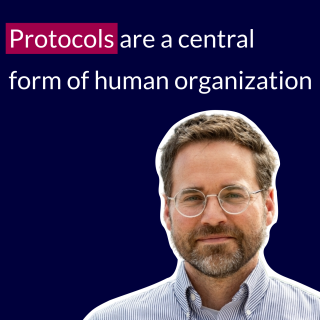
Welcome to another episode of the Democracy Innovator podcast and our guest of today is Nathan Schneider.
Download transcript (.srt)
0:00
0:08
0:10
0:13
0:20
0:26
0:32
0:33
0:41
0:54
0:59
1:01
1:25
1:31
1:43
1:48
1:54
2:00
2:10
2:14
2:28
2:43
2:58
3:02
3:08
3:11
3:21
3:36
3:41
3:44
3:58
4:06
4:08
4:17
4:22
4:35
4:49
4:56
5:05
5:16
5:26
5:30
5:31
5:45
5:49
5:52
5:53
6:01
6:10
6:20
6:24
6:26
6:28
6:40
6:45
6:57
7:04
7:13
7:19
7:24
7:28
7:34
7:52
8:03
8:06
8:18
8:22
8:28
8:32
8:42
8:45
8:51
8:52
9:04
9:14
9:20
9:22
9:27
9:41
9:51
10:05
10:10
10:14
10:19
10:30
10:41
10:54
10:59
11:06
11:06
11:07
11:13
11:21
11:35
11:46
11:50
12:06
12:13
12:19
12:27
12:34
12:43
12:57
13:01
13:04
13:10
13:15
13:18
13:21
13:28
13:33
13:42
13:58
13:59
14:04
14:07
14:15
14:20
14:22
14:38
14:45
15:02
15:13
15:24
15:36
15:42
15:50
16:08
16:10
16:19
16:28
16:47
16:58
17:05
17:11
17:20
17:39
17:42
17:51
18:03
18:16
18:35
18:44
18:45
18:58
19:03
19:05
19:12
19:27
19:30
19:38
19:39
19:44
19:52
19:54
20:02
20:09
20:19
20:23
20:33
20:34
20:39
20:40
20:49
20:55
21:02
21:08
21:08
21:09
21:19
21:21
21:34
21:39
21:43
21:45
21:53
22:04
22:06
22:11
22:14
22:22
22:26
22:39
22:48
22:52
22:58
23:01
23:10
23:15
23:20
23:25
23:39
23:46
24:02
24:04
24:13
24:16
24:23
24:30
24:39
24:43
24:59
25:13
25:18
25:25
25:39
25:40
25:43
25:54
26:06
26:09
26:16
26:32
26:35
26:37
26:43
26:47
26:49
27:02
27:06
27:09
27:23
27:36
27:43
27:55
28:06
28:14
28:23
28:34
28:45
28:57
29:00
29:02
29:03
29:11
29:24
29:29
29:34
29:44
29:50
29:53
30:12
30:15
30:23
30:40
30:45
30:57
31:12
31:15
31:22
31:37
31:44
31:47
32:01
32:09
32:14
32:29
32:37
32:43
32:56
33:04
33:09
33:18
33:31
33:35
33:47
33:50
33:54
33:59
34:12
34:17
34:28
34:38
34:42
34:47
34:57
35:04
35:10
35:14
35:27
35:35
35:43
35:48
35:49
35:50
36:02
36:13
36:16
36:17
36:24
36:40
36:46
37:03
37:04
37:14
37:20
37:32
37:35
37:39
37:41
37:44
37:48
38:05
38:10
38:13
38:31
38:36
38:41
38:51
38:59
39:02
39:10
39:26
39:37
39:43
39:46
39:52
40:01
40:06
40:16
40:20
40:24
40:27
40:46
40:46
40:54
40:56
41:16
41:24
41:27
41:35
41:39
41:44
41:53
41:57
42:05
42:20
42:21
42:25
42:40
42:41
42:54
43:07
43:12
43:18
43:30
43:44
43:49
43:57
44:10
44:12
44:24
44:33
44:41
44:50
45:00
45:04
45:08
45:20
45:26
45:28
45:37
45:47
45:49
45:52
45:56
46:09
46:10
46:21
46:28
46:33
So thank you for your time.
Of course, it's a pleasure being with you.
And when I contacted you, I was very curious about modular politics.
And I was also curious, I'm still curious, uh when you had the idea.
So about a politics that can be...
huh.
Well, uh it was an idea that developed in collaboration and conversation.
And, um you know, it was also very much uh involved in the early development of an organization that I, whose board I now chair, Metagov, which is a research network of
folks around the world working on governance and online space.
And,
One of the early um drivers of this um was seeing work um from a collaborator in the MediGov context, uh Seth Fry, who had studied, a big data study of Minecraft servers and
argued that um looking at the way in which they were governed,
uh looking at thousands of servers, uh observed a kind of drift uh into oligarchy, into a kind of centralized control of the server.
And, and it seems like a kind of natural outcome.
you know, Seth is someone who's worked in cooperatives for many years, you know, has very democratic impulses.
And so it's not necessarily the finding he wanted, but it seemed to be a kind of scientific outcome, right?
The data was, was saying that this is what people do when left to their own devices, like running Minecraft servers, they form centralized entities.
Um, and, you know, I thought this was a really interesting.
uh study, but at the same time felt that uh it was in some sense enabled by the limits of the platform and the structure of the system.
And it was kind uh of through this and some other provocations, uh you know, that I started developing uh ideas around, you know, what I came to call implicit feudalism.
which is a norm in online spaces that we accept a kind of centralized, even more uh kind of hierarchical control of online communities and the servers that run them.
And this goes back, it turns out to the earliest online communities.
But the basic architecture is very familiar is that, you you don't even have to talk about big tech companies and things like that.
We're just talking about a group chat.
you know, a uh Facebook group, a subreddit, you know, you have somebody who has admin power and they have essentially unlimited power over the space.
um And there are respects in which, you know, this is a kind of social norm, but it's also really built into the software uh that social life runs on the internet.
And I got really interested in, you know, how is it that we got to a point where
these became the defaults.
And in response, after kind of developing that critique, that recognition that there's actually historical reasons that constrain us toward that outcome of oligarchy, that guide
us in that direction, that make it the most likely outcome, uh what else could we imagine?
And that's where modular politics.
started to develop among a group of us who were kind of the early uh participants in Medigov.
We started the organization in some respects just by meeting and working on this paper.
uh And we were trying to figure out what uh it could look like to have online spaces that were really designed for diverse forms of governance, uh not designed for
for a hard-coded specific form of governance, like a top-down admin control of everything, but that would enable lots of different forms of self-governance to emerge that are
culturally sensitive and flexible and contextually appropriate.
And modular politics was what we called the answer, which was a framework in which you have a
a kind of platform at the base layer that invites users to add cobble together different modules, them, compose them together in a way that's appropriate.
Maybe you want to have, you know, one kind of executive leadership here, but then you want to have a referendum that puts a check on that executive leader.
You know, you could put the pieces together any way you like.
But the
The goal was to reimagine the construction of online spaces from a perspective of software design in a way that could enable this kind of cross-cultural creative governance design.
And you did also some experiments in some communities.
Also, I saw that you built some tools.
Yeah, yeah.
So I always try to uh test my theorizing and practice.
uh And I think it can sometimes be too easy to just sit in the armchair and tell people what to do.
It's important to also uh get your hands dirty and figure out, what are the, know, how easy is it really to do the thing you're telling everyone to do?
uh
And so um as we were developing this.
um
this idea and especially after we've of sharpened it, um I, in my lab and with some collaborators at Medigov as well, started a bunch of experiments to try to figure out, how
could um we try to implement this uh in practice?
And one example is uh Community Rule, which is a kind of drag and drop web app currently being fully redesigned to be much more accessible and user friendly.
but its purpose is basically to allow communities to easily develop bylaws that are appropriate for themselves.
So before you even get to the point of giving all the power to the admin, give yourselves a chance to just say, what should your organizational design look like?
uh And that's the point of community rule has some basic templates, things like that.
Another example is ModPol where this was an attempt using a...
uh an online game called, uh now called Luanti.
It's an open source, Minecraft-like uh boxel game.
And uh I uh built a mod for the game that, uh along with collaborators uh like Luke Miller at Medigov, uh to implement diverse governance.
practices in the context of the game, enabling players to design and construct their own governance systems.
And this was a really, really useful exercise.
It helped me realize just how deeply entrenched our assumptions about admin control are, uh how many things you have to rethink if you are to imagine online spaces that are
designed really for co-governance, uh and how many
uh, kind of, assumptions you have to pull out of the software.
We, what we would often do is hard code in something that seemed right.
And then we would realize later, Oh, that's like a particular assumption that voting is important or that, you know, this or that, uh, political assumption going back thousands
of years, like should be universal.
And we'd have to claw it out of this code base and, and rethink it and figure out how do we, how do we build a code base?
That's really.
much more, you of course it's never going to be fully neutral, but that carries as few of our assumptions as possible and is as inviting as possible to diverse approaches.
So that made me realize in some respects, you know, what an interesting challenge this kind of design is.
so, you know, it's useful for me as a fairly bad software developer.
At the same time, of course, I'll just...
note that better software developers than myself have also taken on this challenge.
And uh I've been gratified to see that, for instance, in contexts where online governance has actually been operationalized uh and invited into being, um such as when governments
do so with like the Decetum platform that the government of Barcelona in particularly sponsored, um or in the blockchain context with platforms like
Aragon and Zodiac and Open Zeppelin, you in context where you have communities actually and projects and companies and so forth actually trying to co-govern uh and do forms of
collective decision-making over with real assets and uh real stakes.
They actually converge on something like modular politics.
In many of these cases, they actually started building the platform one way and then ended up
choosing a more modular structure uh to enable precisely what we hope for, which is that kind of composability and creativity.
And it was very interesting last time that we talked because you were saying that you were rethinking maybe the approach because now there are LLMs.
So instead of just modularity with a sort of drag and drop interface, maybe using the LLM to describe what has to be done.
And maybe it's also related to the article that you...
recently posted constitutional agents for online governance or not.
Absolutely.
Yeah.
Um, I mean, I'll just say from the beginning, um, I, just want to be clear.
I'm not, I think there's a lot of work to be done on this in this direction too.
and, um, and that I think there's a lot of risk, um, in, trusting, particularly the LLMs that we have, which are, you know, profit driven, fundamentally extractive tools.
but nevertheless participate in a very interesting technology that I think could have really powerful consequences for how we think about online governance.
um Here's the basic challenge.
Is the question of whether at the heart of uh a governance system, uh you want to have software, uh code, essentially, uh or interpretation?
And the modular politics framework basically assumed the former.
It assumes that you're going to have to have code running the system at some fundamental level.
You know, maybe not ultimate power, like, you know, essentially you need code to adjudicate what otherwise the server admin.
would have control over, know, who has what authority, who gets banned, who gets removed, that sort of thing.
uh You kind of replace that personal power with, with software that enables, that manages governance processes.
So, you know, if somebody is, if, if, if somebody accuses somebody of doing, of breaking a rule, then the software, you know, manages a process and then implements the outcome.
in a deterministic way, you know, it's written in code.
I think there's, there are some interesting advantages to this.
It's perhaps as the ability to be credibly neutral.
It has a kind of uh rigidity to it that could be valuable at the same time.
It can, these kinds of systems can be gameable.
They, they, uh and they often
kind of lend themselves to being manipulated by people who are really good at manipulating systems.
uh And we've seen that a lot in the context of DAOs, right?
Where uh people come in, are able to uh manipulate what's written in the code.
and violate the spirit of the code, uh to violate the purpose that the Tao is created for in order to obtain money or undermine that purpose just by making use of what's written in
the code.
And so those kinds of rigid technical systems uh can be really vulnerable.
uh
The, you know, another thing that really um struck me was actually very recently reading the new um
Anthropic Constitution, the Constitution for the Coach, Claude Chappot.
It's a very strange document.
uh But one thing that's really striking about it is that the company that is most obsessed with AI safety among the big labs, uh to a fault even, uh has determined that the best way
to govern its models is to treat them like people, to address them in very human terms.
uh And that was a really striking thing to encounter for me just in that it suggested that maybe we're moving more toward a world, and this is something I think many of us have been
seeing for a while now, in which we are gonna have to encounter computers much more like we encounter people.
Um, and, um, and that, that maybe the best way to communicate with the computers of the future is going to be to communicate in ways that people can understand too.
Um, rather than just writing in, in kind of code and, abstracted language to actually talk about values, to talk about ethics, to talk about purpose.
Um, and so it's, it struck me that, you know, maybe there is.
maybe we need to rethink the strategy of modular politics, at least in some contexts, and maybe more for the future than for the present.
um And imagine that the goal is not to write code and mechanistic structures that facilitate community self-governance, but to actually double down on writing the kinds of
human readable uh
governance documents, human readable constitutions um that are also going to be, you know, uh LLM readable.
And if instead of putting a mechanistic deterministic system at the base layer of your community governance system.
Maybe the better path, at least in subcontext, will be to put a model at the center of that system or an agent, model-enabled agentic tool at the center of it that's able to
interpret that natural language constitution rather than imagining that any piece of code is going to serve as a
uh as a complete base layer for that community governance.
And then actually if you have a human readable constitution.
as like the core code uh of community governance, uh it might be more accessible for the humans involved.
It might be more easy for them to be involved in the governance practices, uh handing less power over to people who happen to be technical experts uh and also granting the agent uh
managing the system uh
ability to detect the difference between uh what is and isn't in the spirit of that constitution.
uh And again, I would hesitate to delegate too much power uh to two LLMs, but I think there are respects in which they can serve as.
really able administrators, uh or they could in the future, uh you I think we're seeing glimpses of where that might be possible and where actually this might be an easier path
and uh a more fruitful path ultimately to uh defeating implicit feudalism than a more deterministic approach to modular politics like the one I've tried several times over.
I was trying to imagine this system so I don't know like a community or like a group of people could maybe describe, I don't know.
um
We are a group of high school students, are a company that have to decide something, we are 100 people and then the AI helps to write the constitution and the constitution also
enables people to do certain things and not to do other things.
So something like this.
Yeah, so actually right now I'm working on testing this with a Mastodon bot.
So I got a bot that I'm developing right now that um is hooked up to an LLM and um it uh has a plain text.
I've tried a couple of different constitutions so far.
I'm really building this on my own experience with a platform called social.coop, which is...
uh
cooperatively governed Mastodon server that I co-founded years ago.
It's one of the great kind of community, one of my favorite little communities, um something I'm really grateful for.
I've met a lot of wonderful people through it.
um And it's been a place of experimentation, thinking, you know, argument and so forth that I've really appreciated.
um But one thing that's always bugged me is that we can't do our
own self-governance on the very platform that we are trying to self-govern, which is Mastodon, which is really not designed in any way to support community self-governance.
And so I've been for years trying to figure out how could we actually change that?
You we instead go over to another fabulous platform called Lumio to do decision-making processes and things like that, a very well-designed platform for self-governing
communities.
But I always imagine what would it look like to really integrate that into Mastodon?
or a platform like it.
uh know, the same question could be applied anywhere else to a Facebook group, Slack, Discord, whatever.
But in this case, I'm playing with Macedon because I like playing with tools I know and with open source software and things like that.
um so in this case, the bot has admin uh rights.
on the platform, can determine, it can make other users admins or not.
It can...
um
uh There are some limitations for what the API allows, uh but it can ban servers and it can carry out moderation actions.
can delete posts, things like that.
So uh for instance, you could have a situation where, okay, somebody posts something that another user flags as offensive and maybe the constitution of the server.
written in plain English, hopefully, or whatever language actually that the alum can understand.
Hopefully um it's...
uh
uh written, I think, by the people uh for what their needs are, a handmade constitution.
And it says, well, if somebody uh finds that a post has violated uh our shared rules, uh they can flag it.
And then it goes up for a decision.
And then say the rule is, well, five other people have to agree that it violated the rule.
uh And then the bot.
could say, okay, there's been a post flagged, you know, to five other people want to stand up and agree that this post violates the rules.
And, you know, if it receives five, uh,
mentions and it keeps a memory, so it keeps a ledger to keep track of previous actions, then if it hits that mark, then it can delete the post.
uh Or it could say, well, we delegate, maybe the constitution says, no, we delegate that decision to X group of users.
And then the bot could facilitate the process among.
that group of users, know, a Supreme Court or something like that.
So there's a really wide range of things we could do.
And again, one thing I'm encountering in developing this system is always trying to insist that we're trying to create a generalized tool.
We're not trying to hard code in any assumptions about how a community should be governed.
And actually my sense is that if you do this right,
it could be a lot easier to develop creative governance practices.
For instance, on the modular politics approach, if I want to create a system that, you know, a mechanism, a decision-making process that maybe is part of my ancestral culture,
but hasn't been implemented as a module yet, I need to find a software developer to implement that module, right?
The interesting prospect of an LLM supported process is that I could just write, describe what should happen in natural language and hopefully that LLM can figure out what that
means and implement it.
And so far, you know, not without obstacles, I've seen some pretty good evidence in my tinkering here that that's possible.
uh I don't think we're at a point where we can
trust these with secure uh processes as in any context.
These things are still very, very new and we're still learning how to build guardrails and so forth.
But I'm really excited by the possibility of being able to allow people to implement governance practices that they don't know how to write in code, but that they know how to
describe in words.
Absolutely, these kind of experiments are very interesting and I wonder like, of course they are experiments so they would not maybe be ready for something like um let's say to
manage a country but I wonder if you think that maybe in the future, I don't know, like in the 10 years or whatever also that could be a sort of possibility.
uh Managing a country.
I mean, I think it's uh right now an idea that's being weaponized in really dangerous ways.
I mean, we saw this in the early days of the current administration in the United States when Elon Musk took over the government and um started saying that, okay, now we have AI,
so we don't need all these bureaucrats.
uh There is no...
clear evidence that AI replaced a single em administrator em in any trustworthy fashion.
I mean, this is an excuse being used by tech people to claim power for themselves under the guise that their technology is actually working in this or that way.
um
But what I would, here's how I would put it, is that governments already run on essentially automated systems.
uh Bureaucracies, legal structures, these are all technologies and infrastructures of automation that create different topologies of uh determinism and non-determinism,
determinism and agency and interpretation.
Okay, so an election is a kind of
in some respects, a deterministic system as nondeterministic inputs, but as deterministic outputs.
But a court, you know, has more room for interpretation.
These things are check and balance each other.
uh And so what I would argue is that territorial governments already have infrastructures for implementing governance practices.
What I'm interested in is the fact that
Online spaces don't have those infrastructures.
uh When you're in uh a group chat, there is no fundamental infrastructure to carry out and actually especially enforce an election to unseat an admin who's been behaving badly.
uh And so my goal here is not to so much to replace existing infrastructures that do allow collective self-governance, which is I think
an anti-democratic orientation that is quite strong right now in the world.
What I'm interested in is creating appropriate infrastructures for spaces that do not have infrastructure for collective governance, like most of our online spaces.
So in some respects, one way I phrase the challenge of implicit feudalism is for online spaces to catch up to my mother's garden club, which is a collective organization.
in my mother's neighborhood where, you know, women get together and talk about gardens and do community service, right?
And I mean, and they have like an infrastructure of self-governance and bylaws and everything, things that virtually no online community I've ever been part of has.
um so in some respects, I think what we're up to here is not attempting, you know, to replace the nation state right now.
uh First, we got to get our online communities uh caught up to the basic expectations of self-governance that we have in virtually any other context of life.
That said, I think there are some really radical consequences that can emerge from having democratic online spaces that do unsettle the foundations of the nation state uh as the
fundamental site of uh democratic governance.
But uh I wouldn't...
uh
But at this point, I think we're primarily at the stage of catching up, not uh trying to supplant.
If in fact we were to try to supplant current political democratic institutions with online practices and online politics, that would be a step in the wrong direction.
That would be a regressive step, a turn toward a kind of
micro authoritarianism and we saw that with Elon Musk taking over the federal government.
He was essentially trying to become the admin of the whole government and assume a kind of a unitary top-down control over the whole thing.
that's, uh you know, that's kind of where we are right now.
and it can be dangerous.
Now maybe instead of a system that can allow to govern like a nation state, maybe would be more correct to think about, let's say a social network that is widely used, something
like uh X Facebook or...
And I think that part of this is also the web tree with the DAOs.
And it aims to go in this direction, to have software that is in some way decentralized and with new kind of governance structures, uh so that there isn't just one person that
own everything.
Yeah, I mean, I think that Dows, right, um reflected a kind of opening, right.
And this is something that I think is still yet to be kind of appreciated for what it is, uh which is that, you know, in uh during the periods when there was a lot of energy around
something like Dows, ah
say 2017 first and then 2020, 2021.
These were, as far as I can know, the only moments in internet history where there was mass investment in the design of collective governing tools.
This is a time where millions of dollars were being poured into building tooling for
people to make decisions together online.
And I think we have to recognize how rare that has been because there's never been a need for it uh according to those who are running our online platforms.
And that for all the profound problems with the crypto ecosystem and blockchains and so forth, which, you know, I'm...
you know, very happy to recount and criticize.
Still, uh they broke the kind of fundamental logic of implicit feudalism by trying to disrupt the server-client relationship, by trying to build networks that were
fundamentally about peer participants co-governing a network.
you know, not to say that as a, it's a democratic thing, not at all, you know, it's often essentially plutocratic.
uh And I've, you know, I've written about that extensively, but, um but nevertheless in breaking that fundamental server client relationship, uh they had to figure out, okay, if
we're all peers on this network, you know, how are we going to make, how are we going to choose?
version updates together, how are we going to allocate a treasury?
And so that's where platforms like Aragon and Colony and Open Zeppelin and all these things emerged.
And I think they just show that uh when you enter up into a space where self-governance becomes a problem that you have to solve.
really interesting creative stuff can start to emerge.
And during those periods, know, the ICO boom in 2017, the kind of NFT craze of, you know, 2021, where people really started to feel, oh, there could be billions of dollars.
There are billions of dollars at stake in these governance decisions.
We have to build tools to make those decisions good.
You know, we didn't get that far, but already during those periods, it felt like every...
week you would hear about a new mechanism, a new thing that could be built and designed into being a new way of approaching this challenge of healthy self-governance.
And I found that froth tremendously exciting.
uh Not always because I loved the projects that were using them or I loved what their goals were or anything like that, but that at least people were trying to figure out.
how do we balance the incentives and help people do collective intelligence in these contexts?
And to me, it just wets my appetite for more.
What could it look like if we had more spaces where that was an opportunity?
And I think if we allow ourselves into that possibility and into that challenge, I think it does start to unsettle.
you know, the foundations of what we think of as democracy normally, in, in, some, in some powerful ways.
Um, and, and I think we're just starting to begin to see glimpses of what's possible there.
Um, but I think I just want to underscore that.
think we're, we're, we've mostly not even allowed ourselves into that conversation of what online democracy, what, what, what, what self-governance in our.
that's native to the networks we so often inhabit um could really be like.
And I was thinking, so at this moment, are you still working on the, let's say web tree?
What is more exciting for you right now?
Something that's...
huh.
Well, I'm in the process of finishing a book on protocol, the concept of protocol, which of course, you know, has some uh important resonance in Web3.
I mean, I'll uh admit one of the major motivators for me in taking on this project has been the conversation around the Summer Protocols community that was supported by the
Ethereum Foundation and you know, it's very much.
uh anchored in Web3.
But actually the thing that really got me excited about this concept was not just that.
It was that it was seeing the concept of protocol being used, particularly in indigenous contexts around the world, as a um word to denote both um sovereign practices, that
rituals, traditions,
uh ways of being that help people know who they are, even in context of uh colonization and oppression, and also protocol as the kind of uh membrane between a community and the
state.
A protocol as, for instance, in the context of a lot of Latin American governments, uh protocol is the word used to talk about
the appropriate relationships between the state and indigenous communities.
As a researcher, when you're interacting with indigenous communities in Latin American context or Canada, in places where there has been some developed policy, protocol is the
word that kind of mediates that relationship.
uh And there's so much more.
Protocols are climate protocols.
There are internet protocols.
protocols now being used to create guardrails for AI.
And this concept, I think, uh is a tremendously interesting and powerful form of human organization and more than human organization um that we tend to neglect um or kind of
demean as just like, it's just a tool we're using.
But what I argue in the book is that it's actually a really
uh a really central uh form of human organization in human history and that its importance has never been greater and that we need to learn or relearn uh how to operate this way of
organizing ourselves and organizing in relationship to our environment.
So I'm excited in this very kind of...
In some respects, theoretical way to honor this set of practices that have accumulated around that name, around that word.
uh Well, at the same time, of course, I'm always playing around with practical experiments, you know, uh trying to think about what...
uh what kinds of protocols we need in our world right now.
In my lab right now, we're really interested in protocols for uh managing conflict in online spaces.
So once again, I try to balance my theorizing with uh practice and make sure I'm not kind of getting to uh falling too much in love with my own ideas.
And it's very interesting also conflict resolution is something that I'm really curious about because...
Sometimes I also talk to people that are not really into this field and they are a little bit skeptical.
But still I really believe that a lot of times.
Also, mean language is a protocol and also is modular.
I mean we compose phrases with different words and the way that we do it is very different.
And I wanted to you something about your background.
um personal, academic, professional, whatever.
What in particular?
Yeah, you can start also from when you were a child, if you want.
So where did you live?
uh I mean, there are lots of ways to, you know, to begin and end, but I grew up in Virginia on the East Coast of the United States and, um you know, part of my family's from
Colorado.
I'm grateful now to live in the state of Colorado, um right where the mountains meet the plains.
um
But one thing I'll share that I think might be relevant to this conversation is that when I was a teenager, when I was 15, 16, I had the opportunity to attend a school which was a
public school in my area that was kind of an alternative program.
and that had.
Just uh a part of it's what made it unique was it encouraged students to participate in self-governance.
So we had a weekly meeting where everyone was welcome to attend.
Nobody had to, but you could, that was where all the business of the school would be discussed.
So the principal would come and talk about what he was doing and, you know, teachers who had issues would bring them there and students who had issues would bring them there.
And, you know, through that, I got to participate in some
interesting processes and helped shape a change to the admissions policy for the school uh and things like that.
you know, that I think that experience among a few others just kind of left me with, uh with uh at least so far lifelong belief that self-governance is possible and fun and
empowering.
And, uh and I think that's uh
a really important thing that I try to remember and hold, which is that uh having those experiences of self-governance is crucial to having faith that this stuff is possible and
recognizing the power of it.
uh And so out of that experience, one thing that I'm really eager to do with all of the things I do around online governance, also...
do a ton around online, offline work with particularly cooperative businesses uh working here in Colorado and elsewhere to support conversions of businesses to worker ownership so
that, you know, workers have power and stake in the places where they work.
And, you know, what that's all about to me is enabling
democratic experience, enabling people, know, democratic in some respect is kind of too fancy a word, enabling people to have a real say in stake in their lives.
And I think when we have those experiences, when we feel our own power, it's an incredible, you know, it's transformative.
We see ourselves, I think, as much more than we thought we were.
And I got to experience that a few times early on and it's stuck with me.
in all of these little games I play with ideas, with software prototypes, with community organizing work, to me that is kind of the ultimate goal is to help seed those
experiences, to help others.
to continue helping myself, you know, see what we as human beings are capable of, what dignity we really have and um creativity we really have.
And I think too often that um richness is just not visible to us.
And the last question is, do you have a message for the people that are working on similar things?
So it be in the civic tech field, in the web 3 field, in the governance field that they're trying to innovate if you have a message for them.
I just, I mean for the, it's like the choir here, you know.
Someone once told me that if you don't preach to the choir, they won't come to church.
And I think that's really right is just keep doing what you're doing.
um I think remember that the best defense of democracy, of human dignity, of rights is not just defense, it's offense.
It's continually deepening that practice um that you cannot.
democracy does not live in stasis.
This is something that philosophers like Alexis de Tocqueville or Adrienne Marie Brown or uh CLR James or ah W.B.
Du Bois have all, Derrida, know, have all recognized that um democracy cannot.
function in stasis.
It must always be developing.
It must always be uh challenged and deepening.
uh And so folks who are trying to push the boundary of democracy uh push its possibilities rather than just try to protect what was established.
oh
hundreds of years ago, they are the ones who, I think, give us the best hope that we'll have a democratic future.
Thank you a lot and if you would like to add anything else that I haven't asked you...
No, thank you so much for your questions and your interest in this work.
Thank you again.