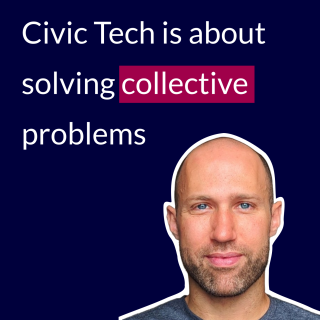
Welcome to another episode of Democracy Innovator podcast and our guest of today is Matt Stempek.
Download transcript (.srt)
0:00
0:07
0:11
0:16
0:17
0:21
0:26
0:27
0:31
0:32
0:37
0:41
0:43
0:54
1:01
1:05
1:11
1:14
1:17
1:21
1:27
1:31
1:35
1:37
1:40
1:47
1:52
1:58
2:01
2:04
2:07
2:08
2:13
2:20
2:22
2:30
2:44
2:50
2:53
3:01
3:05
3:08
3:20
3:22
3:23
3:23
3:27
3:30
3:39
3:49
3:53
3:55
3:56
4:03
4:05
4:09
4:16
4:20
4:23
4:26
4:27
4:33
4:35
4:44
4:52
4:58
5:06
5:08
5:16
5:17
5:19
5:27
5:31
5:32
5:43
5:51
6:00
6:18
6:30
6:33
6:34
6:36
6:39
6:47
6:48
6:54
6:58
7:02
7:02
7:04
7:08
7:11
7:16
7:26
7:27
7:29
7:32
7:34
7:39
7:43
7:49
7:51
7:57
7:58
8:03
8:04
8:09
8:21
8:26
8:34
8:38
8:44
8:49
8:55
9:04
9:07
9:08
9:15
9:24
9:37
9:47
9:52
9:58
10:05
10:15
10:29
10:43
10:53
10:59
11:02
11:09
11:21
11:25
11:36
11:45
11:48
11:53
12:05
12:09
12:15
12:17
12:25
12:35
12:37
12:39
12:46
12:52
12:59
13:02
13:08
13:10
13:15
13:22
13:25
13:35
13:39
13:43
13:45
13:47
13:57
14:07
14:09
14:16
14:17
14:25
14:35
14:37
14:40
14:48
14:53
14:56
15:00
15:11
15:16
15:20
15:26
15:35
15:37
15:48
15:50
15:54
15:56
15:59
16:05
16:07
16:12
16:17
16:24
16:26
16:36
16:43
16:46
16:48
16:55
16:55
17:05
17:08
17:11
17:14
17:15
17:26
17:32
17:42
17:43
17:48
17:49
17:52
17:56
18:00
18:06
18:15
18:17
18:18
18:28
18:41
18:51
18:58
19:00
19:06
19:10
19:10
19:24
19:29
19:30
19:35
19:36
19:37
19:39
19:47
19:50
19:52
20:02
20:07
20:11
20:16
20:19
20:22
20:24
20:31
20:40
20:41
20:50
20:54
21:07
21:10
21:15
21:15
21:18
21:22
21:26
21:34
21:37
21:42
21:46
21:49
21:52
21:53
21:56
22:00
22:09
22:16
22:28
22:29
22:30
22:38
22:44
22:55
23:00
23:01
23:07
23:09
23:16
23:23
23:35
23:45
23:59
24:01
24:06
24:16
24:29
24:31
24:43
24:49
24:51
24:54
24:58
25:00
25:04
25:04
25:12
25:16
25:22
25:23
25:27
25:31
25:37
25:42
25:50
25:52
25:57
26:01
26:10
26:22
26:26
26:29
26:31
26:38
26:42
26:44
26:53
26:56
27:01
27:06
27:12
27:16
27:25
27:30
27:33
27:46
27:47
27:52
27:55
27:58
28:11
28:14
28:21
28:27
28:39
28:46
28:52
28:57
29:04
29:10
29:19
29:20
29:30
29:33
29:34
29:36
29:46
29:53
30:03
30:05
30:07
30:10
30:15
30:16
30:19
30:28
30:37
30:46
30:50
31:00
31:07
31:10
31:13
31:28
31:37
31:44
31:46
31:47
31:48
31:56
32:02
32:04
32:08
32:17
32:22
32:23
32:24
32:34
32:35
32:41
32:48
32:51
32:56
33:02
33:10
33:17
33:26
33:29
33:32
33:40
33:49
33:58
33:59
34:03
34:15
34:17
34:27
34:29
34:34
34:39
34:50
34:50
34:59
35:07
35:16
35:18
35:21
35:28
35:33
35:38
35:41
35:46
35:51
35:59
36:03
36:07
36:08
36:12
36:21
36:32
36:35
36:36
36:45
36:47
36:51
37:01
37:03
37:12
37:20
37:21
37:30
37:40
37:49
38:07
38:12
38:18
38:25
38:27
38:33
38:42
38:43
38:48
38:57
39:06
39:12
39:15
39:23
39:26
39:32
39:45
39:50
39:50
39:51
39:55
40:12
40:13
40:16
40:25
40:40
40:45
40:56
40:59
41:07
41:10
41:14
41:19
41:22
41:28
41:30
41:33
41:39
41:42
41:48
41:51
41:52
41:55
42:05
42:07
42:14
42:21
42:29
42:31
42:38
42:39
42:44
42:54
43:00
43:01
43:15
43:22
43:27
43:29
43:33
43:38
43:50
43:57
44:07
44:09
44:14
44:23
44:23
44:26
44:30
44:40
44:44
44:47
44:51
44:55
44:57
45:02
45:08
45:14
45:18
45:20
45:28
45:37
45:39
45:44
45:49
45:53
45:59
46:02
46:12
46:13
46:19
46:22
46:23
46:30
46:37
46:37
46:44
46:49
46:52
46:57
46:58
47:05
47:09
47:10
47:13
47:14
47:16
47:19
47:27
47:38
47:46
47:55
48:06
48:19
48:20
48:22
48:23
48:28
48:29
48:36
48:38
48:41
48:49
48:51
49:00
49:02
49:09
49:11
49:19
49:27
49:28
49:38
49:41
49:45
49:54
49:55
50:07
50:14
50:15
50:21
50:22
50:28
50:37
50:44
50:46
50:49
50:49
And you're working on this VicTech guide, right?
Yes, the Civic Tech Eval Guide because it's a field.
thank you for your time.
And it's a quite big project.
And how did you start and yeah, how it is working now?
Are you alone?
is a team.
Yeah, sure.
So it's actually this year will be our 10th anniversary, which is very exciting.
We know from our collection that not everyone makes it to 10 years in this space.
It's difficult to sustain so long.
ah So about 10 years ago, I was at Microsoft on a Civic Tech team in New York City and some of my colleagues at Civic Hall, Mika Sifri and Aaron Simpson.
The three of us got together in a room and just like all Civic Tech, we took a lot of Post-It notes and put them everywhere, the sticky notes.
and we mapped out the field as it was in 2016.
Basically, we each had our own little spreadsheets of all the different civic apps that people were launching.
And we said, you know, this field is booming, which it was at the time.
It was the hot thing in 2015, 2016.
And if it's booming, we need a map of the field.
And specifically, we want to help grow the field, but also make people working in this space more effective.
So that means knowing who is doing what, who else is out
you know, if something fails, why did it fail and what can we learn from it?
uh So yeah, that was just the initial idea.
It started as a Google Sheet, you know, really high tech.
uh The Google Sheet got really popular by 2016 standards and people were adding all kinds of projects.
And we came up with a taxonomy to sort of organize this field.
And just really simply, we split it artificially between the tech and the people.
So the tech is all the tools, the data and
what are the functions of things they do for democracy, right?
They send a text message to a voter about the election.
Okay.
The social side of the field is how we use those tools to make a difference, right?
So that might be a fellowship or a research center or someone that's hiring for a job or a funder who funds us.
That's kind of the social side of the field.
And they're both really important, but we ended up creating all these categories to sort of just organize who's doing what.
And I was curious to know how it changed maybe the concept about Civic Tech also compared to like, I mean, I don't know also if in Microsoft nowadays they still have a Civic Tech
team or like, yeah, what did you see during these 10 years?
Yeah, it's changed a lot.
I think the core definition of civic tech in most people's mind is probably tech that improves the relationship between the people and the government.
And so that might be government to people, or it be a participation platform.
uh I took a pretty broad view.
I wrote an essay about this for Civicist back in the day of civic tech being any tech or innovative methods, including, you know, design that help us address collective problems.
And so you can separate that.
There's like smart city.
right?
That might be about helping your car get through traffic faster.
That might be a private problem of you driving around a city.
We look at collective problems like how might you, you know, reduce accidents and deaths in cities by cars, which is more of a collective issue in a city.
So that's one way we just took a broader view of civic tech is it's somewhere more narrow than just tech for good, social good tech, because it's inherently has to involve
democracy and power and, you know, the relationship
between the governed and the government.
ah
but we definitely went broader than just participation platforms, which we include, but that's, we kind of took a broad view.
So the field has changed a lot.
Some of the hype went away, which is a good thing and a bad thing.
know, some of the people who were excited about it are now onto other hype areas, hype cycles.
But at the same time, the field has consistently grown and grown more impactful.
So it's easy to wonder what impact we're having.
And because of that, I started just tracking, you know,
you
The numbers of who's doing what, know, Desidium in Brazil has 1.6 million users last time I looked.
That's not bad for a national program.
Like that's a pretty significant impact of people can go on that website and be involved in budgeting and policymaking and other important decision-making.
You know, we haven't won for sure, but also we're beginning to have an impact and be a bit more institutionalized.
So that's the other change I've seen is a lot of civic tech started as sort of this outside protest movement.
building their own tech, often at meetups or hackathons, and then trying to convince the government to adopt those solutions, which very rarely worked.
Government likes to adopt their own solutions.
So many of those people who were outside activists actually went inside of government to make the change from within, because that's often where it happens.
That's where the resources are.
That's where the decision making is.
So it's kind of funny you ended up with people that never really dreamed of having a government job going inside the bureaucracy and learning how it all works.
so that their work can be more impactful.
Awesome.
And I wonder, like, can we consider Civic Tech also like mainstream social network like, uh can be Facebook, can be...
Because it is possible in some way to participate and we have to say that the people mainly are there.
And so, but it's not specifically for, let's say, uh problem related to governance.
And yeah, also like about the difference between what can be defined as civic tech and the Gov tech, because often, as you said, and it is very interesting government, they want
their own solutions because in some way, maybe they are used to a certain way of deciding and governance.
um Yeah, what are your ideas about this?
Yeah, for sure.
That first question is a great one.
em We actually do track.
So the way we framed it a long time ago is there is a civic product, which might be, you know, an app that's just about voting.
Right.
And then there's then mainstream platforms like, you know, X Facebook threads, Instagram, Tik Tok.
They're obviously not designed explicitly for democracy use cases.
They have externalities that have a huge effect on democracy.
Right.
If you think about the disinformation environment.
or influencers gaining power as people in the public sphere.
And then also sometimes they build civic features.
So I'm this weird place, you a lot of us like to be very critical of the big platforms.
I've also celebrated where the big platforms help people do things like register to vote, donate their organs if they die, you know, these these kind of pro-social things that they
build into their product.
ah
They're often not the core focus of the platform.
The platform wants to make money.
But because they serve billions of users, they can actually have a big social impact that way.
So I've always celebrated the teams that are working on those internally at the companies.
So if you've got civic products, civic externalities, which could be good or bad, and then civic features.
And that's sort of how we think about it.
And we organize, like on our civic tech field guide, we have sections for Meta, Google, Amazon.
um
anytime that they're doing something that directly relates to democracy and decision making.
oh
For the second question, the GovTech one, that was something we had to consider at the beginning.
Especially at the beginning, we only focused on GovTech if it was about shifting power, helping the collective governance of a democratic society and helping give people more
power in a democracy, ah collectively and more so than individualist.
There is a huge sector of GovTech that's just about making bureaucracy work, ideally more efficiently, but many of these
companies are vendors and they're making a lot of money off the government.
So we take sort of a values driven approach to GovTech, which is it should be pro-social.
That's like if we're paying attention to it and spotlighting it, we're interested in it because it's helping people.
And part of that is, you know, does the GovTech shift power?
Is it not just, you know, for example, one example is say in the US government, digital teams made web pages work really well on the phone.
and mobile and they're really well designed now.
That's great.
The public has more trust in those web pages because they work like any consumer tech company would and we need the government to have that capacity.
But if the content of that website is saying that some people are illegal and we don't want, you know, X group in our country, then I think we haven't won our battle.
You know, even if the page is super modern design and loads fast on your phone, I think the meaning of what the GovTech is doing is also vital.
And also I was thinking that I mean a platform that just help let's say bureaucracy to work in a easier way.
It is also in some way maybe centralizing power.
uh And so many times I thought that
On one side it is cool that we have like instead of paper we have something that works better.
if you don't know you have to deal with the with bureaucracy it is actually that is uh something faster.
I mean in Italy we are very slow with bureaucracy and but at the same time it it concentrate power and uh
Maybe it has to go on parallel with Civic Tech because I think that a Civic Tech app completely disconnected from institutions, maybe it doesn't have an effect.
And it's cool that people that came from outside institutions go inside institutions so they can maybe adopt a certain platform.
And so I was thinking about this union between Civic Tech and GovTech.
we wanted something really change.
And I'm curious to know which platform, if you have any, uh have success and which fails.
ah If it is true, I don't know that the one that have success have this connection between GoTek and CivicTek more hybrid or like, I don't know.
Yeah, that's a big question.
To answer that one first, um I do think a lot of civic tech projects that tried to build something that really the government should be doing, if they try to just build that and
then convince the government to take it and use it, that often fails, which is a shame because often the tech, the product they build is better than what the government offers.
But the government has its own way of building tech.
so because of like now almost two decades of this pattern, that's why a lot of people went inside government.
And this very unsexy topic of procurement became a hot topic because procurement is how government buys things and how government buys technology was fundamentally broken.
know, people inside government thought that they couldn't buy open source technology.
uh They would fight with regulations from 100 years ago about accepting things for free.
which includes open source software.
ah So there's a lot of work just to improve if you help government be better at buying technology.
For example, maybe they can buy from smaller technology companies that are more mobile and agile than some of the big GovTech vendors that just sell websites for $500 million on
some old database.
So that's why people focus on procurement.
um On GovTech, yeah, it's interesting.
issues where, there's this tension always between convenience and privacy and security, right?
I was speaking somewhere last year where I said, you know, I'm tired of having to enter my birthday every time I fill out a government form.
You know, they know my birthday as one example.
And someone in the audience took issue, you know, but do you want all the government agencies to have the same data across everywhere?
And, you know, I'm an American citizen.
The second Trump administration started looking at health records, tax records of their political opponents.
That's an obvious area where it could be really treacherous to have your data synchronized across all government agencies.
At the same time, this is why regulations exist.
And Europe, in my opinion, compared to other places, has done a good job with certain regulations like GDPR and Italy's data agency has been very active where you can have
things like government services, like a digital ID for government, for example.
And then there's legislation and enforcement of not abusing that power.
I think that's an important side of
it that sometimes gets lost.
And identity is a really interesting subset of GovTech because, know, it's a necessary thing, but it's actually very controversial even on the social good side of things.
Some people see it as, you know, helping people without bank accounts or other services get those services, and others see it as a giant violation of privacy and the future of
the Orwellian state.
And it could be either, depending on its execution, right?
Absolutely.
And this is why it's very important to talk about it, because it can go in one way or the other one.
And I mean, you explained before how you started the project, but how did you came up in the Civic Tech team of Microsoft?
Like, what is...
uh
So basically I was in Washington DC for many years because I wanted to change the world and I thought the US Capitol was a good place to start.
And I got my background, my first years of working basically doing online campaigns.
ah
you know, including for candidates, also for issues and causes and for nonprofits.
So I fell in with the network of folks from the Howard Dean and Obama campaigns professionally, where we would train other organizations how to, you know, combine big
data and digital campaigns with traditional old school political organizing.
And that was basically the root of my whole career.
I ended up going to MIT media lab for grad school up in Boston and Cambridge center for civic media with this guy,
in Zuckerman who was looking at global attention in the media and why do we, especially as Americans, not pay attention to certain parts of the world and could we actually build
media tools that track and measure that.
um And so while I was at the Media Lab, I started getting interested in, you know, more of this, civic tech was emerging and I actually wrote my thesis, my master's thesis, you have
to build something.
And so what I built was all the ways people can help in a disaster.
I was really inspired by
both man-made disasters, natural disasters.
Around the world, when something terrible happens to a community, that community often rallies and tries to help.
In the past, we would just ask them for money.
And now with digital skills, people can contribute in much more powerful ways.
Influencers can donate their attentions of millions of people of their audience.
Software developers can build something completely new that maybe the charity didn't know was possible.
So I was inspired by that.
And then I also came across this concept of civic features of like, you know, if platforms have billions of users, then they could do a lot of good for the world with that attention
span and with embedding civic engagement in the product itself, instead of asking people to go download a civic engagement app.
I think this just makes more sense as a feature sometimes.
So that's what drew me to Microsoft.
Microsoft had noticed that the civic tech movement was happening and that people were building government technology outside of government.
And so
a company that sells a lot of government technology, they thought maybe it makes sense to be participating in these civic tech communities, which at the time was a bunch of cities
across the US where there was already an active community.
Microsoft was smart enough to say, we're not going to start a community from scratch.
Let's just go participate where there is a community.
And they built a team, including myself.
I joined in 2014 to basically, in New York City, in Boston, Chicago, DC, Seattle, San Francisco, in the Bay Area, all across the country.
just kind of show up and, as communities are building technology in different ways, be part of that.
And it coincided nicely with Microsoft selling cloud services like Azure, because then you could, you know, even run Linux on a large part of Microsoft's cloud, lot of their revenue
is from Linux.
So instead of being against open source, it became kind of a co-beneficial thing.
I didn't sell anything.
It was kind of an outreach engagement team partnering.
We partnered with New York City, for example, on Vision Zero, which was
coming up with real-time digital twins of cities to model.
If you were to make changes to traffic policy, how could that benefit the city and reduce deaths and accidents?
So we work with three cities on that with this nonprofit you might have heard of called Datakind, basically doing data science for social good.
So it was a really fun job.
New York City was a real...
still is, is a real hive of, you know, active events and energy and people doing new things and data and society was getting founded, AI Now Institute, we worked with
Microsoft Research, so it was a pretty exciting time to be applying all this computational social science towards like real on the street issues in cities.
And I was thinking about what you said that Microsoft was smart enough to not try to build his own community, but approaching the one that already exists.
Because I'm thinking that uh this is some way, this is a problem.
Nowadays, it is easy to build a platform.
uh It is not so easy to convince people to use the platform.
uh And so the platform remain m empty.
m
uh And so an approach can be like the one of going where the people are and also to maybe like remove the friction because a lot of times when they tell you like, hey, register to
this new platform and you are like, okay, another plus.
And the.
companies with lots of money have really struggled to even when they build the platform to get people to use it.
Right.
um
And network effects are powerful things.
And I think we're seeing now the digital sovereignty argument, you know, it's happening in Europe and for good reason.
But fighting network effects is a difficult thing.
need everyone to be there, right?
And it's another, you asked about, you know, patterns of failure in civic tech and trying to build your own social network just for civic engagement or something like that.
It has been a common pattern we've seen where even if they had money, it just fails because
people to go somewhere and be the first user on a social network is already difficult.
And then they have these very narrow views of what people are going to talk about on that social network.
Like maybe we want you to talk about democracy, but don't be political.
that's been a product people have built before.
And like it doesn't work, right?
People, if they're an interest in democracy, they probably might want to be political, but also they can already do that on 10 different social platforms.
So how are you different and how will you get that critical mass for the network effect has been a real challenge.
Yeah, absolutely.
And I was thinking maybe, um like on your app, there are like hundreds of different projects.
And this is a problem, you said it's also for big techs.
em I wonder if like a sort of integration, and this is something very interesting to talk about, like interoperability between different projects or maybe...
Different API is connected.
So yeah, mean, I'm sure you had some idea
Totally.
You mean in this space in general or for our product?
Yeah, I don't know, like in the space for civic...
I mean there are tons of civic tech apps that do not talk to each other.
Maybe one app has 10 users, the other one has 100 users, then there is the Decidim in Brazil that has 2 millions.
How to connect all of them?
That's uh area where last year I finally saw some movement, which is exciting.
So basically we put everything like this, every discussion like this, we put into another category.
So we created a category for interoperability of civic platforms.
ah It's not a huge category.
There's like seven things in there.
Some of the exciting things that are happening.
have Acti, ACTE, it's Alliance Civic Tech Europe.
So they're basically a trade group representing the digital participation platforms in Europe at the EU level, which I think is great because it shows the industry is mature and
it also helps get some of the existing government EU resources to participation platforms and programs.
ah They had a panel at TICTeC, the Impact of Civic Tech Conference last year, last summer in Mechelen, Belgium, all about, they're basically one-off individual team ups between
different platforms.
So like go.
vocal and deliberate and some others like would work together and they were acknowledging different platforms are good for different parts of the process and so let's team up.
That was still happening as sort of one-off direct bilateral relationship kind of partnerships.
There's also work across in other places to first of all we should have a standard there's like public code yaml from Italy and that's like to describe a project.
We also track digital standards like you know people want to map all the hiking trails there's
open standard for that.
There should be an open standard for participants and supporters and public action, right?
And there's been some efforts to try to do that.
So that's the whole interop space and there's a standard space and I'm closely following both because I would love to see more of it and it's actually a little surprising given
how open source and know pro-social all these groups are that we don't have a more coherent one.
And lastly, Metagov is building a tool with Scotland, with the government, uh to again combine a lot of participation tools into one coherent single tool.
Yeah, I know that and I was curious if you knew about the Metagov that is working on the ontology, but I see that you know.
ah I mean, I'm doing some small experiments with the tools I'm building uh using some of the ontologies that came up from that group inside Metagov.
uh
But yeah, this stage just very small experiments.
But I am curious to see how to connect all the different tools, uh because I think it is needed.
also nowadays, I think that one of the problem and one of the solution that connecting the tools in some way will also connect the different teams.
uh
And so it will maybe create something, a co-es union of people that are working on different projects in different countries, but at the same time with the same goal.
And people that are doing this, it means that they are creating a center of power.
mean, same intentions.
It means that you can build something together.
This is something powerful, I think.
And I think what...
it, go ahead.
Yeah.
One thing I should mention, together with People Powered, which is a global organization of members doing this work, we wrote.
two versions of this guide to digital participation platforms.
And as part of that, we looked at 30 participation platforms and said, you know, what are the features and can you export the data?
That's one place.
And then last time we also looked at interoperability with other tools.
That might be an analytics package or it might be another participation tool.
And it's a lot of work, frankly, to go through the hundreds of platforms and see exactly what it does because that also changes over time.
But I should mention our collection is crowdsourced, so you can go and adopt your project.
when a company like a participation platform adopts and claims their project on the Civic Tech Field Guide, they have an opportunity to say what features they have.
That's something we just started doing.
It's a lot of data collection, but if it's your company, it makes sense to say what the things are.
And that can include what tools does it interoperate with.
yeah, I would love to see not just being able to export the data, but actually having the data work across tools like other platforms do.
Yeah, then I think there is a lot of also regulations uh that is good that there are, I mean, if we talk about GDPR, but then it also creates some, let's say friction when you
want to pass data across different tools.
And so.
Sometimes I look at em
you know, people who are working to destroy things in the world, ah including GovTech and CivicTech.
And they're just, ask, uh they don't even ask for forgiveness.
And they definitely don't ask for permission.
And then sometimes in our space, you know, I was at conferences last year where people were saying we can't do access to information and freedom of information because of GDPR.
I was like, sometimes I think we get in the way of ourselves.
Maybe we need to be a little more bold sometimes, but while following the law, you know.
but sometimes law is also uh interpretation.
Yeah, this is also very interesting that you mentioned this.
I mean, because the law, is absolutely interpretation.
And I wonder, like, because let's say I don't know what the future will look like about governance and so on.
And maybe, I mean, I have some ideas that, of course, are wrong.
And but they saw.
how, let's say, I don't know, now we have a constitution that maybe can be, you interpret the constitution, then if tomorrow we will have, I don't know, a smart contract, then it's
harder to interpret it.
I mean, it's more specific, maybe, I don't know.
If you...
And yeah, then there's enforcement too, right?
So I mean, you're a student of history, you know, like there's the political culture is also a factor and how things are interpreted, understood, executed, enforced, are as or
more important than the actual letter of the law.
And we're in this unique moment where the 20th century world order is being torn down or hollowed out.
It's still there, but it's being robbed of its ability to perform as it's supposed to.
And we find ourselves in a position where, know, I find myself like we went into this space to improve democracy, to fix and reform these somewhat broken institutions.
And then the institution themselves are actually under threat and being eroded and being destroyed.
So then we end up sort of playing defense instead of offense.
So then there's a temptation to use some of this participatory tech and, you smart
contracts and everything else to leapfrog, say, okay, if this institution is failing anyway, what can we come up with that's better than that in the first place?
But then we have to have the votes to leapfrog and build something that's better and not worse, right?
So we're in this tricky position right now of defending these institutions that we ourselves wanted to fix and make better, but also a moment where the future is coming,
whether we like it or not.
And how can we use all these innovative methods that we know about to help make that better and maybe move towards the world we want instead of just defending the 20th century
order, which I would actually be okay with, but we're losing anyway.
So then it's like, what do we
do.
Yeah, like how to because in the past a lot of time everything changed but at the same time everything remained the same.
So how to not yeah how to make it successful in some way I don't know.
Yeah, if you look for the opportunity in the current crisis, that opportunity might be that a lot of things we took for granted and things that you thought you couldn't touch
are being messed with.
They're already being changed.
So it's a malleable moment in the world order.
So maybe we can take advantage of that moment to make things a little better instead of worse.
I don't know.
It's our work that we have to do.
Yeah, it is true, when there is instability, in some way it is also an occasion for a new kind of stability.
Exactly, and you know as a history scholar yourself, when there's a revolution you have an opportunity for change, but also lot of people get hurt.
And so I think that's why a lot of the people who went inside government stopped calling for revolution is they actually gained appreciation for the systems and all the people
whose lives depend on those systems, even though they might not know it.
And that changing those systems can upend people's lives, even though those systems desperately need to be upgraded, you know, to do it carefully and responsibly becomes sort
of their focus rather than just completely revolutionize everything and not understand who's going to get hurt when you complete
upend everything.
Yes, absolutely.
And going back for one second to the app, I wanted to ask you, yeah, from a technical point of view, how it is working.
And also, because you have a database with a lot of information, if you discover something that you were not expecting.
m I discovered things I'm not expecting all the time.
No, no, mean something interesting for you that can...
m
Sure.
So technically, um I have to give a shout out to my friend, Devin Balkin, who helped us kind of evolve.
We started as a Google Sheet, then we became a WordPress website with a small grant in 2018 from Knight Foundation.
um
where we basically did like a directory theme on WordPress.
then we evolved and Devin helped us build an Airtable database that then populates a directory app website.
And so the directory app is open source and our Airtable database is completely open data.
It's just Creative Commons.
We just ask for attribution.
um So, you know, we basically all the time, like a team from Taiwan just reached out for project information about
Taiwan.
ah A team reached out last week or two weeks ago about funding information in Latin America.
And we're never like completely comprehensive, but we can give what we have and I can slice and dice and, you know, filter the data for people so it's useful.
ah And it's important to us that it's open and it's free.
There are much larger collections of nonprofit data, for example, that are very expensive.
ah So we're not always the best in a given area, but we are open and free and crowdsourced and
Anytime I do freelance research to subsidize my own living off this and every time I learn something I put it back in.
So the work I did with People Powered for example, all that data on participation platforms is back in the field guide like from the very beginning.
Likewise I worked with Code for All on disinformation projects around the world and as part of that project refined our collection of think over just hundreds maybe 500
disinformation fighting projects.
In that work, there's this interesting...
So then I started doing a newsletter to, know, having 11,000 things in the database is great, but it's overwhelming, right?
So the newsletter is week to week, special coverage or areas we've improved or spotlights on things that I find interesting as a curator.
So that's basically in our newsletter, I kind of write up what are the trends that are emerging, like the interoperability conversation we had, of course, following AI and
specifically like where is AI showing
up, how is it being used on a participation platform, for example.
ah So that newsletter has been really helpful for basically, and this year we're actually going to do even more of this, is detecting trends in social, political, civic technology
as they emerge.
And I think there's a sweet spot of once a trend, once there's like a few examples of that thing in the world, that trend, um helping others learn about it, if it's something
effective that seems to be working, m
helping get it to more groups sooner can help all of us do our work better, right?
There's that famous quote about the future is already here, it's just not evenly distributed.
So like, if a new technique or technology or method is proving to be really effective, we should help distribute it faster so that social good organizations can make use of it
faster.
Because I think there's also this flip side of that, that when you're too late, everyone's doing it, and you no longer have a really asymmetric advantage.
doing that technique, you're just another person doing that thing that you kind of have to do.
And so I was curious about something that maybe you are working on, I don't know, the next part of the app.
Sure, I can do sneak peaks.
All right, so.
One thing I started doing is using this no code app building platform called softer S O F T R.
We still have our open source web app, but frankly, we just didn't have money last year to improve it.
It still works, but we, don't have funds for a developer right now.
So we started using softer, which is actually kind of fun.
I can, it's basically like these building blocks, modular way that we can interlink everything.
And that way, when you're looking at a job page, you can see, you know, the city it's based in.
all the civic tech there or the hiring organization and all their projects from the job page and everything can be interlinked very easily.
They also roll out new features that we don't have to pay to develop, which is nice.
So for example, they added a button for an AI chat bot.
I'm still testing that button.
So far it's not that great, but we also didn't spend any money to build it.
um, you know, an LLM bot based on a far knowledge base is an obvious idea that we haven't done yet because I want to make sure it's done well, but it'd be nice.
know, people currently search our database, or we serve things up in a newsletter, but it would be nice to be able to ask an LLM about it in a way that limits hallucination, maybe,
you know, retrieval, augmented generation.
So that's one area.
And then on the social side, we're always trying to expand, we have a collection of volunteer curators around the world, an assembly of curators that basically help us see
what's happening wherever they are.
So we have someone in Venezuela and Thailand, also within
different categories, like for example drones, um and they can help share what they're seeing so that our team doesn't have to be, you know, omnipresent and that way we can know
what's happening around the world.
And I guess the third thing, there's always more data to integrate and that's both, you know, projects about and data about products we already have.
So I like, for example, I've been embedding this very podcast on profile pages so that those profile pages now have a video explaining the project instead of just some text.
oh
um But also like the GovZero team has thousands of Taiwanese civic tech projects that we don't have and that gets into another thing we need to do much better job localizing and
translating the languages which we're hoping to get some resources for that soon because it's currently we use the original language that a project describes itself with but
overall the overall thing is very English centric and that's obviously we're trying to be a global collection that's a pretty limiting factor.
Yeah, I was thinking also about the people and the tech, how you said at the beginning, and the fact that often uh it could be that there are several projects with just a few
people of funders that are maybe struggling because they to wear multiple hats.
And so it could also be helpful if two...
If people discover that they are actually working on the same thing, they could also work together on the same thing.
along those lines.
First of all, anytime you have an application deadline for something, we share it in our calendar and across our socials.
That's basically how we use our social media is just to share other people's opportunities, events and applications for things like a fellowship or a job or a program,
a training.
Like that's all we use our social media for is to share other people's opportunities like that.
And then something we built a couple of years ago that we now have hundreds of projects using, I want more, is contact forms on the page.
know, this is opt in, but you give us info at your project.com and we can have a contact form embedded where people can then reach out to you.
And that came about because I started receiving messages, trying to buy a certain technology that we had a profile about in our directory.
It's like, no, we're not the team, but I can connect you to the team.
We, we always link to the website and their contact pages, but having it right there on the profile can help interconnect the field a bit more.
Add Text
Yeah, I'm thinking also about new ideas.
Yeah, something that could be interesting is because at the moment it is just, I mean, there are people that are inserting new, I don't know, they discover a new tool, a new
event, a new podcast, and they manually insert it in the database.
Right.
Okay.
I was thinking also about maybe
because I was also experimenting about, ah let's say, collecting the links, or this is what I tried to connect, to collect all the links with a bot, like a Telegram bot, Discord
bot.
then if you have like a...
Because it happened to me a lot of times to see that there was an event, I don't know, three months ago, and I didn't know about it.
And also, if I'm a part of several communities that can be a metag of the other Discord group, the Telegram group, the WebTree group and so on, then it's impossible to see all
the communities, to stay updated.
Yeah, and so I think that this is something that also can be useful because I see that there is like an event page that is basically collecting all the
events in the next future.
But I was thinking also about this possibility of using technology by itself to collect things.
But then it's also connected to power and so on.
Do we want a bot that spy us?
I mean, for me, the bigger concern is will it work in a way that is compelling, right?
um
Like, first of all, like for just dropping a link, think, you know, messaging app bots work really well.
I teach at Newspeak House in London.
It's political technology college.
And, you know, I asked the students every year to add projects to our AeroTable and there's a forum.
don't have, the only required field is a link.
ah But socially, it's much more interesting for people to be in a channel where they do that together and share things.
And then I can always just grab those links from that channel.
ah
it's just a matter of time sorting and aggregating things.
But the other thing is people build solutions like this that like maybe automate some of this, but then you lose the part where you have a person saying this is important because
or I think this is important, right?
Which is sort of a fundamental part of sharing something with the community, even on social media is I think this is important.
and bots can certainly do that, but then you, you know, we have 11,000 records and there's many more we don't have.
If it was just that automatically, we'd have to figure out how, why it's compelling for someone to look at and be worth their time, right?
Yeah, absolutely.
I also grab out the possible cons of bots.
Yeah, I built one.
I will send it to you.
And yeah, then I wanted to ask you something about how do you imagine a possible future where...
Yeah, I know in 10 years or 20 years if you're optimistic, pessimistic.
Like newspaper nowadays are like.
Yeah, and also from a governance point of view, like let's say if then people really start using.
Let's say let's call them social network civic tech app or whatever, but like they.
They really want to participate, like in the political, local life and so on.
How do you think it is?
Is it going to happen when?
So I guess someone at the local level wants to get politically engaged.
Yeah, like, uh let's say nowadays, em if they want to do something in the town, in the town where I live, they do not really consult me.
um How so I imagine, I don't know, in the future, but also now it is possible.
I don't know if a direct democracy, if a sort of hybrid direct democracy and representative democracy or maybe.
Yeah.
I'm excited about that question.
I was uh brainstorming about this last year with Liz Berry from Metagov and we wrote up a pitch that we tried applying for a couple of things, but funding has been difficult the
past couple of years.
ah But I'd love to see someone do this.
It's like, what's the version zero of an organizer kit, right?
ah Many of us, or some of us even in this field, we get people who come to us and they just want to work in their town, but they're looking for a tool and they're basically,
they're hungry and they're, you know, they're talking to people and they're organizing, right?
they're trying to get, maybe they have a WhatsApp group, right?
Maybe they just are managing a campaign from their iPhone.
What's the initial kit we can give them that helps supercharge what they're doing?
um
And how do we support them also because there's some like training and programmatic element of supporting people like that.
And these are the people that are actually making the change at the local level and actually applying a lot of what we're doing.
We're aggregating or building platforms, but they're the ones actually using those platforms in a political context to do something.
But often they're disconnected from this national or global conversation.
And they're also under resourced.
They might not have the formal background to know what a CRM is, for example, but they're actually organizing people and talking to people.
So I think that's an unsolved challenge to do this locally and support them at the local level in a way that like works with how they work, but also maybe bring some of the
benefits of digital technology, for example.
Yeah, I'm super interested in that challenge.
um And then serve at our level.
I'd like to institute more community governance of the project.
It's, um, yeah, I mentioned you can claim your profile and like, we love feedback and we exist to serve.
And when people say it's useful, that's like the best feedback we can get.
But long-term, the project I've been in this place that people sometimes find themselves with independent projects where like, I've been the one keeping the lights on, making sure
that stays alive for 10 years.
And so then it's hard to let go because I'm not, I wish I would love.
people contributing to decision-making and power.
That's not it.
It's more like making sure this doesn't get diluted or stop running or not available.
And basically we made a promise at the beginning, because there are other crowdsourced projects like this and there have been many over the years, but they last like a couple
years online.
They ask everyone to create a profile and enter data and aggregate the community and then they go offline two years later.
I have to say the EU is really bad at funding projects like this where like they two years and one day after
the grant, the website, the domain doesn't work anymore.
It's like not only is it not active, you can't even access the resources they collected with all these events they did.
And that drives me crazy.
If we're going to ask the community to enter data and create a space, then we should make sure it's longevity and sustainable.
For a long time we joked about our project just being too cheap to fail.
You know, we didn't have much headcount.
We were a Google Sheet for a long time.
Our WordPress budget was pretty small.
um
But then we obviously want to make it a stronger resource for people.
So I think this year we're going to be thinking a lot more about the community governance of this resource and where, you know, there's some clear actors around the world like
GovZero, Actee, some of the ones I've mentioned already that are leading this field that'd be great to involve in the governance of this resource.
And do you have any message for the people in the Civic Tech space?
I know if it's anything they haven't heard, but um the number one hardest thing everyone struggles with when building technology is like.
talk to your intended users sooner and spend as much time with them as possible before building the thing and before getting too excited about building the thing because it's
always a sobering experience to watch someone use what you built and it's still a problem that we build things of what we want to build instead of what people actually use and
need.
And if we can solve that, then the thing is more sustainable.
eh
Yeah, that might be my main thing for the builders of Civic Tech.
Thank you.
And if you'd like to say anything else, if you want...
you for doing this podcast.
And the reason for that is
There's a lot of amazing stuff happening in this field and we're not always good at communicating beyond the choir of people who are already interested in democracy or
technology or both.
So I'm a big fan of efforts to communicate what people in this space are doing to get us to sit down for an hour and talk about what it is and explain it so that we can get more
people doing this work.
Because I think we need many more people doing democracy work right now and improving, upgrading and defending our democracies.
Anytime I talk to students, which is a fair amount,
either high school or college or graduate students, like they're excited this thing we call civic tech exists, but they didn't know about it.
Even if they're researching something similar, maybe they're lucky enough to have their teacher or professor bring someone in to talk to them, but other than that, they didn't
know this field exists.
So we have a lot of work to do to communicate that this is here and how to get a job in it and can you get a job in it and funding and how to apply these things to make our
democracies better in a really vital time.
this work is so important, so it's important that we do it well.
And that's our mission and I'm really grateful that you're actually helping publicize and make people sit down and explain the cool stuff they're doing.
So thank you.
Thank you a lot really and it is true what you say like I some it happened to me but also to other people that I know that um you start building something and you also didn't know
you don't know anything about sweet tech about the field that you're just thinking okay this up can be helpful okay I can
Yeah.
And it's not that you shouldn't still do it and maybe you have a new approach that's better or maybe the timing is better.
You never know.
But also it wouldn't hurt to know what came before and where they went wrong.
Maybe there's open source code you can take, you know, just to benefit from that, that kind of collective knowledge over time is great.
And the more we can do to help that be easy to find even better.
Thank you a lot again.
It was really a pleasure, Matt.
Likewise.
Thanks, Allison.