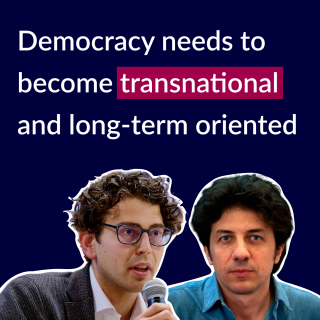
Welcome on another episode of Democracy
Download transcript (.srt)
0:00
0:02
0:04
0:07
0:09
0:11
0:12
0:17
0:22
0:25
0:29
0:34
0:37
0:41
0:45
0:50
0:54
0:57
1:00
1:04
1:07
1:10
1:14
1:15
1:18
1:24
1:27
1:30
1:34
1:38
1:42
1:46
1:51
1:56
1:58
2:02
2:05
2:08
2:12
2:19
2:20
2:24
2:26
2:28
2:31
2:33
2:35
2:37
2:38
2:40
2:42
2:45
2:47
2:51
2:52
2:54
2:56
2:59
3:02
3:05
3:07
3:09
3:11
3:12
3:15
3:19
3:21
3:23
3:25
3:27
3:29
3:30
3:34
3:37
3:39
3:44
3:46
3:49
3:52
3:55
3:57
3:59
4:02
4:04
4:06
4:08
4:10
4:12
4:13
4:15
4:18
4:19
4:21
4:23
4:25
4:27
4:30
4:32
4:34
4:36
4:38
4:40
4:42
4:44
4:47
4:49
4:51
4:55
4:56
4:58
5:00
5:04
5:06
5:10
5:13
5:15
5:18
5:19
5:22
5:24
5:26
5:28
5:30
5:34
5:36
5:38
5:40
5:42
5:45
5:47
5:48
5:50
5:54
5:58
6:00
6:04
6:08
6:14
6:19
6:22
6:25
6:30
6:32
6:35
6:39
6:41
6:46
6:50
6:56
7:01
7:06
7:08
7:13
7:15
7:18
7:21
7:26
7:30
7:34
7:39
7:42
7:46
7:50
7:54
7:58
8:02
8:05
8:09
8:12
8:13
8:18
8:22
8:25
8:29
8:32
8:38
8:41
8:46
8:49
8:54
8:58
9:01
9:04
9:07
9:10
9:13
9:17
9:22
9:25
9:27
9:30
9:34
9:37
9:39
9:43
9:47
9:50
9:55
9:59
10:02
10:07
10:10
10:14
10:16
10:18
10:20
10:22
10:25
10:26
10:29
10:32
10:34
10:37
10:40
10:42
10:44
10:46
10:49
10:50
10:53
10:55
10:58
10:59
11:02
11:05
11:08
11:10
11:12
11:15
11:18
11:20
11:24
11:26
11:29
11:31
11:33
11:37
11:39
11:41
11:43
11:45
11:49
11:51
11:52
11:56
11:58
12:01
12:03
12:05
12:08
12:09
12:11
12:14
12:16
12:18
12:20
12:23
12:26
12:28
12:30
12:32
12:34
12:36
12:39
12:41
12:43
12:45
12:48
12:49
12:52
12:54
12:55
12:56
13:00
13:02
13:04
13:06
13:07
13:10
13:12
13:14
13:17
13:19
13:21
13:23
13:26
13:28
13:29
13:32
13:34
13:37
13:40
13:42
13:44
13:47
13:48
13:50
13:52
13:54
13:57
14:00
14:02
14:04
14:07
14:09
14:11
14:13
14:15
14:17
14:20
14:22
14:24
14:26
14:29
14:32
14:34
14:36
14:39
14:41
14:43
14:45
14:46
14:48
14:49
14:52
14:54
14:56
14:59
15:01
15:03
15:04
15:07
15:08
15:11
15:13
15:15
15:18
15:20
15:22
15:24
15:26
15:29
15:30
15:33
15:34
15:36
15:38
15:42
15:47
15:49
15:53
15:54
15:56
15:59
16:02
16:04
16:06
16:08
16:10
16:13
16:14
16:17
16:20
16:22
16:27
16:30
16:33
16:36
16:39
16:41
16:42
16:46
16:48
16:52
16:54
16:56
16:59
17:02
17:05
17:08
17:11
17:14
17:16
17:19
17:22
17:25
17:29
17:31
17:32
17:35
17:40
17:42
17:44
17:48
17:50
17:52
17:55
17:57
17:59
18:02
18:04
18:06
18:08
18:12
18:16
18:18
18:22
18:26
18:29
18:32
18:34
18:36
18:39
18:42
18:46
18:48
18:54
18:54
18:57
19:01
19:05
19:09
19:14
19:18
19:21
19:24
19:28
19:32
19:36
19:38
19:42
19:45
19:49
19:53
19:56
20:01
20:04
20:07
20:11
20:18
20:24
20:29
20:32
20:35
20:38
20:41
20:47
20:50
20:52
20:55
21:00
21:03
21:07
21:09
21:13
21:16
21:20
21:23
21:26
21:31
21:33
21:37
21:41
21:44
21:47
21:51
21:55
21:58
22:02
22:05
22:08
22:11
22:17
22:20
22:24
22:27
22:29
22:32
22:35
22:40
22:44
22:47
22:51
22:54
22:58
23:02
23:06
23:10
23:13
23:16
23:20
23:23
23:27
23:32
23:35
23:38
23:40
23:44
23:47
23:51
23:54
23:58
24:01
24:04
24:07
24:10
24:14
24:16
24:18
24:20
24:23
24:26
24:29
24:30
24:32
24:34
24:36
24:38
24:39
24:41
24:43
24:44
24:48
24:50
24:52
24:54
24:58
25:00
25:02
25:04
25:07
25:09
25:11
25:13
25:15
25:16
25:18
25:21
25:22
25:24
25:26
25:28
25:30
25:35
25:37
25:39
25:41
25:43
25:46
25:48
25:49
25:52
25:55
25:57
25:59
26:02
26:04
26:07
26:09
26:11
26:13
26:15
26:18
26:21
26:23
26:25
26:27
26:29
26:32
26:35
26:38
26:40
26:43
26:45
26:47
26:49
26:51
26:54
26:58
27:01
27:03
27:04
27:07
27:10
27:12
27:15
27:17
27:20
27:23
27:26
27:28
27:30
27:34
27:36
27:38
27:40
27:43
27:46
27:48
27:50
27:53
27:55
27:58
27:59
28:03
28:07
28:09
28:11
28:13
28:16
28:18
28:21
28:22
28:24
28:27
28:29
28:30
28:33
28:35
28:37
28:38
28:40
28:42
28:45
28:47
28:50
28:54
28:55
28:58
29:00
29:01
29:04
29:07
29:09
29:12
29:15
29:18
29:21
29:23
29:25
29:27
29:29
29:31
29:33
29:35
29:37
29:39
29:40
29:43
29:45
29:47
29:50
29:52
29:54
29:56
29:59
30:01
30:03
30:04
30:06
30:08
30:09
30:12
30:14
30:17
30:22
30:24
30:26
30:28
30:29
30:32
30:34
30:37
30:39
30:42
30:43
30:46
30:48
30:50
30:53
30:56
30:58
31:00
31:05
31:07
31:09
31:11
31:13
31:15
31:17
31:20
31:21
31:23
31:25
31:27
31:28
31:31
31:33
31:36
31:39
31:41
31:43
31:46
31:49
31:50
31:54
31:57
31:59
32:03
32:07
32:08
32:10
32:11
32:13
32:16
32:22
32:26
32:29
32:34
32:38
32:40
32:43
32:46
32:50
32:53
32:58
33:02
33:05
33:08
33:12
33:17
33:19
33:23
33:26
33:30
33:34
33:40
33:43
33:46
33:49
33:53
33:55
33:58
34:01
34:03
34:06
34:09
34:15
34:17
34:20
34:24
34:28
34:34
34:38
34:42
34:46
34:49
34:53
34:57
35:00
35:03
35:07
35:10
35:14
35:18
35:23
35:28
35:32
35:36
35:39
35:42
35:45
35:49
35:52
35:55
35:58
36:03
36:05
36:09
36:12
36:15
36:19
36:22
36:26
36:30
36:34
36:38
36:41
36:44
36:48
36:50
36:52
36:54
36:58
37:00
37:03
37:08
37:09
37:12
37:16
37:19
37:23
37:26
37:29
37:33
37:37
37:40
37:43
37:48
37:52
37:56
37:59
38:03
38:05
38:06
38:09
38:11
38:13
38:16
38:18
38:20
38:23
38:25
38:27
38:29
38:32
38:35
38:38
38:40
38:43
38:45
38:47
38:49
38:51
38:53
38:56
38:59
39:03
39:04
39:06
39:07
39:11
39:13
39:16
39:19
39:21
39:23
39:25
39:28
39:31
39:34
39:36
39:38
39:40
39:42
39:45
39:47
39:49
39:51
39:54
39:57
40:02
40:05
40:07
40:08
40:11
40:13
40:16
40:18
40:19
40:21
40:24
40:26
40:28
40:30
40:31
40:32
40:34
40:36
40:39
40:43
40:47
40:48
40:51
40:54
40:57
41:00
41:04
41:05
41:07
41:10
41:13
41:14
41:16
41:19
41:21
41:23
41:24
41:26
41:29
41:31
41:34
41:36
41:38
41:40
41:42
41:45
41:47
41:50
41:56
42:00
42:04
42:05
42:09
42:12
42:13
42:14
42:16
42:18
42:19
42:21
42:24
42:26
42:30
42:34
42:39
42:42
42:46
42:48
42:53
42:54
42:57
43:02
43:04
43:09
43:13
43:17
43:21
43:24
43:27
43:29
43:33
43:35
43:38
43:43
43:47
43:50
43:55
43:57
44:00
44:04
44:06
44:11
44:15
44:18
44:22
44:26
44:28
44:34
44:39
44:43
44:45
44:48
44:53
44:57
45:02
45:05
45:09
45:12
45:15
45:19
45:22
45:26
45:30
45:35
45:40
45:44
45:48
45:50
45:53
45:55
45:56
45:59
46:01
46:03
46:07
46:12
46:15
46:18
46:23
46:27
46:30
46:35
46:39
46:42
46:46
46:49
46:52
46:56
47:00
47:02
47:05
47:10
47:13
47:17
47:21
47:24
47:28
47:30
47:33
47:37
47:40
47:43
47:45
47:50
47:50
47:52
47:52
47:54
47:58
48:00
48:03
48:05
48:07
48:10
48:12
48:16
48:18
48:19
48:22
48:26
48:28
48:30
48:33
48:34
48:36
48:39
48:42
48:45
48:48
48:50
48:51
48:52
48:54
48:56
48:58
49:01
49:02
49:04
49:06
49:07
49:09
49:11
49:15
49:17
49:19
49:21
49:24
49:27
49:30
49:33
49:36
49:39
49:42
49:44
49:46
49:49
49:51
49:53
49:54
49:58
50:00
50:04
50:06
50:08
50:09
50:11
50:13
50:16
50:18
50:20
50:22
50:24
50:26
50:27
50:30
50:34
50:35
50:37
50:38
50:40
50:42
50:45
50:48
50:49
50:51
50:54
50:56
51:00
51:02
51:06
51:08
51:09
51:12
51:14
51:15
51:16
51:18
51:19
51:21
51:22
51:26
51:29
51:32
51:34
51:36
51:38
51:42
51:44
51:47
51:49
51:50
51:52
51:54
51:56
52:00
52:02
52:04
52:06
52:10
52:11
52:12
52:14
52:16
52:18
52:19
52:21
52:23
52:25
52:27
52:30
52:31
52:34
52:36
52:38
52:40
52:42
52:46
52:47
52:51
52:56
52:59
53:01
53:05
53:07
53:09
53:11
53:13
53:14
53:17
53:19
53:21
53:23
53:25
53:27
53:29
53:32
53:34
53:36
53:38
53:39
53:42
53:44
53:46
53:49
53:53
53:55
53:57
53:59
54:01
54:02
54:05
54:08
54:10
54:13
54:15
54:16
54:18
54:20
54:26
54:28
54:28
Innovator podcast and our guest of today
are Marco Kapat and Franchesco
and
thank you for your time.
>> Thank you.
>> And you're working on um a humans,
right? What is a movement?
>> Humans is a panuropean movement of
popular initiative. What does it mean?
um a movement that is directly European,
so open to the membership of people all
around Europe um without the need of
passing through national organization.
So is a directly citizens movement um
directly at the European dimension and
is political but non-electural so
popular initiative because
we uh do politics in political
initiatives but through the tools of
civic particip participation at European
level for example the European citizens
initiatives
but also national, regional and local uh
level because we think that the two main
limits and problems of democracy
nowadays are first of all democracy is
mainly national but the problem of our
era are mainly transnational supra and
and infraational also and we also think
that uh uh elections, electoral
democracy is uh too uh concentrated
focused on shortterm consensus
um
in front of problems that need long-term
solutions. So there is the need to
complement electoral democracy,
national electoral democracy through a
robust dose, a strong dose of panuropean
citizen
u democracy, direct participation.
>> Yeah, let let me add a couple of things.
I do think that what Marco said is uh
really true. Um the point is that humans
was also born to fill in the gaps of a
few dissatisfactions.
um we believe of citizens in general but
especially know we started from the
Italian use case and the satisfaction
were not only the scope of the
participation meaning you know national
versus international but also the
satisfaction that a lot of widespread uh
a lot of campaigns a lot of ideas that
would be widespread ac among the public
so I don't know for example euthanasia
rights or abortion rights and other
things didn't really find any match into
the political debate because any party
is a bit worried of losing some specific
constituencies, they would be against
that. And since party politics is about
gaining consensus and gaining, let's
say, quantitative consensus, no one can
um can really afford losing that kind of
political support. Therefore, we do
believe that there are some topics that
should be discussed outside uh or at
least that whose discussion should be
complemented outside of a usual
representative democracy. This is the
case again for uh transversal political
uh initiatives.
>> And now you are both working on a
campaign called Civic AI, right?
>> Yes, we do.
>> What is CV AI?
>> H well uh this is a very tough question.
Uh maybe I can step in here. uh the
problem in defining civic artificial
intelligence is that we are first of all
speaking of uh a moving target under so
many different layers. The technology
itself is a moving target. The
technology itself is extremely complex
and you know it is multi-layered. It
starts from the infrastructure. Then it
gets to the layer of how data are
collect, stored, gathered and used. And
then there is the um then there is the
level of the algorithm and then there is
the level of the software and then there
is the level of the interface with users
and effects that artificial intelligence
might have on specific users and
citizens. Therefore u it's not only the
technology uh which is a moving target
but the regulation of the technology is
a moving target on its own. I mean we
have the example of the European Union
and other places in the world are
starting to uh regulating AI of course
with completely different approaches uh
compared to the European Union's one. Uh
but then another problem is also that uh
that I can say the dissemination of this
technology into the um contemporary
public sphere and especially the digital
sphere is constantly changing because we
are also getting used to the different
applications. So um is civic AI a fight
against disinformation generative AI le
disinformation is civic AI uh how can I
say um the campaign for ensuring that
each specific layer that I mentioned
earlier uh complies with European values
and democratic values? Is it a campaign
for increasing and enhancing civic
participation online also through the
support of CVKI chat bots or virtual
assistants or platforms? I mean the
point is that CVKI is a bit of
everything. Um maybe I I'll leave the
floor to Marco to explain what was the
original idea of CVKI and then I can get
back the word to explain you know what
we did in the last few months and what
we are uh trying to what we uh what we
plan to do in the coming uh weeks and
months.
>> Yes. uh well I will start from the
consideration that uh uh almost I think
99.999%
of investment
of huge immense amount of money poured
into uh artificial intelligence in the
current times is driven by either
commercial purpose profit company either
uh control, warfare,
uh security. Um
but there is virtually no investment or
really marginal
um
uh on the use of AI to empower the
citizen.
Um that's exactly the meaning of civic
AI artificial intelligence as a public
service. There is no major um invention
and uh technological advancement that
didn't have both the private uh
commercial use but at the same time the
issue of how this invention could be
provided as a public service. Let's
think about I don't know power,
electricity, gas, mobility, cars and so
on. Um the revolution that we are
experiencing that is already triggered
um is there is a lot of debate on how we
should regulate and limits the the risk
of abuse, manipulation and so on. But
there is no real discussion and most
most important no real big plan and
investment on how this revolution could
also not as an alternative but also be
used to benefit the citizens and empower
the citizens on those issues without
direct commercial interest. The first
example, the main one probably is
democracy.
Uh we know that democracy is uh in a big
is is in a big crisis. There is lower
and lower participation rates,
attendance rate to elections and people
are losing faith and trust on how
democracy could really help in
giving solutions to the problem of daily
life. So the idea of empowering through
artificial intelligence the possibility
of citizens uh of dialoguing and acting
with institution and among themselves to
find solution for their life for the
quality of their life for the quality of
the envir of the environment. This is
something that we cannot hope that will
be solved by big tech in Silicon Valley
or in China. This is a political problem
that need to be um replied with a
political solution at the public
institutional level. And the European
Union is the only dimension that could
in a way uh federate aggregate what is
already existing as civic use of
artificial intelligence to make them
interoperable to unite them and to
create a digital ecosystem
um to empower the citizens in the daily
life. So uh the this is the idea of
having of having also this path for the
future of artificial intelligence not
only the current paths that uh billions
of billions of billions of billions are
invested and attracted and attracted to.
Yes, if I may add something on this and
if I thank you Marco for mentioning you
know the need for creating a I can say
an ecosystem a digital ecosystem. This
is exactly uh one of the most important
things to clarify when we speak about
civic AI. Uh what we do have in mind is
trying to outline a European digital
public sphere. Uh since you know
technologies in general but especially
AI are influencing every single aspect
of how we do interact publicly. So
they're influencing the way information
is shared. They're influencing the way
we interact with public organizations or
public institutions. They are
influencing also our daily lives. We
must ensure that everything in our you
know in the in this mixed reality in
this hybrid reality that we are living
through you know which is mixing um can
I say physical assets and digital assets
we must ensure that this also exists at
the same uh this is per this is
permeated by democratic values at the
same time while this was the gen the
original idea of the petition maybe not
all of you know that any citizen in the
European Union can um how can I say uh
can submit a petition to the European
Parliament. Uh and this is was exactly
what Marco did supported by some experts
especially from Italy but not only from
Italy. Um the uh what happened to the
petition was that the petition was first
examined by the um committee of the
European Parliament dedicated to
petitions and then we were asked to
present it uh in April 2025 in front of
the of the committee. In that case,
Marco asked me to go simply because I
was in Brussels and um and after in that
case we gathered the support of all
representatives from all me or all
groups of the parliament for our
initiative. In that I must admit that in
that case we didn't not only uh present
again the petition was already existing
and you can still find on our website
but what we tried to outline is exactly
this the panuropean digital public
sphere and this public sphere was
composed of four main strands. The first
one is a civic assistance. So we you
know in our effort to explain what we
mean with civic AI the first uh
visualization that we got was a sort of
chatbot of victory assistant that would
help any citizen navigate not only the
complex framework of the European Union
but especially the all the participatory
opportunities the deliberative
opportunities they can jump in and in
general gather u insights and feedback
on how they can actively participate in
the European democracy. There are plenty
of of things that citizens can do. For
example, um provide feedback to open
consultations of the European
Commission. This is going to be
important also for later on. Um they can
on the have your say portal. They can
for instance uh participate in the
citizens engagement forum. Sometimes
there are uh participatory and
deliberative initiatives such as uh was
uh the conference on the future of
Europe. But in most cases people simply
don't know. And what we have to um what
we have to accept uh when you do
politics is that citizens are getting
used not even at having you know
services delivered as a softwares or as
as platforms but they're getting used of
having services delivered through
virtual assistants and chatbots. This is
the main trend that we see. So we would
like that public services not only as
the public the services uh given by
public authorities but also democracy
which is a public service in its own. I
mean it is so trivial admitting this but
still you know sometimes we do forget
that democracy should be a public
service in its own well we must ensure
that they are provided in the most
citizenfriendly way uh why am I
mentioning all of this was just in fact
the first trend that there are other
trend for example we mentioned the
participatory dashboard so let's say a
sort of platform that once you sign in
with your ideally European digital
identity according to the data you
provide to the specific platform. You
see all the participatory initiatives
that you can uh partic that you can join
depending of course on your res
residency rights, your nationality
rights, your citizenship rights and and
so on and so forth. And third there was
the liberation. creating a sort of tool
that would help public deliberation
through all the techn including AI but
through other technologies that help
create collective intelligence among
topics and I mean these technologies
already existed again in the platform
for the conference on the future of
Europe. So we're not saying to deploy
something completely new but just to
adapt what's existing to a slightly
different scope. And finally but this is
probably one of the most important
layers um there is what we call the
democracy data commons. So the concept
of data commerce and I know that Marco
probably would like to add something on
that as well. Um but the the concept of
data commerce is creating these sort of
data spaces that are public not
necessarily publicly managed but
definitely publicly owned and publicly
controlled and governed not necessarily
again by a government like let's say the
European Commission but it might be by
third authorities or independent
authorities like the European data uh
protection supervisor but this data uh
this data space would collect all the
data regarding the democratic
participation online and civic
participation online. Why is it
paramount? Because currently there are
plenty of participatory tools, participy
tools, but sometimes they are either um
can I say the data is either stored by
specific private oriented actors or they
they are stored even outside of the EU.
There are some platforms that are based
in the UK and this of course would
create some issues in for any um can I
say panuropean digital democracy tool
because I mean if your data is not even
under European law then of course you
know this raises issues. I could go on
with the next step. So probably uh I
would like Marco to spend a couple of
words on data com because he recently
had an idea also on this. I would like
to know the Alexandra's reaction because
we gave you a lot of information. So
what what what idea have you made out of
all of this of what civic artificial
intelligence could be? Sorry if I ask a
question instead of replying.
>> I like the question and I'm thinking
about all the interesting things that
you mentioned mentioned earlier. Um I'm
thinking about how information is power.
I mean if citizen knows what they can do
then they have also the power to do it
but uh as Franchesca said like often the
citizen doesn't know what he can
actually do and uh
and I was wondering like uh this uh
dissatisfaction that citizen has so we
have seen also how people maybe uh I
mean they still vote there there are
election but we cannot say that
representative democracy is at
uh the itest um it's not the itest
moment for representative democracy
and uh I totally agree about uh uh the
possibilities that we have now using
technology
uh to make um
um politics more accessible for citizens
uh because as you said like um
Franchesco with a chatbot maybe it's
easier to uh to tell to a citizen and
what he can do or what are the
possibilities
and uh I'm thinking also about the the
digital ecosystem that is also something
very important
uh because probably uh I can imagine
that several platforms are needed
several expertises
and um
and yeah I totally also agree about uh
how to that uh it it is necessary to
break the circle
of um of technology used for control or
for commercial reasons. Um
and actually uh it was uh yesterday I
was at the table with some uh PhD
students that that are studying these
kind of things and uh we were also
thinking about what is the CVKI uh
because I asked them uh the question and
uh it is actually not an easy uh thing
to
uh it's not actually easy um but yeah I
I think
>> maybe do some examples that could be
useful. Maybe also for for those who
probably could think, okay, but
do we really want the state or Europe or
the European Union be an actor in the
artificial intelligence race? Is this
realistic or is really something that is
suitable even more than realistic? Well,
um let's think about for example
platforms for civic participation
uh nowadays if you want to take an
initiative maybe in your own
neighborhood in your own city council uh
because you need to ask uh I don't know
the respect of a park of a green area
and so on what you do what are the tools
Usually you have this alternative. On
one side you have uh social media. You
can open pages uh on Facebook, launch
debates on Tik Tok and Instagram and so
on. But you know that the algorithm
will uh um will will in a way will push
um will push the the the content would
push the content that are polarized
uh and aggressive or with a very strong
idea and proposal. But civic
participation should follow another
logic because you don't need to sell
publicity advertisement products. So uh
the unfortunately
civic participation
uh the tools the non-commercial tools
for civic participation are boring or
non-existence or technologically
I mean not even digital sometimes you
don't even have a possibility of digital
interaction. So let's think about how
important would be to have a platform
for digital participation empowered with
artificial intelligence user friendly
and at the same time with an algorithm
conceived in a way uh that uh dialogue
is promoted
uh to speak but also to listen to have a
real interaction among citizens. Okay.
And uh many
local civic digital things exist around
Europe but they are not interconnected.
they are not uh uh you have you don't
have a single sign on
uh to uh like
to have access to all the digital tools
of interaction with the state and with
other citizens around Europe. So this
could be one of the concrete outcome of
an ecosystem of civic of European civic
AI to have uh interoperability
of platform of democratic
participations.
uh and this is not something that a
giant in Silicon Valley or in China
could do even because uh democracy is a
two delicate things. You need to have
for example when we are talking about
signing with a formal legal value a
petition or a proposal of referendum or
a ballot. the state is the only out is
is the only authority that can identify
and certify that signature as as as a
real one. So to uh to ensure the
legality of the process. So this is why
we think that even if
um the technological race toward
artificial intelligence is not something
that the state could play or should play
a competition role. Uh from the point of
view of the user of the citizens
uh the empowerment with artificial
intelligencebased system could be
crucial in having their rights,
democratic rights but even so social
rights on civic participation for public
goods for example for the as a user of
public goods. uh this dimension needs to
be uh empowered through a political
choice of investment by public
authorities.
>> Yes. Again um let me let me take a step
back to move a step forward. So um
whenever we speak about CVI sometimes
people get the impression that we do
want the European Union or whatever a
public actual in the regard to develop a
platform or develop a chatbot and put it
in the hands of the citizens. uh I mean
developing this kind of tools is
extremely expensive and not always
public institutions do have the talent
pool needed to develop something and
would effectively work and in that case
case again you know as Marco was saying
I mean we they would put themselves into
competition with the private actors that
have more money more talent and more
expertise in the field so why did I
mention to take a step back let's have a
look at the European digital wallet and
the EI does framework what did the
European do union do in in that regard
They first of all developed a framework
that would define would outline some
rules some guidelines on how to deploy
softwares and tools for uh trust service
providers for digital identity that
happened I mean I don't remember if five
10 years ago the first version and then
recently the second version was uh
published
according to the frameworks that were
deployed by the European Union basically
the assumption was okay if you comply
with these frameworks and you deploy a
specific tool then this tool will
receive that kind of public
certification that Marco was mentioning
earlier. They created uh a sort of uh
market incentive. In that case, for
example, in Italy, we had the deployment
of two main tools. On the one hand, you
have speed. On the other hand, you have
uh the electronic digital identity. Two
completely different structures. They
are slightly different, but let's say
that both comply with the eidas
framework. What happened then that with
that with those tools for example Monaco
and especially Luka Kushon and other
actors in Italy they both forgetting the
possibility of signing digitally
referendums which means you know that
these platforms that just received
market incentive they say because they
were complying with rules with laws so
they could be used for anything public
and official then now they are actually
used for signing official referendum or
at least the proposal sorry market and
make a mistake. Why am I mentioning all
of this? Well, because for example,
something that the European can you
union can do is this. First of all,
write a sort of framework for what is uh
what is needed for a electronic
participation tool to be compliant with
the EU law and to be officially recogni
for any interaction happening on this to
be officially recognized by the European
Union. Second, deploy as I was
mentioning a sort of data space for
democracy in order to and binding every
actor uh private or public may be to uh
store the data and to manage the data
through that data space which is public
publicly owned. Of course you know
people it is open but people cannot get
access to um personalized data but they
can only access to anonymized data for
doing research and whatever and then
deploy always the European Union a sort
of a single sign on platform may it be a
chatbot may it be a I don't know a
dashboard or whatever uh where you can
sign up with your European digital
identity and once you're signed up I
mean depending on your data okay you get
what is it that you see? What you see is
not only the participatory opportunities
that you're in, but every municipality,
every level of governance can upload a
participatory uh process online,
choosing themselves the specific tool
they use, but with the data that goes
again to the democracy data commerce.
Why is this solution more feasible than
deploying a chatbot uh by the eur the
public administration? Because for
example this would not only um how can I
say um this would uh only require
interoperability of all the systems
especially with the European digital
wallet. They would not this would not
necessarily require a centralized uh
data storage. This would not require a
centralized tool but it would in fact
allow for a proliferation of
decentralized tools.
So on decentralization in fact I can
move a step forward. You know you asked
us it's not so easy to understand what
civic AI is okay everything that I just
mentioned is not even AI I mean there
could be a virtual assistant or a
chatbot that would help you navigate
across all these platforms or whatever
there could be some machine learning
systems again you know to uh regulate
the debate online according to specific
rules there can be some um I don't know
um yeah some complex data analysis for
creating collective intelligence on
specific participatory processes again
these are also AI technologies but can
be achieved even with other
technologies. Um but when we speak about
civic AI we could also mention again for
example the infrastructure layer. So
currently as Marco was saying the AI
market is extremely centralized by few
monopolies that own not only can I say
that the software and they do not really
allow anyone to understand what are the
weights what is the whole process they
use because of course they base your
business model on that but the problem
is that often times what is centralized
is infrastructures
uh I've recently gone to the I recently
been to the Mozilla uh festival in
Barcelona and there I attended to a
session that was speaking of how a
federated AI system is possible. So
different organizations, different
places can have their I don't know data
servers or or whatever is need to deploy
an artificial intelligence system and
then what they can do is to federate the
system so that the data is still owned
by any specific organization but their
AI models are trained on all the data.
So they can run all over the data but
yet you know this data doesn't get
centralized. So again why am I
mentioning this when it comes to civic?
Because one of the questions that we
have to ask ourselves is do we want AI
to be held by a monopoly may it be
public or private or do we want it also
to reflect the uh values of democracy of
even competition in a way that are
embodied in the European Union at the
infrastructural level as well. And there
again I mean we can start conversations
on for example um even on blockchain
technologies on distributed ledger
technologies and how to use them. But
just to this is just to understand that
beyond visualizing what civic AI is.
What is important to understand is that
artificial intelligence is a general
technology as much as was the internet
and as such it affects many different
layers and uh translating our democratic
values and our civic values into AI to
make to enhance a civic participation
and not reduce it you know through
profilation and through um I can say the
increase of misinformation whatsoever.
Well, we really need to reflect at all
the different layers of this technology
and in this regard probably Europe if it
would if it would adopt a different
approach compared to the other two
giants especially US and China well
probably it would really find their way
of being competitive in the market
through a more democratic approach to
technology which is not only reflected
in I don't know huge words like
trustworthy citizencentric and blah blah
regulation that is only risk based as it
is now
It's very interesting the the data space
uh thing. It's also something that with
some people that are developing civic
tech tools we were thinking about uh uh
because let's say there is a sit citizen
assembly I don't know in Italy and then
another one in uh in Germany then uh if
the topic is similar then it will be uh
worth it maybe to have a connection
between the two uh citizen assembly to
understand better what citizens want and
uh
>> and yeah it's it's are interested in
these things.
>> And
maybe we could uh we could raise a
question which are the only data that uh
uh a dict a dictatorship will never have
access to because we know that for
example in China uh there is no
privacy issue. So every data are
collected
uh in a massive way without privacy
restrictions. So
we think we tend to think which is true
they have a huge competitive advantage
in terms of the amount of data they can
use to train artificial intelligence for
commercial and control purpose. But
which is the data set they will never
have the democratic participation data
set. If we as Europe, if we would make
systematic
the promotion of civic participation,
citizens assembly, local democracy,
local referendum, local ballot proposal,
regional, national, European and those
data anonymized of course how
huge value we could extract. act from it
in terms of what are the needs of the
people, the priorities for their own
lives. And if you combine this to the
data
that are owned by public authorities
because we also tend to think okay now
Silicon Valley they have all our
personal data because we are on uh the
iPhone and Facebook and Tik Tok and so
on. But uh we don't have to forget that
uh for the time being maybe in 10 years
it will be different but the huge the
the biggest amount of data it's still in
the hands of the state even if the state
is not using as uh Silicon Valley is
using but the health data for example
uh are detained by the state uh the
justice related the justice system data
but all the the public activity that are
producing data that sometimes are not
even collected by the state. So this is
why uh at the European level we could
create a dimension
for the use for the collection and use
of public data for public purpose. And
we could al we could also add the
possibility of voluntarily donate
our personal data anonymized of course
to uh to in a way to to to nourish to
make grow this uh public data data set.
So uh um I think that even at the level
of data that we tend to think that is a
lost battle because the giant of
artificial intelligence are treating
amount of data that the the public
entity will never will never be able to
use. I think this is not true
is it is not true. If we choose to
invest on the creation on the treatment
on the collection and the treatment of
those data, of course, if we stay uh
steady and looking what is happening
without doing anything, I think that uh
unfortunately the the the state and the
and the public dimension of institution
and the public interest will become less
and less That's relevant because uh if
the world is changing without and
outside public institution and public
interest and the democracy well
democracy will lose value. It will not
be any longer an activity
uh
considered
strongly considered by the people as an
activity able to improve their lives and
this would be the final defeat for
democracy not the crisis but but really
the defeat. So this is why to invest on
on this
macro level that we called civic AI and
as Francho explained can mean many many
different things is really a political
strategical choice that has to be made
but it's a eurent choice because in 10
years the amount of money that would be
collected for commercial purposes if we
don't do The same thing for public use
purposes would be
would be
so so bigger uh that the it would be a
lost battle to try to include public
interest logic and citizens le logic in
the race in the in the artificial
intelligence race.
Well yes this let me add something I
mean let me go back to what I said
earlier I think that in the last few
decades we forgot that democracy is a
public service I mean let's think about
that you know most of the public debate
happens on digital platforms that are
profitled and private owned not even
inside of the European Union uh I mean I
I think that both Mark and I have
nothing against businesses okay that's
not the problem but the problem is that
if the public debate happens mostly on
private own um platforms. It means that
those who uh own the platform can
dictate the rules and this is the reason
for which I mean back in the days I mean
let's not speak about Trump and now you
know what's happening for example on
platforms like meta Facebook and blah
blah uh for what concern for example
feminist content and whatsoever but
before Trump stepped in these platforms
that are mostly uh US based would follow
the the the policies of the the
government back in the days which was
the democratic government and therefore
I mean you saw that Donald Trump was
just banned from uh Twitter after
January the 6th and I mean there were
other uh contents that were you know
censored or limited and whatsoever. I
mean even though we can agree that those
content must be censored the point is
that who is in charge of censoring them
and this must be the public if we decide
to censor them or this debate must be
held on a public platforms until it is
held on private platform this is going
to be a problem but most of us simply
accepted that since there are these huge
marketplaces let's say this huge single
sign on prices so I mean one size fits
all and everyone has to go there if I
were the representative newspaper I
would seriously think but do we really
want to communicate what we do on this
social network uh and this is just one
one case okay uh let's take another one
uh there are some especially local uh
public institutions that are already
deploying chat bots and virtual
assistants to interact with the public
that often times they are extremely
limited like they they only answer to
you know questions about what are the
services that they provide. And if you
ask a questions for in question for
instance uh who is going to be the
candidate at the next municipal
elections in my town, they do not
provide that answer. They don't have it
even though they are the public
authority and at some point you know
they will have to register you know
these elections how the who will win or
not. Uh but the other problem is also
that um it's I think it's news from the
last month um Microsoft so meaning
Copilot
uh bought the license for a lot of data
from Harvard Medical School. Most likely
this happened because they want to make
copilot the most trustworthy uh chatbot
for what concerns data on uh even basic
health which means that you would ask
copilot if you can take paracetamol
while you're drinking or vice versa.
Okay. But these kind of basic medical
questions should be deployed by the
public. I mean this should be a question
of you know public uh health services.
Why is it a private uh company that
would get all these interaction data and
understand what are the needs of the
citizens and then can use the data to
provide even further services.
There are I mean again neither Mark or I
are against businesses. Uh personally I
have no issues with that but the point
is that there is a series of services
that must be deployed by the public or
otherwise we are creating a very tricky
situation.
>> I totally agree. I'm thinking that maybe
this uh difference is also something
that uh um I mean US and Europe have
different approach to health uh one that
is more public and one more private and
um
I have a lot of other questions but I
don't know if you have more time
um
or if
>> I can stay until one as I said Oh, I
don't know Mark if he has to step out
already.
>> I have a few minutes because I need to
go. So if uh there is a last question
for me then I will leave you for the
final. Yeah, it is. Uh so all this
ecosystem, all the data space and so on
could maybe lead to some uh uh to a
society where all citizens are also
active maybe uh where they can actually
participate. Do you feel that this is
possible? I I mean in in in society
already
um cooperation
has plays a big role. We are not only
uh
I mean there are plenty of uh nonprofit
dimensions of our private life uh even
uh from from family relationship and
friends and also the relationship with
the community and and we know how how
this is important as Franchesco said is
not against
uh uh the the the market or
u
is is not alternative. But we do a lot
of things because we like to do to to
for cooperation and uh
in a way to to be useful to the others
or also for our uh own interests through
democratic participation
because we have to defend our rights and
even our economic interests. So the the
political dimension
uh and the social dimensions are
a very important part of our society.
The risk is that if artificial
intelligence empowers
only the part of our life
uh which is
um dominated by the logic or is included
in the logic of uh market interaction.
the social dimension of our life risk to
lose
uh weight to lose importance in our own
life and at the contrary I think that uh
if we would be able in an easy way in a
consumerfriendly way to reinforce to
raise the part of our life dedicated to
society and the others we would do that.
So I think that well it would be naive
to to think that everybody want to
participate that everybody want to uh
make political initiative is not what I
think. But at the same time, if it would
make um if if it would if it would be
made much more easier to do so,
uh that would we would uh uh see a huge
increase in quantity and quality of
civic participation and socially driven
action. see this. I really do believe
because human being is a social. Sorry
if I interrupt you but I mean uh just to
ask you I mean what happened with the
Italian platform for uh presenting the
referend online
>> there was a blossoming of proposals was
>> this was a huge change because nowadays
you have uh a lot of ballot and even
referendum proposal that are made easier
at least in the collection of signature
phases. But of course uh democracy is
not about just about voting but not even
just about signing. Democracy is
something more is uh uh being formed
discussing is a dialogue. There are a
lot of processes that should be
facilitated before the moment of voting
or signing something. So this is the
ecosystem with that we need to build
thanks to digital innovation and we are
not doing so if not in in marginal ways
in marginal experiment at the local
level or sometime at national level but
there is no the um
the the the the political
uh really decision of following doing
this path of choosing this priority for
the evolution of the democratic state.
This would be important to provoke uh
with the with this action. This is what
we are asking to public authorities to
do.
>> Thank you a lot.
>> Thank you. I listen to you but I will
not speak anymore because I'm on the
move. Thank you. Thank you again.
And
>> yeah, I don't know if you have another
question because
>> yeah, maybe another question could be
like uh if you have a message uh for the
people that are actively searching for
new solution for
uh related to citizen participation,
maybe they're developing software. Maybe
they are trying to do something like
CVKI but I don't know in another
continent somewhere else like um yeah if
you have a message for them uh
>> yes I mean this is a message not only
for them but for ourselves as well. I
mean uh there are plenty of platforms
for civic engagement and democratic
participation online. There are plenty
solutions, believe me dozens. Uh, but I
think that most of them have already
been interviewed in this podcast in my
in my point of view. Um, sometimes when
we deploy these tools, we tend to think
more of the offer
and supply, let's say, and lessen the
demand. Uh, this is something that Mark
and I would like to investigate,
something that humans keeps, you know,
reflecting on. I mean, is there really
demand for more democracy? Is there
really demand for more participation?
And under what terms, in what shape?
What I was mentioning earlier, you know,
about that everyone is getting used to
interacting with chatbots and virtual
assistants as the first way of
interacting digitally. That was not the
case five years ago. That was not the
case 15 years ago. Um, we I do think
that we should not only think of the
tool and make the tool perfect, but
thinking of something that is really
used and effective for citizen and
answers to their demands. Otherwise we
are creating cathedral in the desert.
I totally agree about uh listening to
their demands because uh sometimes uh
this is a question that that I ask I
asked myself a lot of times why people
are not participating
and then uh I thought maybe they are
participating already. It's just that uh
I don't see it
and so I really agree that we should
listen and be
>> No, they are participating. I mean um
Marco said it but he didn't use these
words but p when we say panuropean we
mean transnational and translocal. Uh
something I were getting while
interacting with pe especially with
people that are not Italians even though
Italian base is our strongest uh
constituency is that they do engage a
lot but at the local level while
Italians are mostly used to engaging at
the national level or you know levels
that are not necessarily local. Uh why
is it relevant? Because I mean if you
deploy a tool you have to understand
that every different uh let's say at
least people at the if we if we are
thinking about the European Union let's
take the member state and let's define
the people the citizens of the member
states each people interacts with
democracy in completely different ways
and this is the result of centuries of
uh interactions at the local national
regional level and it highly depends on
the history of the specific country or
member state. um there's something to be
taken into account and the other point
is uh why have there been movements such
as um
um me too bright for future and then
there
black lives matter and so on and so
forth what or even now currently there
is my voice my choice which is a
European citizens initiative that
collected way more than 1 million
signatures and now it's interacting with
the European Parliament the European
Commission to push forward abortion
rights in Europe
uh why did these things work? Because
there was a strong demand behind there
were decades of debate or public opinion
built in this regard. I mean this is why
you know even participatory and
grassroots initiatives thrive the
regardless of the platform they use uh
but unless there is that demand people
are less involved in participating and
what is interesting in my point of view
is that I don't know if it is just
because of digital tools whatsoever but
clearly people are less engaged with
traditional politics that requires a
sort of tribal uh to accept you know a
series of values a series of proposals
you were part of the tribe and you
couldn't get out of the community. But
people can engage on single issues.
Even with completely different
perspectives, they can agree on a
specific topic. And this is the case for
example on Newton major rights. There
you have people from all over the
spectrum from the far left to the far
right depending on what do they do
believe is their need. They can you know
just forget that they come from a
tradition of from a political tradition
and then support an initiative. So I do
think that you know when it when it
comes to thinking about the needs of the
the demand of the service we don't have
just translate existing processes into
the digital world we do have to
completely rethink the processes
according to as Habermas would say this
new structural change of the public
sphere.
>> So let's change how this is uh
is actually working. I mean uh let's
think about new ways to make uh
participation easier u so that it can
happen everything that you and Marco
described in the
>> yes if you want to contribute to how we
think about how democra democratic
participation should happen digitally I
mean uh there is a page on our website
where you can join the campaign joining
the campaign means that you can get
access to our working groups and you can
co-create with us the proposal I mean
now we spoke about a lot we We gave you
a lot of information, a lot of ideas and
most of them are not Marcos nor minds.
They are just you know the ideas of the
community that got integrated in all our
activities. We try to co-create in this
campaign with everyone and we try to
experiment. So um currently I mean we
will soon move to discord. So we will
have a discord community for the
campaign. Uh we also already have a
desim page for some specific activities.
uh when I started coordinating the
campaign, I tried to co-create each any
feedback to the European uh commission's
public consultations together
experimenting with mentimeter or with
other methods for gathering collective
intelligence. Uh I mean we are trying
our way out because we do see that what
exists is not working and probably we
need to experiment and this is probably
what I like the most of this campaign.
We are literally building a political
pile from scratch and it's extremely
enthusi can say it's extremely exciting.
>> Absolutely. And thank you again
>> Thank you Alexandra for hosting us.
>> Thank you Alexandra for hosting us.